
Letters: Great Grandson of Pelican Limerick Author D.L. Merritt Writes In
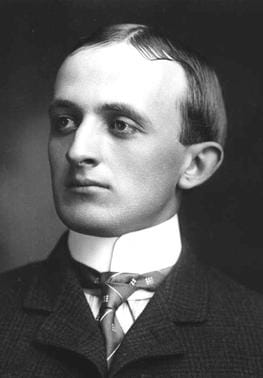
What a delight to be contacted by a local Mr. Robert Watkin, a great-grandson of the famed Dixon Lanier Merritt (1879-1972) the subject of our Oct. 16, 2024 article, "Why Has D.L. Merritt Been Punished So?," linked below:
 Christopher Jones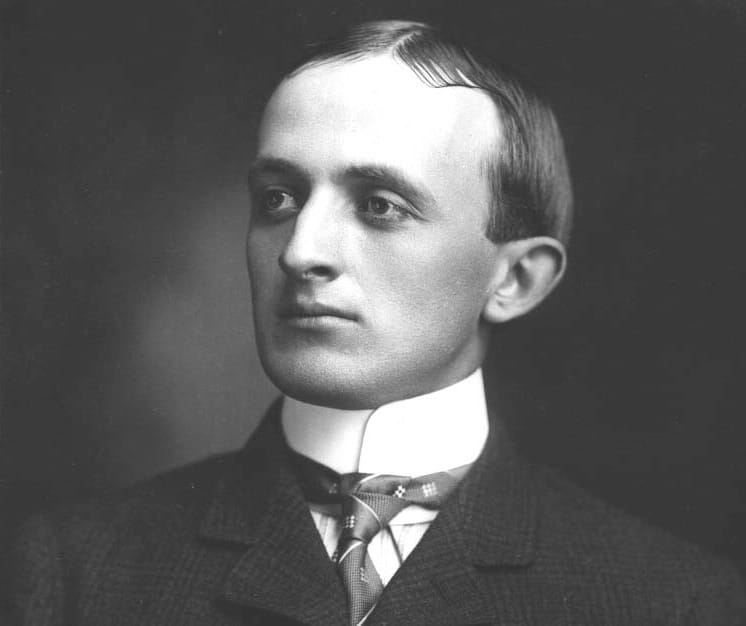
If you recall, D.L. Merritt penned this famous 1910 pelican limerick:
A funny old bird is a pelican.
His beak can hold more than his belican.
Food for a week
He can hold in his beak,
But I don't know how the helican.
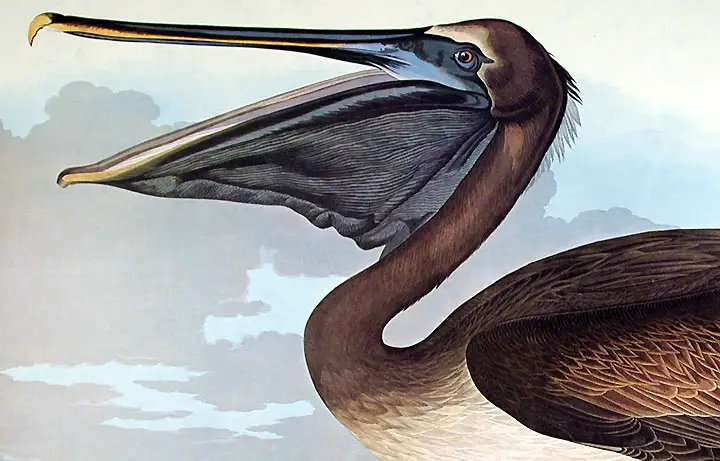
And, while enjoying an Oregon family vacation, we had pondered, "....who was this D.L. Merritt? And what must it have been like to be so famous for just this one little frivolous five-line pelican opus – and not much else, apparently, in his 92 years of life?" So, we set about discovering "whether this poor man's time on Earth had any broader purpose or meaning."
And we discovered that indeed, "Merritt racked up an impressive list of accomplishments," during his lifetime. "But he was also cursed, apparently, to have his little pelican ditty serve forever as an albatross around his neck."
And here, with 32,000 views on YouTube, is police detective Columbo reciting D.L. Merritt's pelican limerick. From The Conspirators (season 7 - episode 5).
A Letter from Mr. Robert Watkin
Now comes Mr. Robert Watkin's friendly missive to The Falls Church Independent. And what a joy to read, as it paints an enlightening family history tableau intertwined with U.S. presidential and European history, turn-of-the-century rural American wit and journalism, and a trans-Atlantic "Great Limerick Craze." To wit,
Dear Chris,
Thank you for your journalism – and your provision of an alternative voice to the FCNP. I just discovered your good article about my great-grandfather, Dixon Lanier Merritt and I thank you for your reflections. Granddaddy Merritt, as we called him, was my maternal grandmother's father, and I'm grateful to have known him. I treasure our many visits to Cabincroft (which burned down in the early 1980s, as I recall), several typed letters of his to me when I was a boy, and many fascinating stories about him that have circulated through the family over the years.
For instance, when he and my grandmother lived in D.C. off of DuPont Circle (during his wartime stint with the Dept. of Agriculture and later as the Washington correspondent for Outlook magazine) in the late 1910s and most of the 1920s, he had the opportunity to play dominoes with Woodrow Wilson at the National Press Club. I'm guessing this was sometime after the end of Wilson's second term, towards the end of the President's life. Lots of family lore. And of course, many stories about "The Pelican."
I'm including some remarks sent me by one of my great-uncles and one of Dixon's four children, Stanley Merritt (died in 2019). And by the way, Dixon's youngest, Bob Merritt, is 93 years old and lives in Chanute, Kansas.
All the best,
Robert Watkin
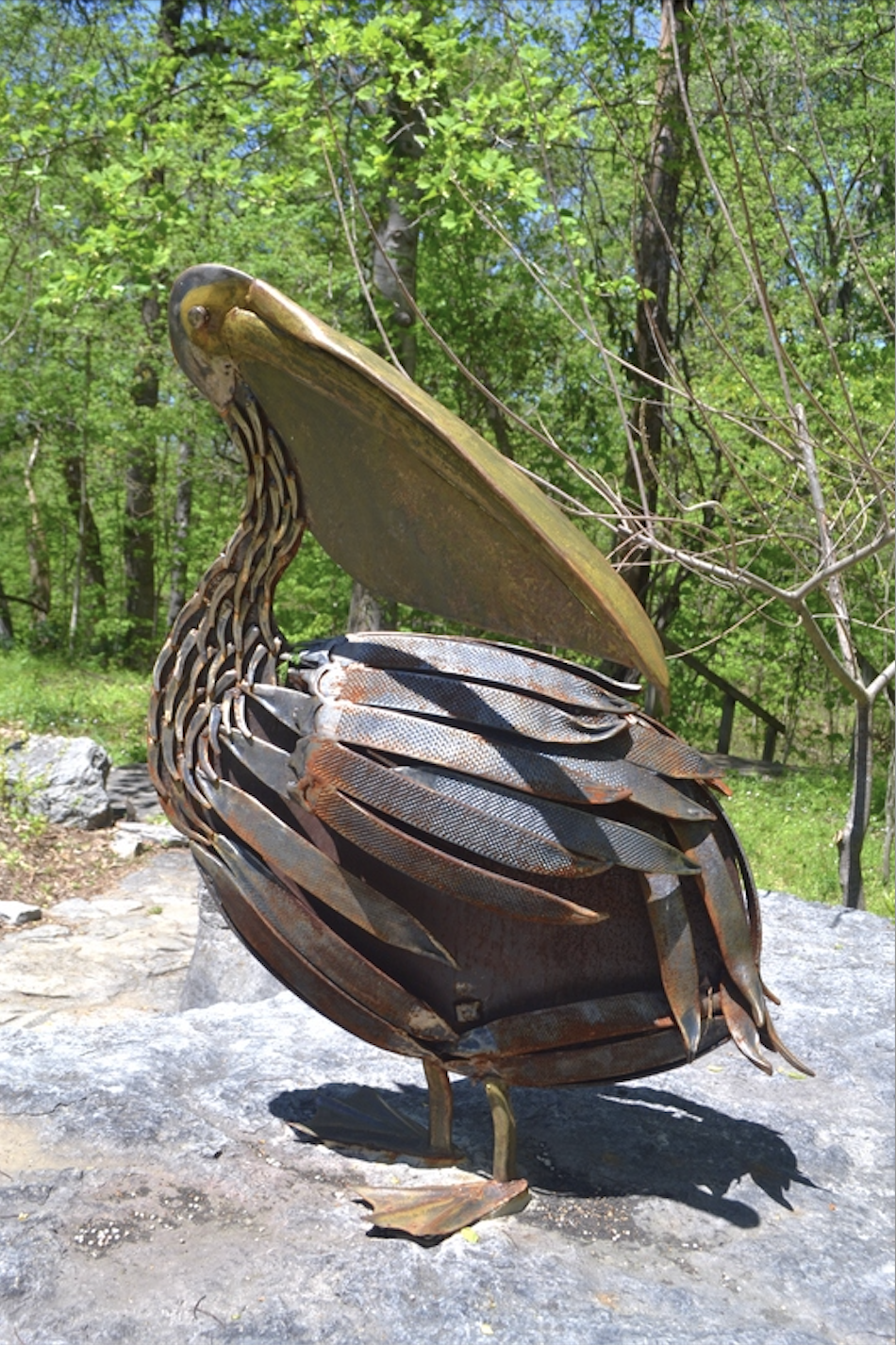
Enclosure: Remarks by Stanley Merritt (Dixon’s son) at dedication of the Pelican Statue, Cedars of Lebanon State Park, 4/28/2012
For the family, I want to thank everyone who has participated in creating and improving the Nature Center. Everything looks so good!
It is surprising to me how durable "The Pelican" is, now that we are dedicating a statue of it over 100 years after it was hatched. It was also surprising to my father how many times "The Pelican" came back to visit even 30 or 40 years later. How can that be?
Trying to understand that, one needs to consider how the world was then, and where in his career it happened. Then, in 1910, half the population lived on farms or in very small towns. There were no televisions, radios, or cell phones. There was no telephone service as we know it. There were few private automobiles, and fewer roads to drive on. So, in a word, almost everyone lived an isolated and compartmented life, compared to present times.
The daily or weekly newspaper was the light in this darkness, the window on the world, the means of communication, the source of entertainment, the means of mental stimulation. It was the one singular medium which performed the function of the surplus of media we know today.
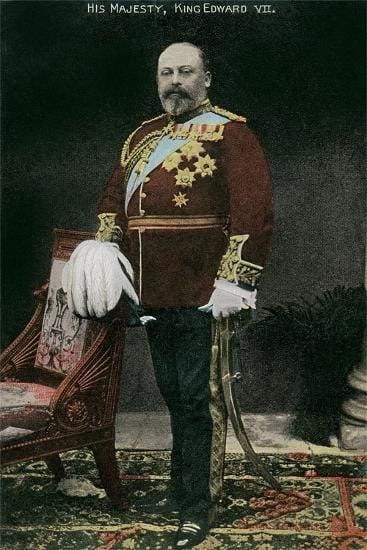
There is also the fact, not known to me until very recently, that in 1907-8 there was a Great Limerick Craze. Dozens of magazines and newspapers ran limerick contests in which four lines were provided and the contest was to write the fifth line. A London newspaper offered the unheard of amount of $1,000 for the best entry. Ten million people (a large fraction of the literate people in the British Isles) entered and the strain on the British Post Office was so great that Parliament tried to prosecute the newspaper under the Lottery Act. The case hung upon whether any real skill would be required to win and so the government of His Majesty (Edward VII) and his Loyal Opposition were engaged in serious debate about the level of skill required to write a limerick.
The date when "The Pelican" arrived, some time in 1910, coincides almost exactly with the funeral of the British monarch Edward VII, which is generally thought of as the turning point in world history at which the decline began leading to world war in 1914. The limerick craze thus probably occurred at the latest point in history when people could be so light-hearted as to participate in a limerick craze.
One can never predict what human nature will lead to, and in this case it led to the extreme popularity of the limerick. It was almost certainly unjustified, but just as certainly it was real.
Then there is the issue of when in his career "The Pelican" appeared.
Just out of school, in 1901, determined to become a newspaperman, he went to Marmaduke Morton, Managing Editor of the Nashville Banner and said, “Mr. Morton, I want to work on your newspaper.” Morton said “I have no budget for another reporter” to which the reply was, “ I said nothing about money, but I do want to work on your paper.” Thus began a career which would, in less than 20 years, lead him to become Managing Editor himself at the Nashville Tennessean.
After loaning him to the Owensboro Messenger for seven years, and at the height of the limerick craze, the Banner brought him back as Associate Editor and tasked him with writing a daily humor column. Humor in those days did not exclusively mean funny. It meant any kind of humor a person might be in (sad, happy, nostalgic, jocular, etc.) So began in 1907 the human interest column “Along the Bypaths” which lasted until he moved to the Tennessean in 1914 and was reborn as “Our Folks,” when he returned to the Lebanon Democrat in 1929.
It was in this combination of circumstances, where things like "The Pelican" were the tools of the trade, that it was written, not by grand design, but mostly to see how many synthetic words could be made to rhyme with “pelican.”
After six months of writing “Along the Bypaths” he felt that this kind of writing was his calling in life, and he never gave it up, writing occasional issues of “Our Folks” even at a very old age. "The Pelican" was thus a part, later shown to be an important part, of the humor column.
The humor column, by whatever name, dedicated almost personally to every one of his readers in their daily lives, was his life and was what I think he would want to be remembered for.
I would like to read for you just one small sample of this kind of writing:
Along the Bypaths, Nashville Banner, 1/26/1912
Signed by Dixon Merritt, Associate Editor
Did you ever hear an old “loose arm fiddler” play “Turkey in the Straw”? Well, they say fiddlers of that kind are getting pretty scarce in the country now, but not so many years ago there were plenty of them. There used to be one who wore a white beard and owned a black fiddle. His face was serene and his conscience was clear, and his rosin was always fresh and his bow abided in strength.
Now one night there was a dance away up at the head of the hollow. As the old man tuned his strings he viewed the throng as sedately as a judge from the bench. But his fingers were free and his fiddle was in tune, and when he launched into “Turkey in the Straw” with the loose arm movement he made everyone sit up and take notice. He played it for about three hours running, in all its incarnations and old fiddlers all over the country laying their ears to the ground to listen, knew that the god of music had business on his hands that night.
The fiddler carried that old tune back to the time of its first existence as “Jackson’s Morning Brush” – but what you may not know is that it was first played behind the cotton bales at the Battle of New Orleans in the War of 1812 where it stirred the patriotism of sturdy men under coonskin caps and sent the glint of eagle eyes along the barrels of those unerring rifles of the Tennessee and Kentucky backwoodsmen. And while the fiddler played, in the mind of the listener Old Glory floated out on the breeze and the feet of an invading foe were beating a retreat across the wide reach of an ocean, and the American volunteer was the finest soldier in the world.
And then the fiddler threw into the tremor of his strings the spirit of the times when the tune he played was known as “Natchez-under-the-hill” and white-columned mansions stood under sheltering trees in the midst of broad acres. And the lilt of a song from the cotton fields was lifted from the fields and floated over the hills and echoed back in mystic thrills of melody.
And then the tune was just “Turkey in the Straw,” and it was the sort of melody that “summoned the music-gods from the beginnings of mythology.”
Just an old “loose arm fiddler” playing an old “breakdown” tune – you may think that is really all there was to it.
That may be right. Its race is run. Its day is done.
But it fulfilled its mission wonderfully well.
D.L.M.
1/26/1912
In his fine letter to us, Mr. Robert Watkin also included this:
Partial List of Journalistic Assignments of Dixon L. Merritt, 7/9/1879 – 1/9/1972.
1901 – Hired as cub reporter by Nashville Banner
1901 – 1907 – Loaned to Owensboro Messenger, rose to City Editor
1907 – 1914 – Called back to Nashville Banner as Associate Editor and humor writer ("Along the Bypaths")
1914 – 1917 – Moved to Nashville Tennessean as Managing Editor
1917 – 1919 – Wartime government service, Director of Information, U.S. Dept. of Agriculture
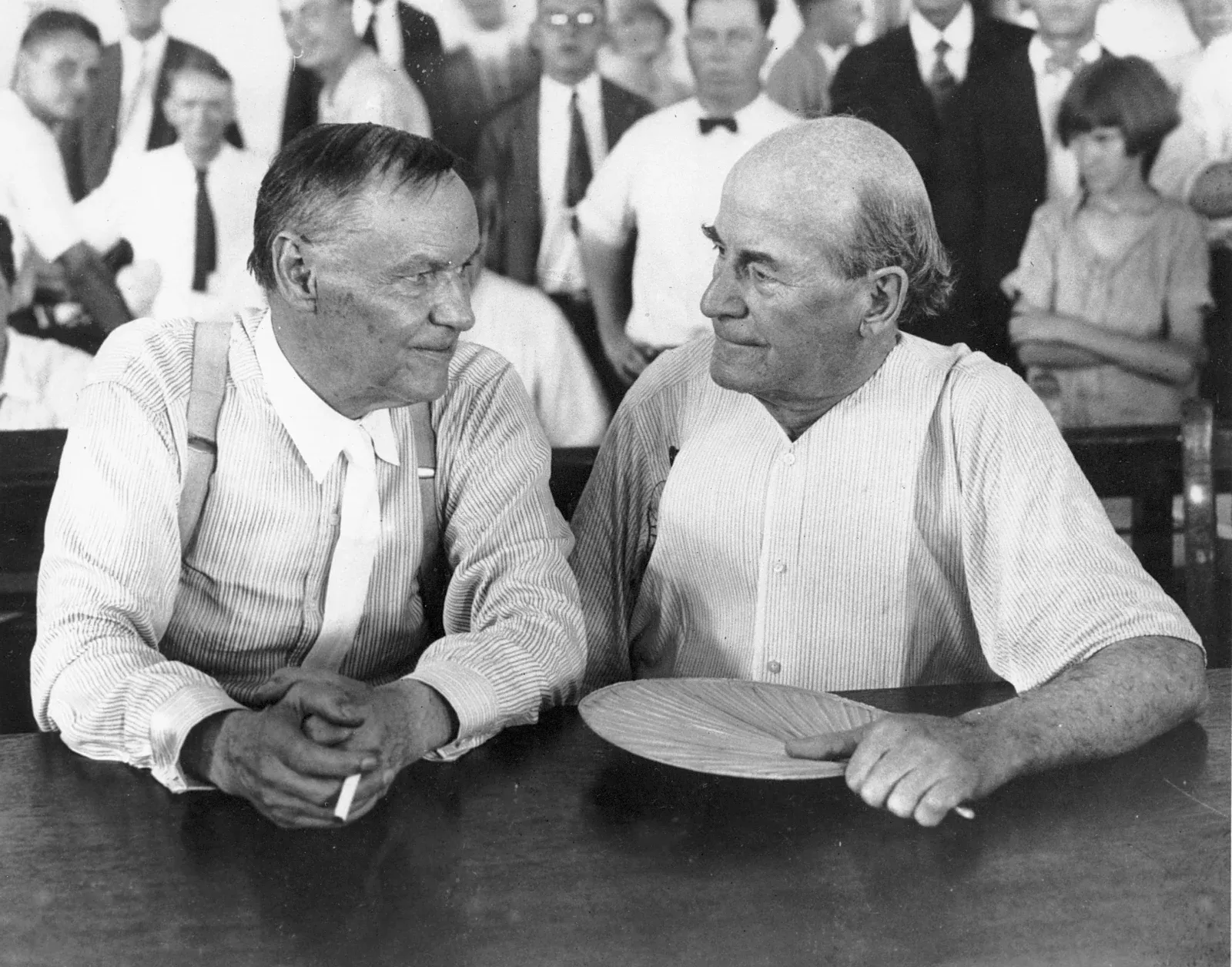
1919 – 1929 – Washington Correspondent, Outlook Magazine (weekly) Notable coverage: Scopes Trial (1925); Mississippi flood in 1927; Presidential campaign of 1928 (Republican Herbert Hoover, Democrat Alfred E. Smith)
1929 – 1939 – Lebanon Democrat – Editor, Reporter, and author of “Our Folks” weekly human interest article
1939 – 1946 – Wartime government service, Editor “Rural Electrification News” U.S. Dept. of Agriculture
1946 – 1959 – Farmer and contributor to “Our Folks”
1959 – 1960 – Editor and contributor “History of Wilson County”
1960 – 1972 – Farmer and contributor to “Our Folks”
Publications (partial):
1913 - History of Tennessee (with Will T. Hale)
1924 - History of Mason & Hanger Co. (builders of Chesapeake & Ohio Railroad, DuPont’s Old Hickory Powder Plant)
1925 - Biography of Adm. William Banks Caperton, USN, Commander, Pacific Fleet in WWI. Permission to publish denied by Navy Dept. (Security concerns.)
1939 - Biography of Andrew Jackson (unpublished)
Data assembled by Stanley Y. Merritt, 4/28/2012
So, our initial conclusion on D.L. Merritt stands: "By all accounts, Merritt seemed a good fellow."
Thanks for your wonderful letter, Mr. Robert Watkin!
By Christopher Jones


Member discussion