
Sports Editorial: FIFA's Soccer Rules Need Fixing
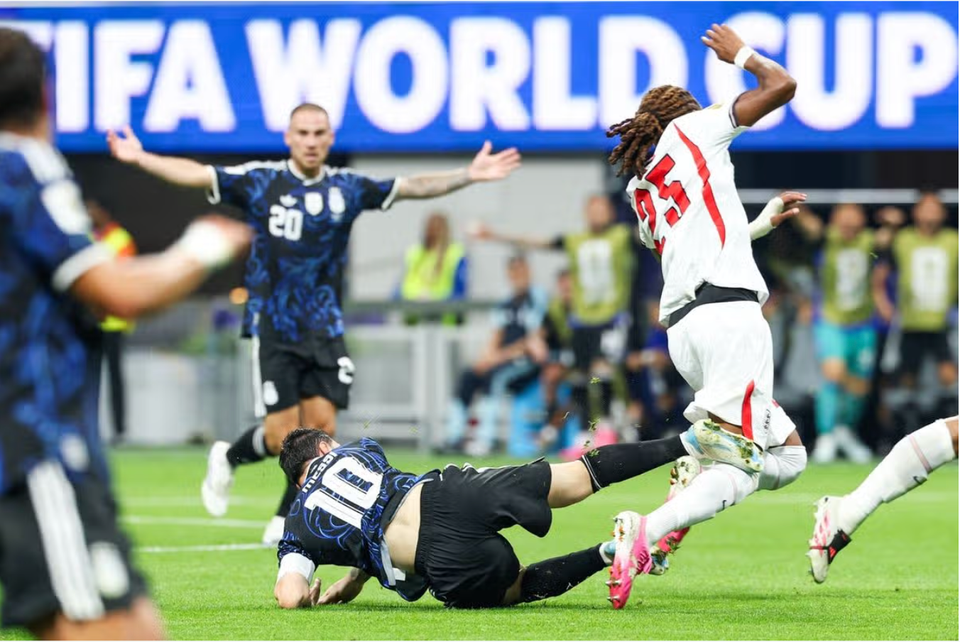
Perhaps it’s fair to say that for five weeks this summer, the “world was joyously united” around this year’s FIFA World Cup. After all, five billion viewers around the globe tuned in to the quadrennial soccer spectacular. Hosted this year by the United States, Canada, and Mexico, the tournament generated over $15 billion in revenue. And for the most part, the 48 nations competing this year – the most ever – brought joy to their fans back home and their newly-won supporters, rooting their favorite squads on, win or lose.
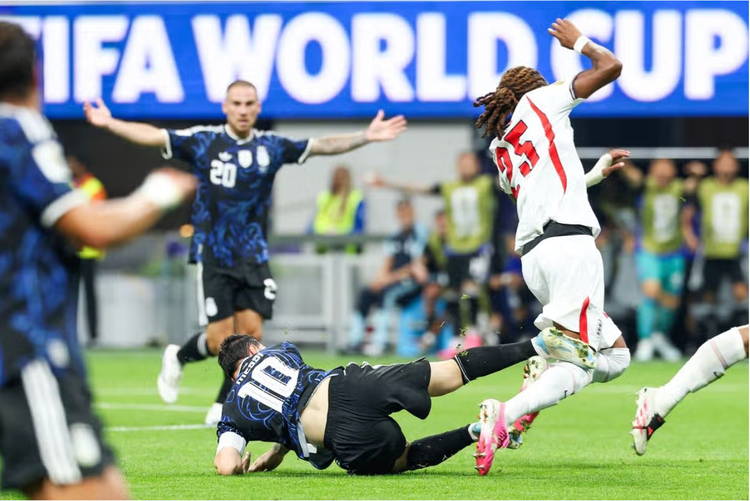
The July 19 final match pitting the national teams of Spain and Argentina, however, sadly ended in chaos, tussling, and brawling. Of course, many games finish with flares of temper given the passions of competitors desperately hoping to deliver victory for their home countries.
But it wasn’t just a surfeit of passions that led to all the chaos of this year’s final match. Glaring flaws in world soccer’s archaic rules contributed to mounting frustrations for fans and players alike, sadly magnifying the Beautiful Game’s many problems for all to see.
From an armchair viewpoint (I used to play soccer, but I'm no expert) here are some of world soccer’s most glaring rule flaws in need of fixing:
Why Only One Referee on the Field of Play?: If the NBA, with its 94 x 50-foot playing area, has three referees or umpires “on the court” during a game, why can’t soccer add at least one more field referee? It has about 72,000 more square-feet of playing surface – more than an entire NFL field. How can only a single field referee be expected to monitor the fast-moving play up close? Often important action takes place beyond their periphery. Sure, sideline referees or umpires are there to use flag signals for off-side calls or rough tackles, but they’re not meant to venture out onto the field for closer scrutiny.
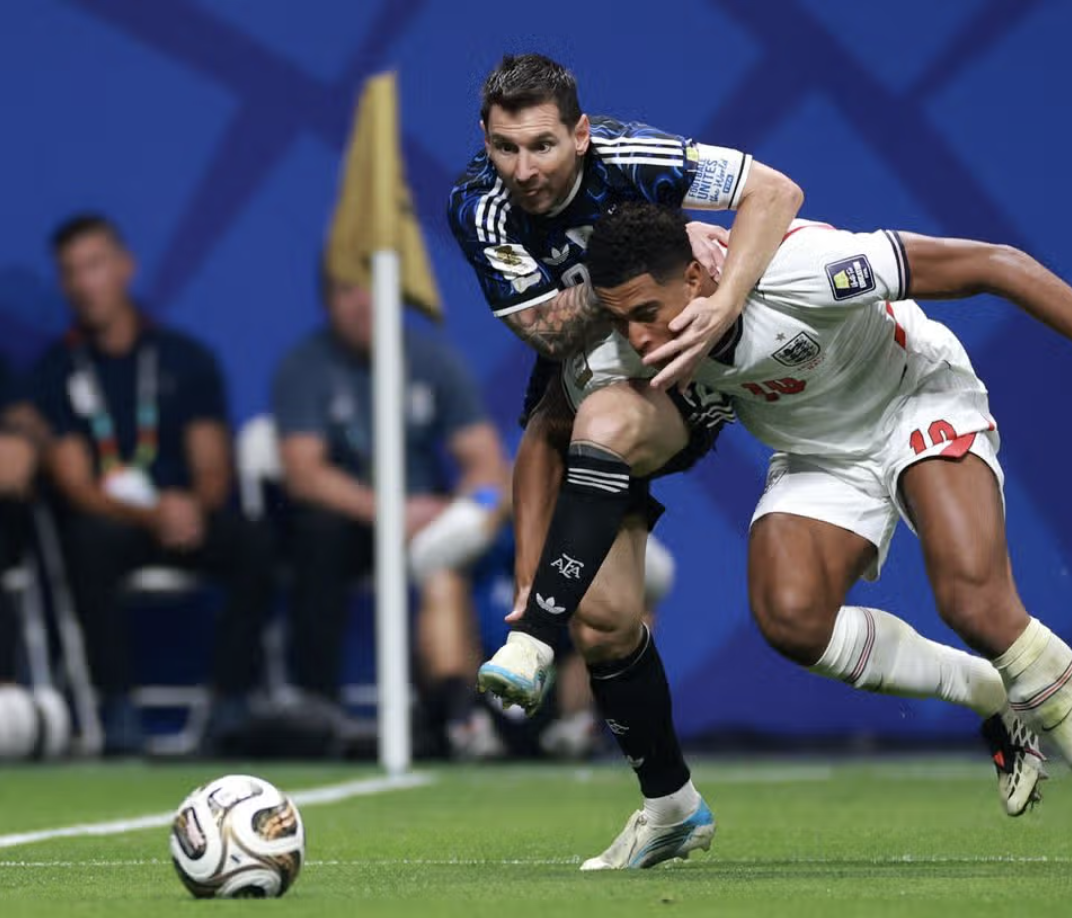
With much of the game’s close-in, aggressive play taking place away from the sidelines toward the mid-field, a lone referee can’t possibly scrutinize all the action. So is it any wonder that players constantly seek to sway the overburdened referee by grossly exaggerating collisions or boot-spikes against them? Or, wildly flailing for off-sides calls, or even “verbal” infractions committed?
World soccer has devolved into professional wrestling-style theater.
Often after a contentious call, angry, yelling players surround the referee who has no real recourse other than to issue yellow or red cards to one player at a time. So the harried referees are not protected from player intimidation or even crowd hysteria whipped up and manipulated by the controversy.
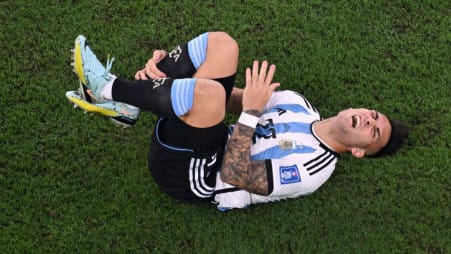
The Problem of ‘Flopping:’ Stemming from the above problem of only having one referee, every player is incentivized to “flop” or to take dives, i.e., to fake being aggressed upon. Despite the cowardliness of the maneuver, the rewards of flopping are perceived to far outweigh the risks. If, following a “collision,” the referee believes an infraction has occurred against the player who’s on his back hamming it up (i.e. rolling around screaming like a baby, banging his hand on the turf, and desperately wincing to elicit medical concern), then that player’s team stands a good chance of garnering a free kick from that spot, or even a penalty kick if the “infraction” has occurred inside the penalty area. The “offending aggressor” from the other side might also be issued a yellow or red card.
This is not to say, of course, that professional soccer players are never injured. Many suffer brutal wounds in the course of a match. But that’s why flopping is so despicable. Not only do the spectators lose all trust in the players’ howls of pain, but the anger and tensions in the stadium build as players seek reprisals with targeted aggression on the field. All of this was too sadly present in the final Spain versus Argentina match as Argentina had amassed 25 fouls while Spain was slapped with 21 by the final whistle. And then when the match was done players for Argentina meted out violent paybacks to particular players for Spain for all the world to see.

While world soccer did institute a rule back in the late 90s that overt flopping (termed “simulation”) can be yellow-carded, the infraction is rarely enforced. Why? Since players can only receive two yellow cards in a match before being red-carded and ejected (and further punished by having to miss the following match), referees hesitate to make such a momentous call given its severity. A flopping call is also considered “subjective,” so referees who issue yellow cards for the violation are often suspected or accused of favoring one side over the other.
The problem of flopping also has historic roots insofar as the practice can be used to whip up crowd frenzy and sway the officials. And it’s not unknown to history that referees in some parts of the world have suffered from hooligan reprisals following a match.
Who calls for video review? Much chaos often occurs on the field due to flaws surrounding video review rules. Video Assistant Referee (VAR) was instituted in 2018, but it’s not at all clear during a match who’s entitled to request a video review.
The rules clearly stipulate that: 1) VAR is conducted throughout the match by VAR officials on the sideline, 2) the on-field referee can request a video review at any time to make a judgment; and, 3) “players and coaches cannot request a review or challenge a call. Often, however, referees appear bullied by angry players histrionically “appealing” for a video review. And referees often appear to give in to the players’ pressure campaigns. Because, why not? If the referee stands by his initial judgment and is subsequently proven wrong, he’s humiliated. But, giving in to the pressure for review removes the possibility of having to own your own on-field judgment.
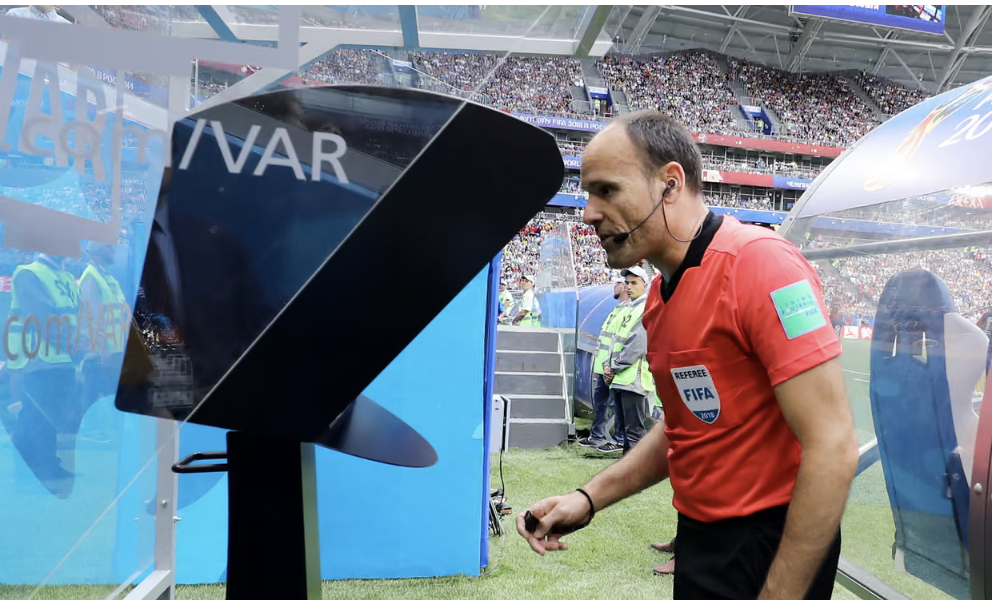
Why not simply institute better structure in the VAR rules similar to those in the NFL? In American pro football, coaches are “limited to two challenges per game, with a third granted if they get at least one correct.” Or, at the very least, allow only team captains on the field or team coaches to request video review – and institute real penalties for players who "appeal" improperly. Or, dare I say, remove VAR entirely from the game and return to human officiating.
Clarifying What Constitutes Excessive Contact: In this World Cup, it appeared as if the referees were allowing players to openly push each other more overtly than ever before. Near the net during corners, goal keepers and players simply used both hands to muscle and shove players aggressively out of the way, rather than using their lower bodies for aggressive positioning. Defenders also sought to slow down sprinting dribblers by jiu jitsu-like arm twists combined with shirt tugging.
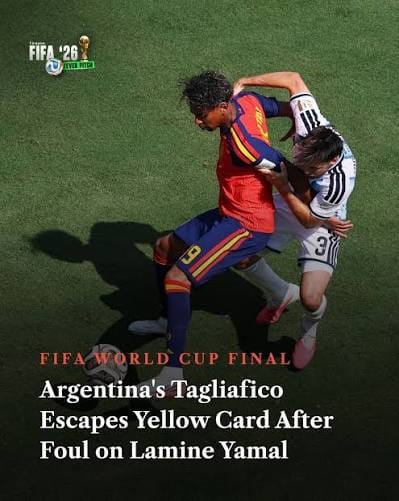
The rules problem here is that there’s simply too much grey area for referee judgments on whether a player’s lack of malicious “intent” mitigates against any flagrant, injury-inducing moves that player might have inflicted during an aggressive play. On the one hand, an aggressive slide tackle might be perfectly legal if the defender reaches the ball with his toes prior to contact with the offensive player, but, on the other, not legal if the play itself was simply too painful to watch. Or, a hands call might be made by one referee if the ball just slightly glances a player anywhere from the shoulders to the fingers during a play, while another referee might deem such a moment as simply a fleeting “incidental.”
Why is Time ‘Kept on the Field’?: In this age of modern time-keeping there’s no compelling reason for soccer not to have a game clock similar to the NBA’s, the NFL’s, or the NHL's. Should problems arise with the game clock or from time-keeping officials, the referee should be given the authority to make corrections as they have been even in the those sports leagues, where every second of play is critical to both teams.
As soccer is played now, however, there’s a frustrating arbitrariness surrounding how much “stoppage time” is allotted to extend a half (the purpose of which is to somehow add back into the match a rounded-to-the-minute approximation of how much official delayed time has occurred while the clock was ticking during the match). Why not just stop the clock and then start it again? How hard is that?
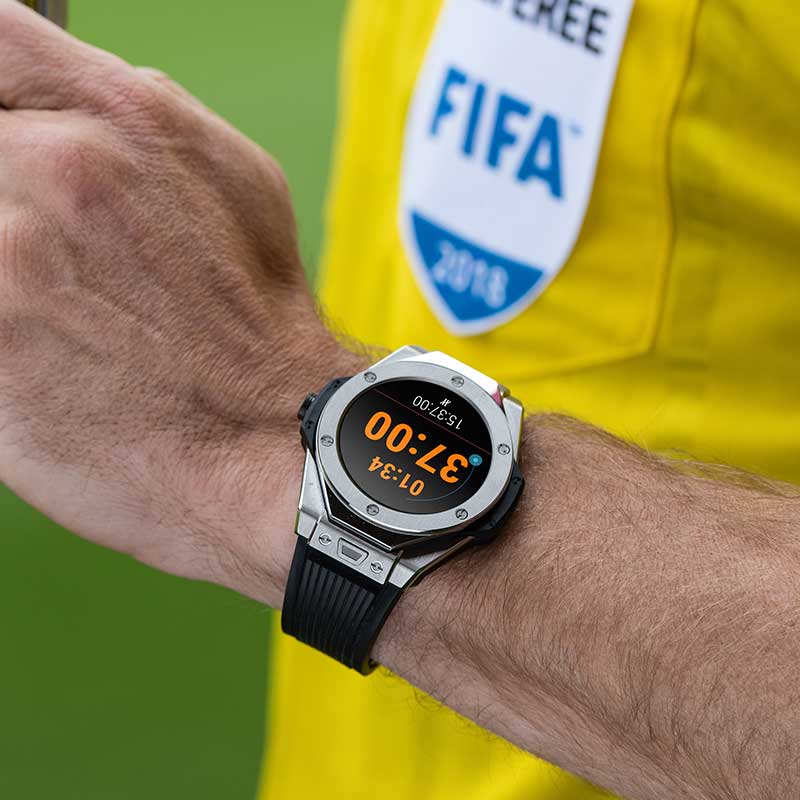
Plus, it’s clear to those watching that the referee tends to add less stoppage time to the end of a match if one team is far ahead of the other. Sometimes, they hardly bother adding much extra time at all, even though the spectators have watched many minutes of delayed time during the match (see above re players hamming up their “injuries” and thereby delaying the game).
Even worse, the referee clearly makes a subjective judgment on when to actually blow the whistle to end the match. Everyone seems to know somehow that the referee will give the team that’s fallen behind “one final chance to score” before blowing his whistle. And, of course, they would never dare whistle the game over if a player’s breaking away and about to score (even though the NBA, the NFL, and the NHL have no qualms about ending the game at a precise time.)
Perhaps the aforementioned possibility of hooliganism or crowd riots have also shaped the idea that the referee “keeps the time on the field.” This protects the referee from angry mobs who take issue with the referee's judgment about when to call the match.
Why Aren’t Team Foul Limits Imposed by Penalty?: There comes a point in many matches where everyone can see that players are purposely roughing up their opponents. But, why not? Since referees only have three penalties to issue for rough play. They can: 1) issue a stern warning – usually signaled pathetically by the “calm down” hand gesture and a face-to-face “discussion;” 2) reward the other team a free kick; 3) issue a yellow card; or, 4) issue a red card. That’s it.
But this incentivizes teams who are desperate to win to distribute the penalties among themselves. So, each player has one yellow card “to give” in a match. And that leads to a lot of intentionally rough play.
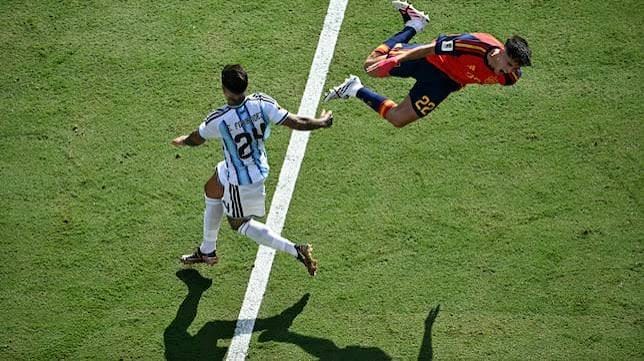
Why not institute a team penalty where a certain number of infractions leads to a significant team penalty during the game. In the NBA, a team can be penalized after 5 fouls are committed in a quarter. The other side is awarded 2 foul shots in a “one-and-one” scenario (i.e., if a selected player makes his first free throw, he earns a second attempt, but if he misses the first, the ball is live for a rebound.)
Or, why not expand the penalty options referees can deliver to disincentivize excessively rough play. Perhaps adapt a penalty similar to NHL hockey where an offending player has to go to a "penalty box" for a set amount of time, giving the other team a "power play" opportunity.
When referees have to issue “stern warnings,” you know something's wrong with the rules. You don’t see NFL, NBA, or NHL referees making such weak pleas. They just make the call.
The Absurdity of Ending a Tied Game with Penalty Kicks: Nothing is less satisfying in soccer than a game “decided” by penalty kicks. Suddenly the outcome of the match rests on another sort of game (or head game) entirely. Sure, it settles the match once and for all, and, yeah, the players are fatigued. And, of course, there’s drama in the anxious one-on-one matchups between the shooter and the goal keeper. But, imagine if the NBA “decided” a game by having players go to the free throw line. How dumb would that be? In major league baseball, extra innings could conceivable go on forever. But, at least, the MLB has shown some rule creativity by putting a player on second base at the start of extra innings, in order to "speed up the game” toward a finish.
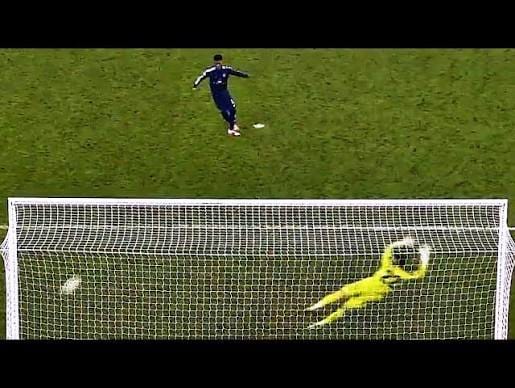
So, if a soccer match is still tied after both extended periods, why not test out some alternative ways to end the match that are based on the actual team-versus-team game people love so much. How about:
- Put both teams back on the field, but remove the goal keepers, while allowing players to cover the goal but just not use their hands. Then the first team to go up by 3 goals wins.
- Or, remove three players from each side and continue the match in added stoppage times. If it’s still a tie after an extended period, then remove another player and the next goal wins.
- Or, move the goals closer together by 40 yards and remove three players from each side. If it’s still a tie after two more extended times, then remove two more players and the next goal wins.
Or, try something else – whatever. The point is, professional soccer should not be so wedded to the past that it can't creatively explore needed fixes. Why not experiment a bit?
By Christopher Jones

Member discussion