
Who Writes These Ridiculous Artwork Wall Texts?
I love all kinds of artwork. From ancient to contemporary, realist to conceptual, maximal to minimal, traditional to radical – any form of human expression that moves me, I appreciate and respect.
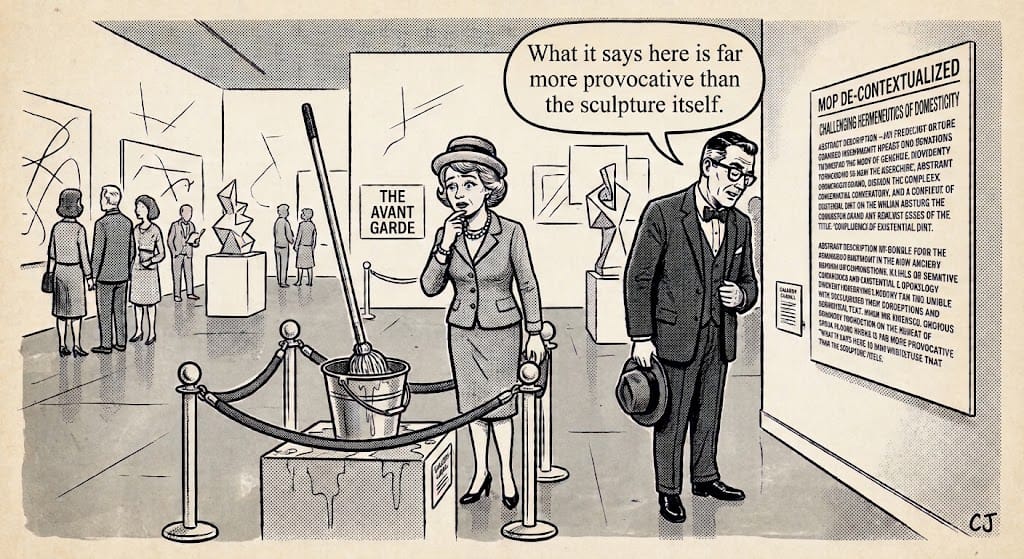
Recently, however, I’ve noticed a certain ridiculousness in the over-the-top wall texts accompanying formally displayed artworks. Who even writes these things?
Often, I appreciate and admire the installation or art piece itself – even if it discomforts me – but end up laughing at the contrived, vague, and aggrandizing gobbledygook gallery and museum curators use to showcase what’s on display.
I’ve even taken to collecting laughable blurb examples.
Turns out, I’m not the only one who thinks these wall texts have gotten silly. Former board director of the Tate Gallery, Will Gompertz, wrote in What Are You Looking At? The Surprising, Shocking, and Sometimes Strange Story of 150 Years of Modern Art: “There are times when those of us involved in the arts talk and write pretentious nonsense. It’s a fact of life: rock stars trash hotels, sportsmen and women get injured, arts folk talk bollocks. Among the main culprits are museum curators, who have a tendency to write slightly pompous, wholly incomprehensible passages in exhibition guides and on gallery text panels. At best their talk of “inchoate juxtapositions” and “pedagogical praxis” baffles visitors: at worst it humiliates and confuses and puts people off art for life. Not good.”
In our recent museum and gallery visits around the country, I’ve noticed a prevalence of wall text characteristics. The abstruse, highly theoretical phrasing to which Gompertz refers often appears to be written as a desperate attempt to academically legitimize the artwork’s display within a formal setting.
What traits do we see? The curator must treat the artist as some sort of magician – guided by ancestral knowledge – who can supernaturally transport the viewer to other cosmic dimensions via metaphor or by challenging pre-conceived notions in a revolutionary way. Any blob or found object can be treated as a symbol of the entire Earth, galaxy, or universe – or basically anything for that matter (who’s to say?) It's also incredibly clever whenever an artist "obscures" anything.
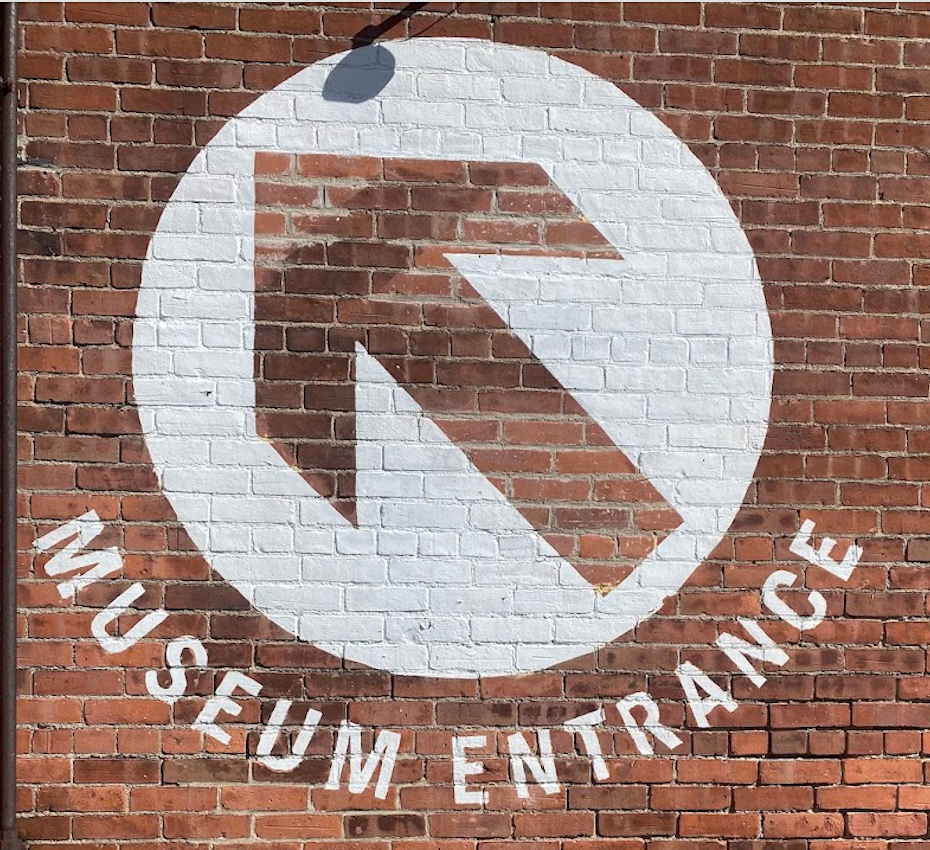
Pieces near museum doorways, or even those suggesting a doorway, must be described as some kind of sacred “portal.” Installations are to be lauded for their placement within the confines of the museum’s surroundings (i.e., inside, outside, along the wall, near the entryway, or even near a water fountain). They’re also to be heralded as some sort of transformative “poetic experience” for the viewer.
Artworks with multidisciplinary, multimedia, and multi-sensory elements are especially prized for their own sake as are broad collaboration and communal values. The artist’s “practice” always suggests genius and must be referred to as “intentional” – or, at least, intentionally chaotic or subconsciously driven. Their selected materials – no matter how easily found along the roadway – are always symbolically suggestive and reflective of the artist’s masterful vision. The artists must also be having “lived experiences” at all times, as opposed to just “experiences.”
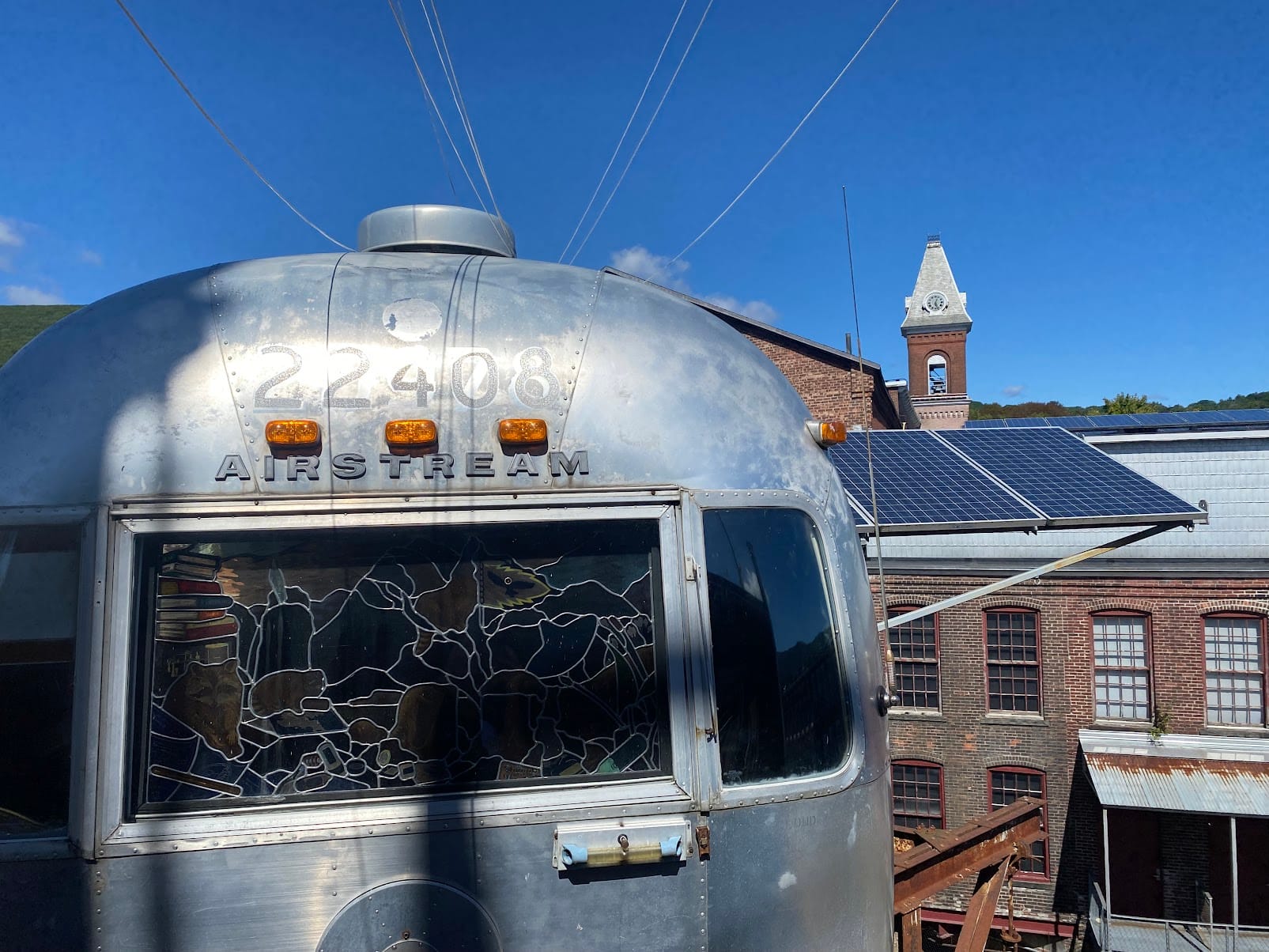
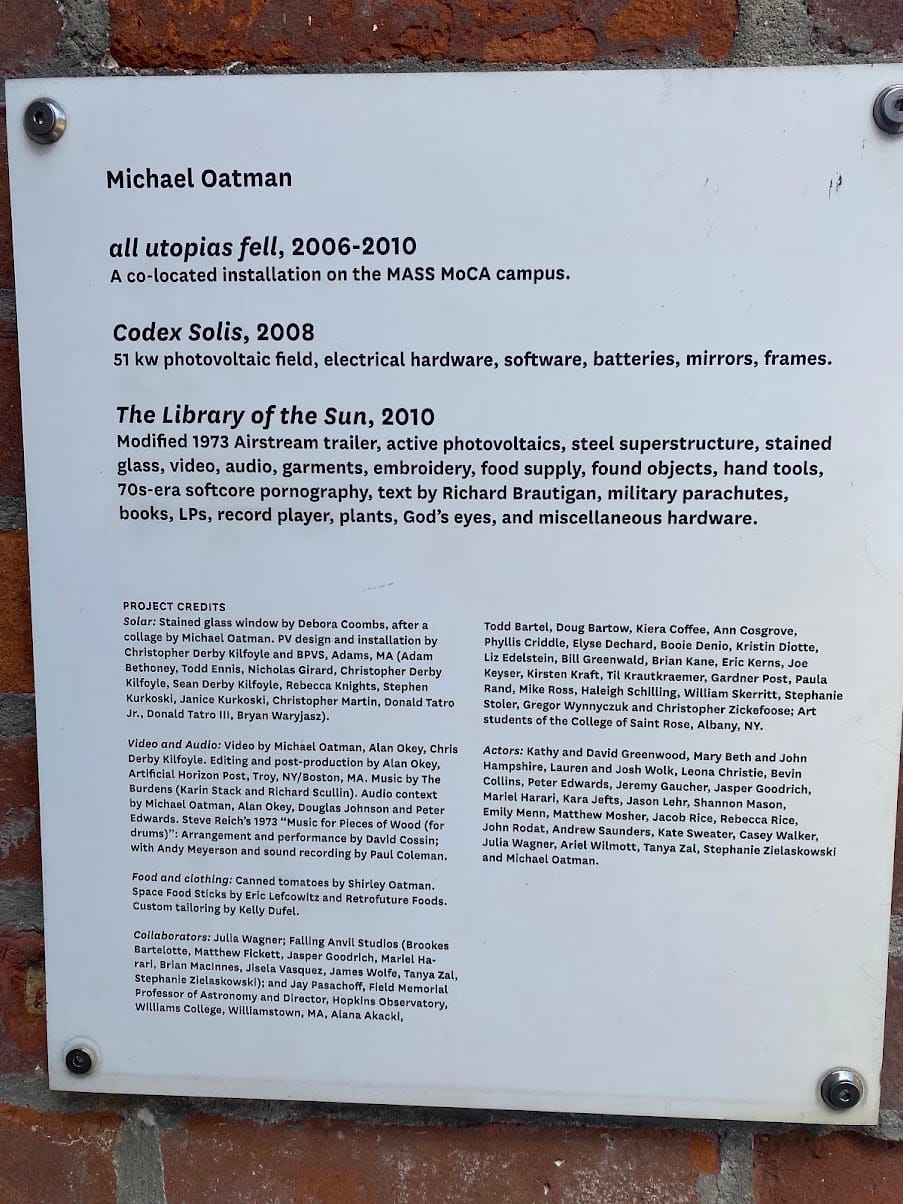
One of my favorite recent art experiences occurred on our visit a few months ago to the Massachusetts Museum of Contemporary Art (MASS MoCA). No elaborate explanation of this particular work was needed. So, the museum simply tagged the piece with the following “tombstone label”:
Michael Oatman’s The Library of the Sun, 2010
Modified 1973 Airstream trailer, active photovoltaics, steel superstructure, stained glass, video, audio, garments, embroidery, food supply, found objects, hand tools, 70’s era softcore pornography, text by Richard Brautighan, military parachutes, books, LPs, record player, plants, God’s eyes, and miscellaneous hardware.
What more needs to be said?
And it was a thought-provoking visit inside that Airstream!
From This Writer's Personal Collection: Some Egregious Examples
From my own wall text collection, I now present a curated trove of samples (removing artists’ identities, since our focus is on the curators not the artists).
Be it known that: This endeavor foregrounds/centers the writer's practice of interrogating “dialectic” language-artifacts from real-world gallery and museum wall texts photographically culled from a variety of formal curatorial settings to problematize and de-contextualize the exploitative hermeneutics surrounding narrative tensions embedded within the dominant “privileged curator versus the uninformed viewer” paradigm. Readers are encouraged to engage with intention to transport themselves through this dream world portal towards more authentic templates of humor, ways of seeing/being, and poetic universality.
Conceptually Foregrounded Ephemerality & Euphonius Rhythm
….The central axis of [Exhibition] is set by the poet and multidisciplinary artist [Name] and her sixty-year art practice of precarios or “arte precario.” These are assemblages of discarded and fragmented materials conceptually foregrounded ephemerality, instability, and evanescence, articulating a broader dialogue on collectivity, new forms of being, and connectedness between human and nonhuman life. Much of her practice, including precarios, is rooted in [Area] epistemology, histories, and knowledge of reciprocal love and wisdom in relation to the environment, [Artist’s] work serves as the overarching conceptual framework for the three interrelated projects, with the curators and artists working collectively in euphonious rhythm to create a score or spatial poem from dissonant sounds and sights…. These works act as evocations of reciprocity between nature, the cosmos, and humans, as rituals of resilience against colonialism, and as actions that initiate future creativity and new ways of collective being.
Portals Channeled and Time Folding Upon Itself
…The symbolic gravesite is filled with sand and memory jugs that channel portals between our world and the afterlife. [Artist’s] * (pronounced as “asterisk,” informally known as the “Nesting House”) re-stages the artist’s most recent large-scale installation of a life-sized kitchen that unfolds into a series of miniaturized spaces as a dreamlike exploration of nested realities about time, perception, memory, and intergenerational knowledge. This installation draws viewers into contemplating themes of connection across distance, the folding of time upon itself, and how meaning is both revealed and obscured through references to memory and routine.
In Case You Can’t Read Poetry
As visitors walk through the galleries, they are encouraged to receive and understand [Exhibit] as an actual poem, a score and composition of sights, sounds, and feelings conveyed through art. For those hesitant or apprehensive about how to comprehend this project, or poetry at large, consider the following excerpt by the American poet and educator Tracy K. Smith, from her book Fear Less: Poetry in Perilous Times, as a guide to accessing the power of poetry:
Poems exist in language, but
Their intention is to travel beyond
The system of words and logic
Into systems of sound, sensation,
memory, imagination, emotion,
knowledge, and ultimately into
Insight. If you hold this view in mind –
That poems use words but are
not about words… – then you
can feel confident that whoever you
are and whatever you care about,
you are already perfectly equipped
to experience and even to claim
a relationship to the art form.
The Pulitzer Prize-winning poet demystifies the art of poetry by guiding and inviting readers to understand and, more importantly, feel how poetry cultivates human connection, resilience, and hope. It is with this intention that visitors are invited into Spatial Poems, a communal exhibition formed through three concurrent paths of poetic and artistic enunciation.
Woven Metaphors for the Cosmos & Future Ways of Being 'Not Yet Here'
For much of [Artist’s] multidisciplinary, sixty-year career, her work has been positioned in terms of ritual, revolution, and reciprocity, among other concepts. Her practice channels [a people’s] epistemology, histories, and knowledge of reciprocal love and wisdom in relation to the environment, with nature as a key component and collaborator for the artist. She visualizes acts of reciprocity among nature, humans, and the divine through conceptual modes of sculpture-making, painting poetry, film, and performance. [Artist’s] acts of reciprocity extend beyond currency art influences and spark creativity that leads to future ways of being not yet here. This exhibition presents a selection of the artist’s precarios (small assemblages made from discarded and fragmented materials), quipu sculptures (large-scale installations composed of unspun wool based on the ancient Andean knotted-string communication devices known as quipus), recent oil paintings based on drawings from 1978 that she recreated from memory, and limited photo documentation, video works, and select photographs that record the earliest making of her precarios and quipus. As a whole, [Exhibition] combines [Artist’s] precarios, a symbol of life’s precarity and fragility, her quipu installations as woven metaphors for the cosmos and resilience, and her acts of poetry as a reminder of the power of collective rituals, sacred offerings, articulations, and evocations of futurity. All of these foreground transformation and honor the intimate connection between humans, nature, and the cosmos.
A Transformative Revolution of Subjectivities
The title of this exhibition, union of three, is a reminder that a collection of elements is the sum of all elements in the collection. In this presentation of [Artist’s] work her precarios kipus sculptures and film-poetry acknowledge the interconnectedness of her works as living, breathing, entities unified by her belief system. It is also a reference to [Artist’s] practice of intentionality within her work. During the installation and preparation for this exhibition, the museum team at large was asked to recognize the inherent intentionality, care, and reverence required to engage with these artworks. Above all, the cosmos and concept of healing are at the core for all who engage with these works from beginning to end. It is with this understanding that viewers are invited to consider these intentions as they walk among the works on view.
…These specific works highlight her six decades of study, care, and activation of indigenous knowledge and ceremony to mobilize communal reciprocity among humans, nature, and the cosmos needed for a transformative revolution of subjectivities, especially of the current society and our relation to it.
Historicized Forms of Conceptualism & The Intersection of Non-Western Epistemologies
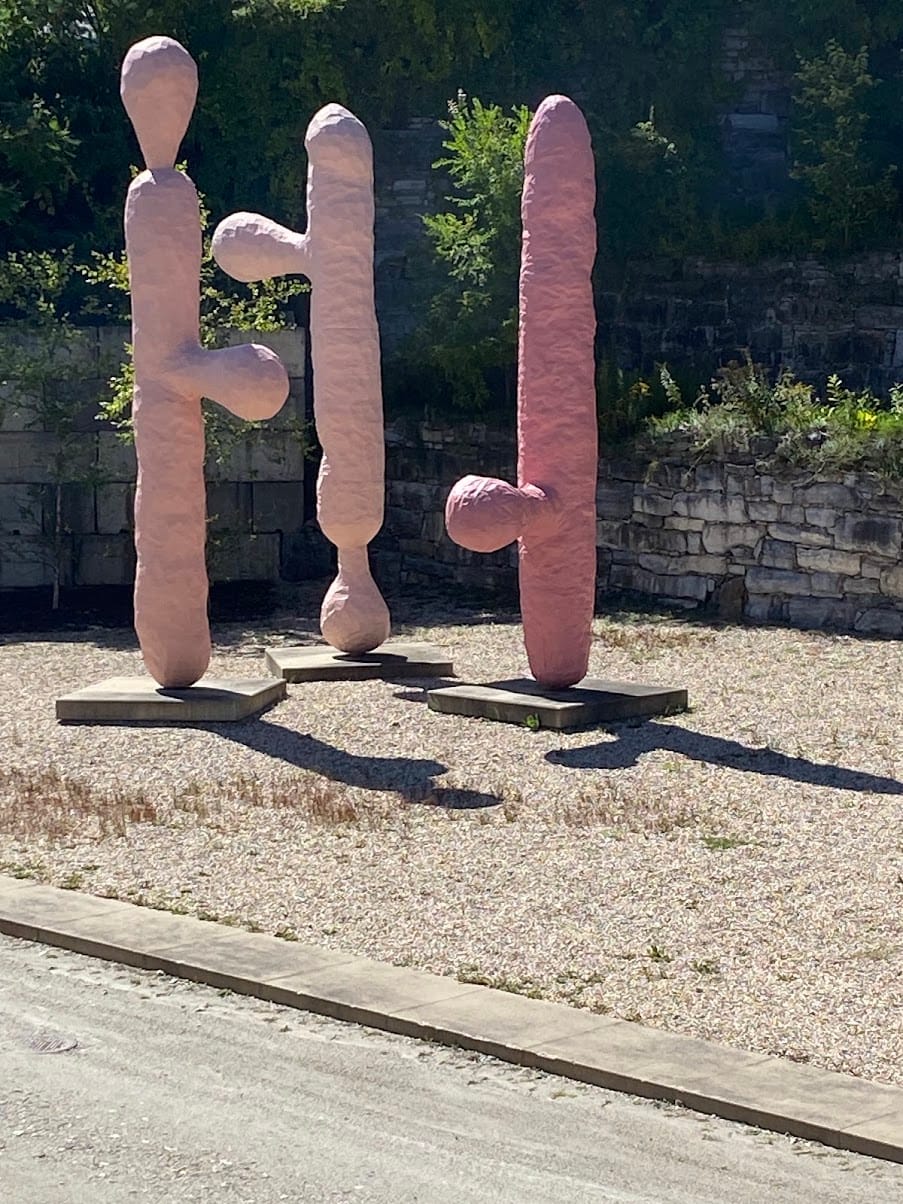
….across her material and compositional investigations, [Artist] enacts both personal and historicized forms of conceptualism. These modes stand at the intersection of non-western epistemologies and bodily topographies.... she both honors and mines her dual-diasporic identities, with subtle cultural nods couched among larger contextual narratives, imbuing her art with an intimate sense of prior knowledge. As a conceptual artist – one who works with ceramics, metal, textile, sound, and photography – she commits her deep interest in materiality to an exploration of memory, internal archives, and shared knowledge systems…. Among the vast archival practices of [people in a place] are some that employ scarification, mnemonic devices, and infrastructural design.
Celebrating the Artist’s Sleep Deprivation
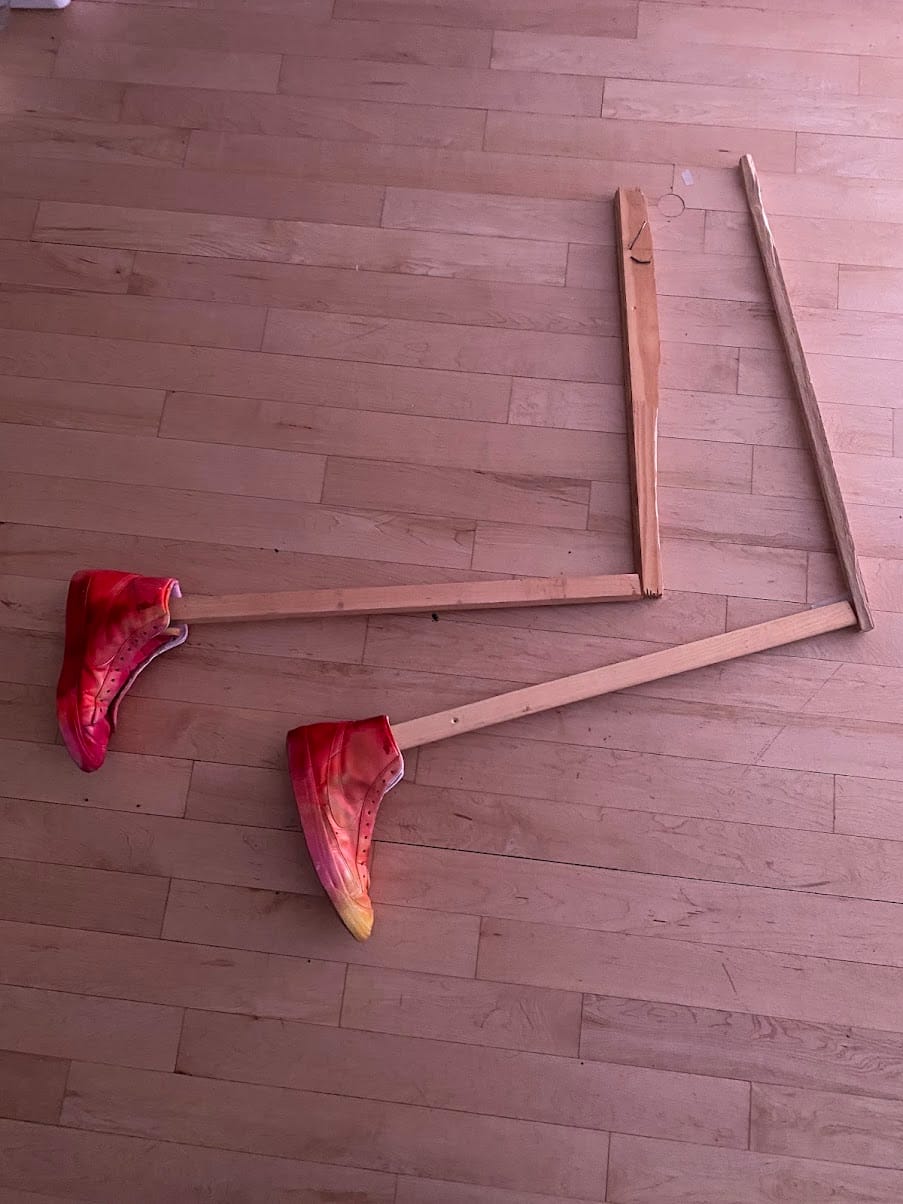
Process. [The Artist] begins each show with the site itself, studying details meant to disappear and using his sculptures to make them visible again. He considers not only the gallery but the entirety of the museum and its surroundings, the routines of everyday life that pass through and around it. He treats his materials the same way, as specific things with patterns of use. The humble objects he works with – clothing, dishware, discarded tech, paper, cellophane – come into the work in their texture, weight, color, and purpose. His editing of these objects goes in several directions. Either he removes the parts of an object that make it too easily identifiable, or alters it to accentuate qualities he wants you to notice, and – when the recognizable aspects, like a logo, themselves serve as the meaning – keeps that in too. Much of this happens in a sleep-deprived state of mind during late nights in the studio and installation, when reality relaxes and fact and fiction blur. It is then when associations between objects and spaces become more liquid and flexible to [Artist]. He often holds on to materials for years until he finds their right places, describing a successful sculptural maneuver as finding “the other halves of objects.” The final Arrangements have the logic of a very good joke or a very bad dream. They all become part of what he calls “the poem.”
Phone Box as Guardian Angel or Angel of Death?
…On the other glass door [Artist] adhered a sculpture made from iPhone boxes. He has been working with Apple packaging – the cut cardboard, the engineered shell, the apparatus that delivers the almost living thing, a phone, cradled in extraordinary care. The packaging is a measure of misdirected tenderness: its makers are preoccupied with what's inside, not who it's for. In the work, circular holes in a box suggest a face – which appears to be winking, or to have a black eye – with a white adhesive bandage across the forehead. More boxes taped to its sides extend like wings, giving the form the shape of a cross. The sculpture stares with the flat look of a child's robot drawing, or the thousand-yard gaze of a war veteran. The phone box might be both Guardian Angel and Angel of Death.
[Artist] treats the car wash both as a found object and paradigm of American vernacular architecture, a fixture of the service economy, usually unremarked precisely because it is everywhere…. [Artist] has placed his small canvases on top of the car washes and in stacks behind them. The canvases are identical, generic supports from the craft store, but the painting technique is layered and exact: full of gesture, symbol, collage, airbrush, built up and peeled back.
The scale for the rest of the show is referenced but also confounded, because being in the room at once feels like standing inside a single device and inside the data center that powers it all. Cables candy stripe red and blue loop across the floor like an exposed nervous system; they could just as easily read as a DNA coil unwound. Red and green LEDs flash like a broken traffic light….
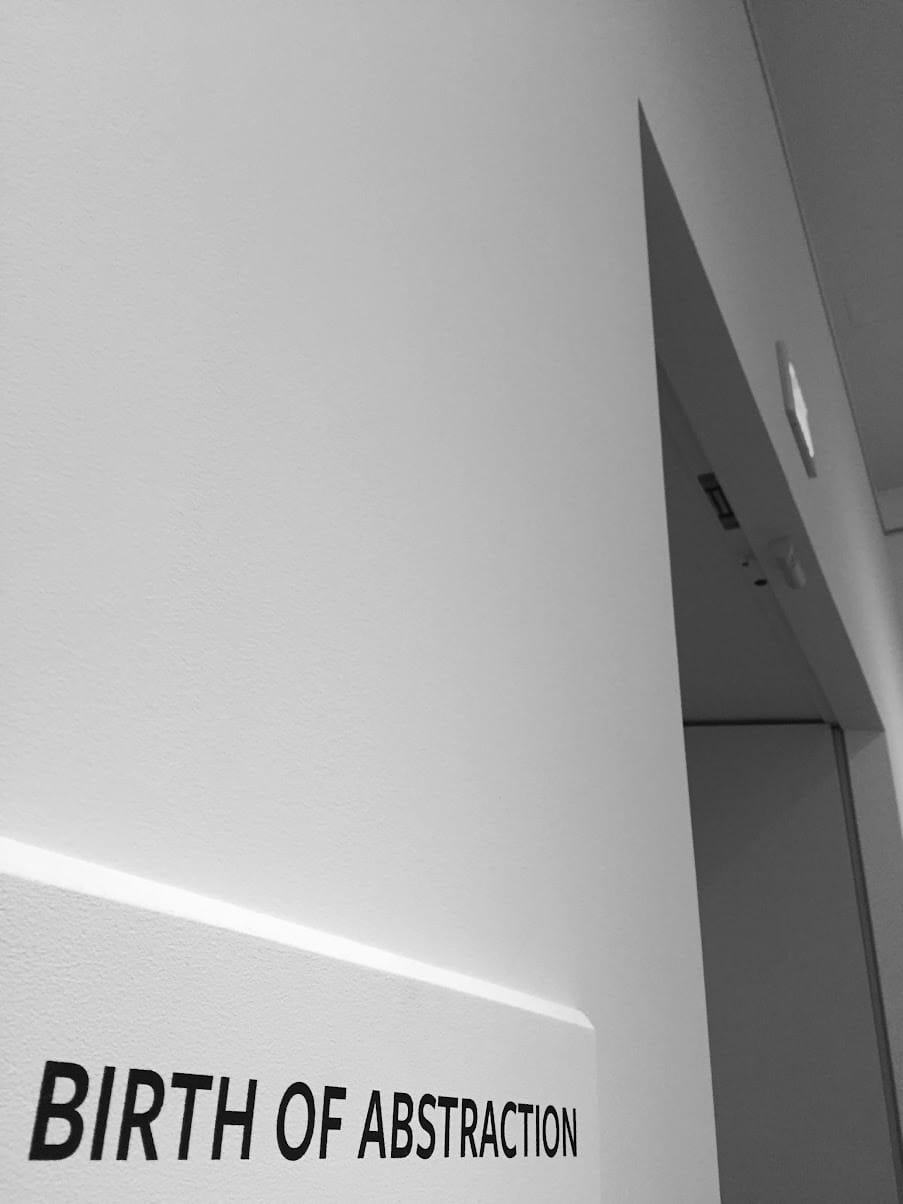
Interventions Surface Gallery’s Latent Strangeness; Car Wash Charged with Meaning
[Artist] spent a year studying the gallery for his installation. His interventions surface the space’s latent strangeness, emphasizing its layout and the fixtures usually meant to disappear. He has unplugged the ceiling lamps, swapping standard lighting for a diffuse blue glow. Emanating from a single sculpture, the light riffs on a phone screen and the [Artist’s] works on view elsewhere in the museum.
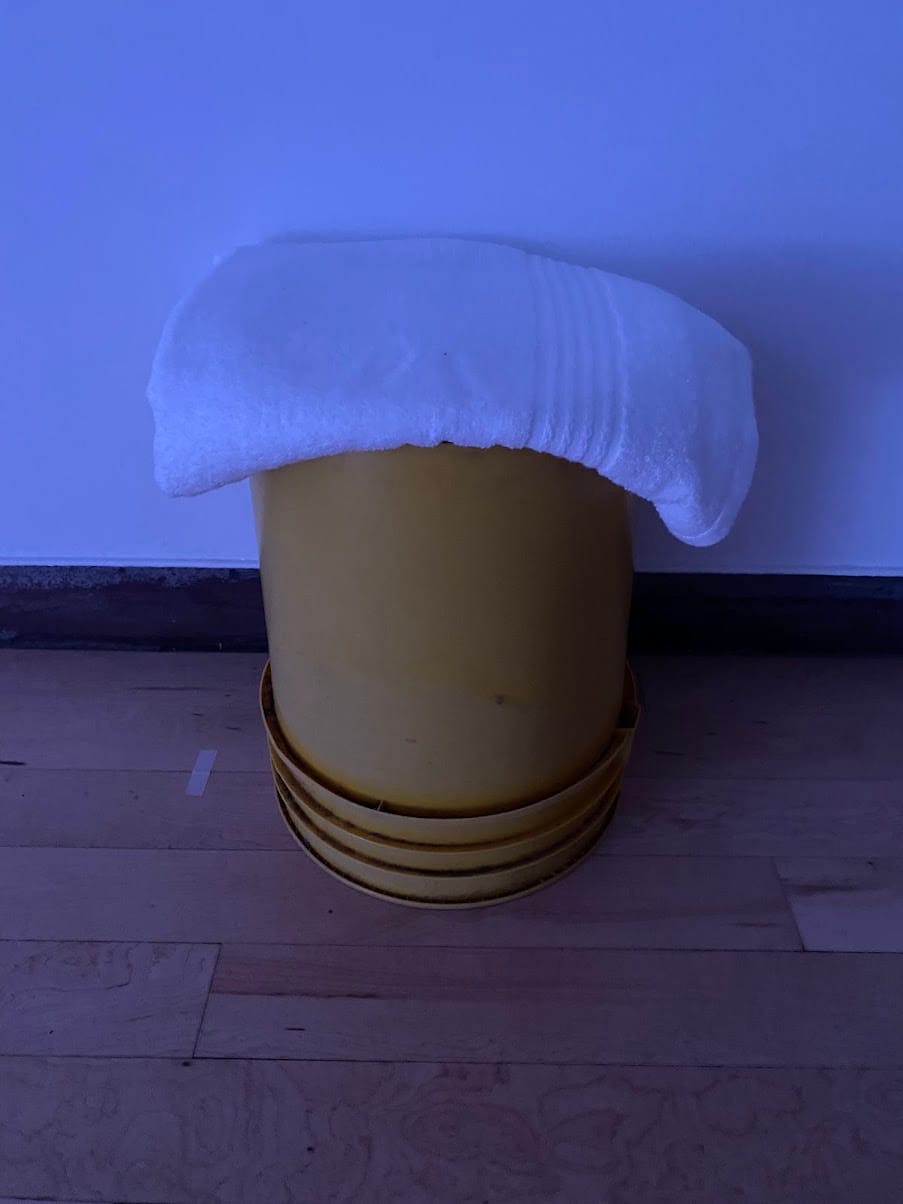
[Artist] works with materials that hold and transform their contents, much like the gallery and museum are containers for people and artwork. He arranged wash basins, glass bowls, and product packaging into a tableau spanning one of the room’s long side walls. In the center of this scene sits a pair of papier-mache sculptures that bring the outside in, referencing the Best Way car wash located next to the museum. The roofs of the miniature buildings support stacks of [Artist’s] paintings, which are obscured by a white adhesive paper that also covers one of the newspaper sculptures. Opposite it, an overturned bucket has the best view of the carefully placed objects and the many postures and dynamics that unfold within and across them. Like many of the humble things [Artist] is drawn to, a car wash is both functional and charged with meaning, witness to the untidiness of everyday life, along with the desires, dreams, and fears – and the makings – of its users.
The Planet Held Within a Child’s Hand
In front of the monitor, [Artist] has set a large cardboard box nested with stacks of phone packaging and powered-down tablets whose screens he has whited-out with tape. [Artist] replaced the iconic smile-arrow logo on the box with a swoosh-shaped rip. In the far corner, unlit, are bits of moss and lichen arranged across a board on the floor like a mini earthwork. Beside it sits a speckled ceramic bowl [artist’s] daughter made, painted in blues, browns, greens, and whites – the colors of Earth from space. The vignette is tender: the nature from just outside brought into the air conditioned museum, the planet held in a child's hand. Against the dead screens and the cabling, the arrangement turns foreboding. The same work of scale and perspective the car washes set in motion has reached the planet. The Earth has been emptied of its contents, like [Artist’s] boxes, and shrunk to the size of a cereal bowl. The technology, indifferent to us, has swallowed up the room.
Maintaining Oneself in Opacity; Holding on to the Capaciousness
….What protects the whole person from being compressed into symbol, biography, or commodity is exactly a commitment to the makings rather than the made. To maintain oneself in opacity, to allow identity to be unfixed or incomplete, as these objects do, is a challenge and a sacrifice. The same is true for artists like [Artist] who resist transparency when an artist refuses to package their practice neatly, or deviates from the role the art world writ large assigns to them. This can be uncomfortable for the institutions that depend on artists fitting into a pre-assigned identity. What [Artist] leaves us with is a question about how we organize ourselves, our work, and the world, and how these containments never quite hold. What seeps out is what [Artist] takes up as his subject, placing his viewers in the messiness of trying to hold on to one's capaciousness in a landscape that so often rewards clean boundaries – a landscape we now navigate through screens, feeds, and the powerful infrastructures that compress our beings and dictate how we see ourselves and others. The hope, perhaps, is that we leave the dimness of the installation, step back into the museum's bright halls, or out into the sunlight, more capable of recognizing the spaces where we and others are being made to make sense too quickly. The attention [Artist] has asked us to have in the gallery invariably slips out into how we see the world outside, encouraging us to value that which won't quite fit.
Reflecting Vernacular Epistemologies and Centering a Foundational Distinction
[Artist] examines land use, militarized occupation, and ranching culture through adobe as architectural material, craft practice, and archive. [Exhibit] explores how land-based practices and militarized spatial regimes coexist within the same terrain…. This historical rupture anchors the project’s central inquiry into how land becomes simultaneously a site of dwelling, ranching, U.S. military surveillance and ballistic experimentation.
[Artist] traces the lived experience of a landscape governed by overlapping jurisdictions. These stories reflect vernacular epistemologies in which knowledge of the land is carried through lived experience, oral narrative, embodied labor, and environmental memory over generations.
The installation centers a foundational distinction. Ranchers experience land directly through touch, weather, maintenance, and intergenerational craft. In contrast, the U.S. military engages the same terrain indirectly through aerial mapping, surveillance grids, and detonation coordinates, transforming lived land into state managed territory.
Adobe is central to this divide. As the primary vernacular building materials of [Area], adobe and stone have long defined ranch architecture across the region….
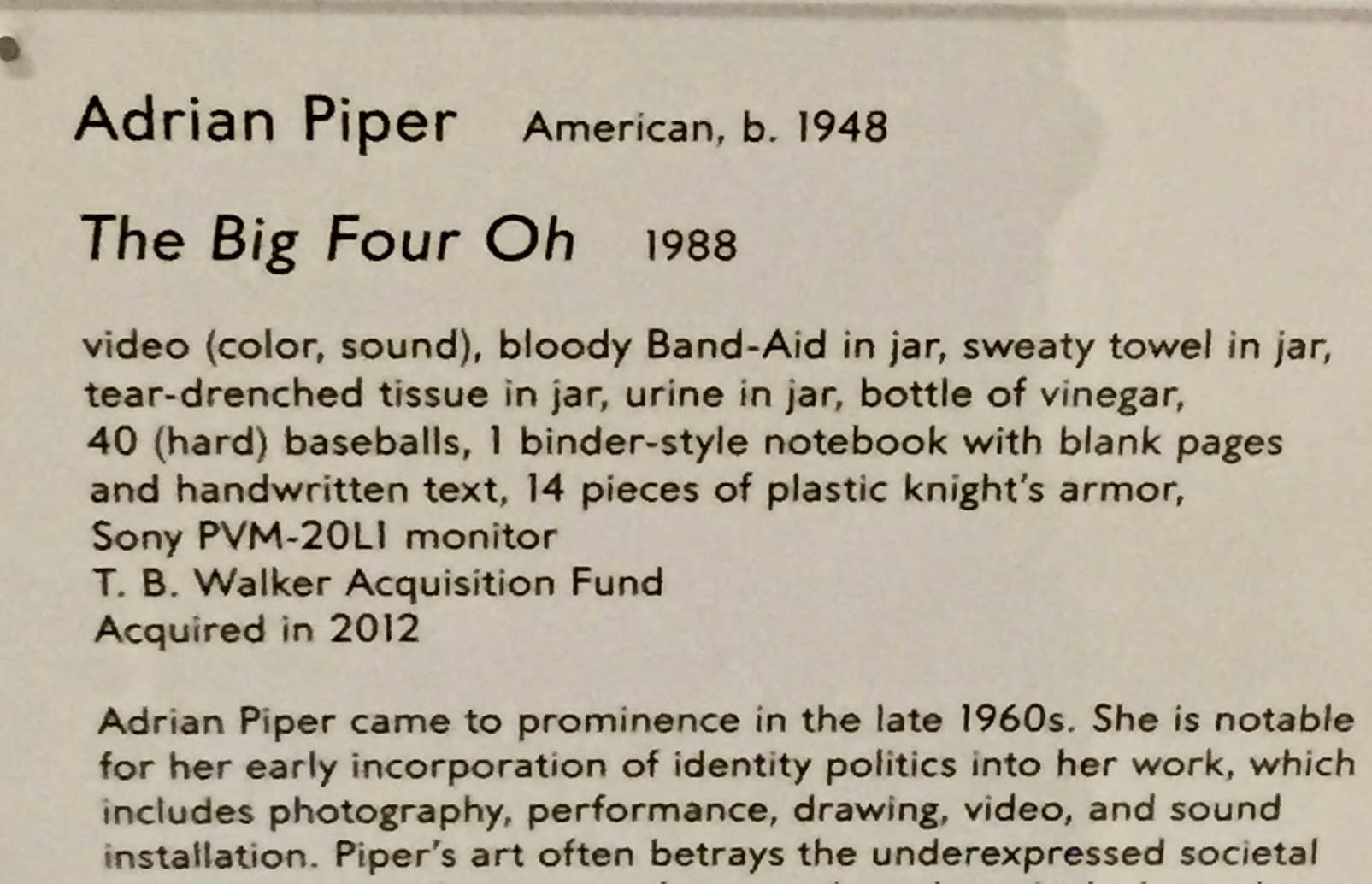
Custom Robotic Extruder Creates Mystical Portal and Material Negotiation of Belonging
[Artist] presents [Exhibit], a site-specific adobe installation that transforms [Museum’s] entrance into a sculptural threshold. The structure was formed using a custom robotic extruder that lays coils of 3D-printed adobe in rippling layers, recalling both the rhythm of traditional hand-laid birds and the geological patterns of erosion and sediment….
Positioned between the museum and the community it inhabits, [Artwork] reframes the act of entry. Visitors pass not just through a doorway, but through a material negotiation of belonging – crossing from the living adobe culture of the region into an institution that has not always reflected it. The threshold becomes a site of recognition and reorientation: slowing movement, inviting touch, and marking the passage between worlds….
[Artwork] stands at the border of disciplines, histories, and publics, asking what becomes possible when institutions learn to listen….
Holding Presence & Exploring Region’s Ufological Lore
For [Artist], adobe is a material that listens: absorbing sound, holding presence and carrying lived experience. In [Installation], [Artist], transforms the gallery into a quiet field of transmissions. Radios embedded in adobe forms whisper fragments of daily life – birdcalls, wind, laughter, and voices of loved ones – grounding the work in intimacy and place. Sculptural elements appear to hum with nostalgic presence, while one structure turns skyward, echoing the scientific listening stations scattered across [Area’s] deserts and the region’s long-standing ufological lore. Here, however, attention is turned inward. Rather than searching for distant contact, [Artist] tunes adobe to the resonances already around us.
For [Artist], adobe is not only shelter but signal. It receives, reflects, and carries – holding the warmth of kitchens, the static between songs, the quiet exchanges that pass between people and land. Rather than monumentalizing adobe, he treats it as a shrewd medium where memory circulates and care lingers.
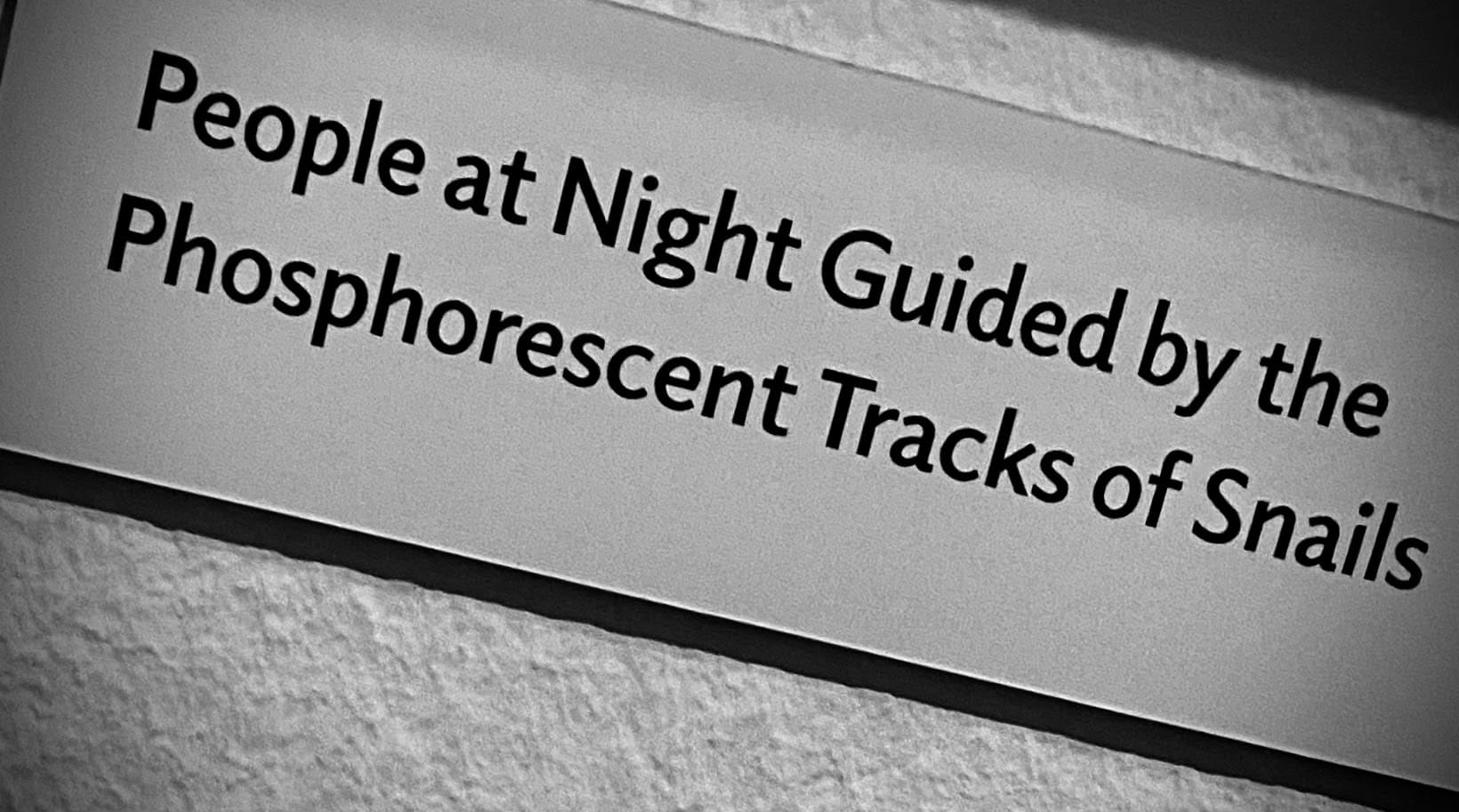
Less as a Conduit and More a Proposition
[Artist] presents an adobe tunnel within a speculative future. In this imagined world, tunnel-boring machines (TBMs) have become coveted technologies used to expand underground cities for the privileged elite, as life on the surface grows increasingly uninhabitable. Underground space is organized hierarchically, with working-class communities forced into the most precarious strata to build and maintain these systems.
[Artist’s] installation proposes an alternative. Constructed from thousands of hand-formed adobe bricks made from local soil, the tunnel is inspired by a Nubian vault – a form introduced to [Area] by Egyptian architect [Name]... and entered through the replica of a TBM turned inward – its cutting face no longer advancing into the earth, but opening onto a space of reflection. Rather than serving extraction, the tunnel imagines a clandestine network built through collective labor, connecting communities above ground and sustaining more egalitarian futures.
Within the tunnel, adobe surfaces hold traces of deep time and human history. Historical images, earthen tiles and embedded forms reference mining, archaeology, migration, and cosmic events, collapsing past, present, and speculative futures into a single passage. The structure functions less as a conduit and more as a proposition: a space where movement is slowed, labor is made visible, and architecture becomes a site of collective survival.
On Proto-feminism and Exploring Intersectionality
….Her interdisciplinary work draws from history, biography, Haudenosaunee proto-feminism, and Indigenous teachings. In this work, she explores the intersection of history, community, and storytelling. Through collaborative actions, she instigates multigenerational and cross-disciplinary conversations that aim to create a lens and conversation for understanding connectedness to place, one another, and the universe.
Materials Whispering Fragility
Despite the scale suggested by its title, [Title] (Portuguese for mammoth:) is an intimate excavation of memory. [Artist] layers lace, fabric, and thread over wood, stitching them into a form that evokes both fossil and relic – an object seemingly unearthed from time. While the work’s title hints at ancestral scale, its materials whisper fragility.
Part of [Artist’s] series [Name of series], or “roots,” [Artwork] embodies the artist’s exploration of origins. Often repurposed from domestic or discarded sources, the fabrics carry traces of past lives. A repurposed plush backpack in the form of a frog suggests a connection to a long-ago childhood….
Themes of Ephemerality and Refusal of Precarious Conditions
[Artist’s] 60-year practice as a poet and multi-disciplinary artist serves as the central conceptual framework for the three distinct but interrelated projects which share themes of ephemerality, memory, and cycles of time. Visitors are encouraged to experience the exhibition as a poem and composition of sights, sounds, and feelings.
…. The works focus on the reciprocal relationship between nature, the cosmos, and humans; rituals of resilience against colonialism; and actions that initiate new forms of collectivity. [Artwork] includes work from the artist’s recent series in clay which engages themes of care, veneration…. along with a new installation, video, and sonic composition.... [Artwork] presents a life-sized kitchen that expands into five successively smaller versions in a dreamlike exploration of perception, time, and intergenerational knowledge.
As a whole, the exhibition and its curatorial model form a dialogue on care and the organization of new ways of being that act as a refusal to the precarious conditions faced by artists and art workers, and ultimately the world at large.
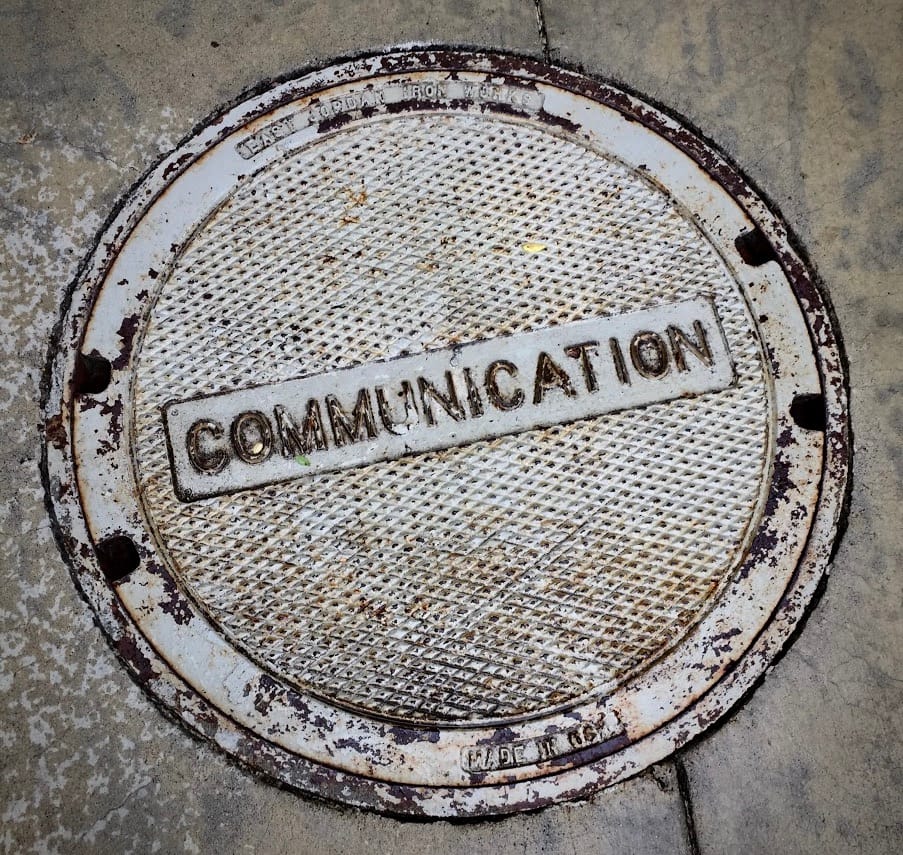
Merging Non-Western Epistemologies
[Artist], based in Chicago, Il. both honors and mines her dual identities … which she subtly references within larger cultural narratives. Working across mediums, the artist commits her deep interest in materiality and sonic experimentation to an exploration of diaspora memory and a spiritually inherited knowledge. Her practice explores what she calls the “Black haptic sub/conscious” or “sensorial memory that is harbored in and on the body.”
Merging non-Western epistemologies and bodily topographies, [Artist] explores the scar as both a visual language of fugitivity – and escape from racialized oppression – and an imprint of resistance….
The Sonic Language of Resonance
[Exhibit], a commission by [Artist], explores the migration of cultural traditions, histories, narratives, and practices through a material language of pre-Hispanic fresco traditions and the sonic language of resonance. By transforming soil, stone, pigment, movement, and sound, [Artist’s] project aims to question and engage with history, materiality, and site, and explores the cultural, historical and colonial histories present in her techni-quest and materials. At the center of the exhibition is a tilted platform of handmade fresco tiles, materials with both Indigenous and colonial influences, which operates as a sonic device when walked across by museum visitors. The void made by the floor’s incline acts as a resonance space, amplifying the sounds of movement through contact microphones, and creating evidence of transitory and migratory pathways. Through a commission which operates simultaneously as painting, sculpture, site-specific installation, and sonic instrument, [Artist’s] cross-disciplinary project demonstrates how migration – physical, cultural or otherwise – is constantly taking place and reshaping society and ourselves.
[Note: After I walked over this piece in my socks, as instructed, my wife was scolded by the humorless docent not to touch the exhibit with her finger.]
Passing Through Another Reflective Portal
….this exhibition references to traditional materials and crafts as well as contemporary politics, literature, and music. [Artist’s] work fiercely clings to hope and love while unabashedly celebrating the power of difference.
[Artist’s] installation takes root in two historic moments. In 1988, [Artist] did a residency at the Anthony d’Offay Gallery in London in which he posed in over-the-top outfits to an audience who could watch him but whom he could not see. This revealing/concealing of the queer body challenged societal norms of beauty, identity, and otherness.
…. The space also holds fused glass stages above which hang oversized garments informed by regalia worn in faith-based ceremonies. A patterned mirror wall bisects the gallery becoming a reflective portal moving the audience between spaces. Once through the portal, visitors encounter additional stages and garments, which will be activated by Indigenous artists and performers from across North America. Counter to the dark club-like atmosphere in the front space, this area has light streaming through windows covered in transparent vinyl like a stained-glass sunrise.
….[Artist] eschews labels and embraces the malleability, which coalesces into an immersive environment....
A Global Cacophany of Lamentations Activated by Professional Mourners
In the postindustrial context of [Museum’s] former factory campus, the form and function of [Installation] conjure both the futuristic and the ancient. As [Artist] notes, “The concrete, modular installation has a monumental appearance but was inspired by the subterranean form of the well. I was initially drawn to their sonic properties, and by inverting their structure – literally flipping it upright – I was able to reference their invisible scale.” Within the 11 structures that make up [Installation], designed in collaboration with [Name] of the architecture firm OMA, sounds reverberate in a deep well, ending not in water but in sky.
[Installations] were originally activated by professional mourners in [Artist’s] solo exhibition [Exhibition name] (Park Avenue Armory, NY, 2016). In a global cacophony of lamentations, [Installation] considered the anatomy of grief and the intricate systems that we use to manage the contingencies of fate and the certainty of death.
In the wake of the COVID-19 pandemic, [Artist] has reimagined the installation specifically for [Museum]. [Installation] is an offering to the community surrounding [Museum]: a space for reflection, impromptu performance and play, or stargazing. Visitors are encouraged to explore the space physically, vocally, and musically, overlaying the sculpture’s sonic memory of loss with the spontaneity of life.
To experience the trace of the mourners’ lamentations in [Installation] – as performed at Artangel, Islington, London in April 2018 – visitors may scan the code here and listen on their own devices….
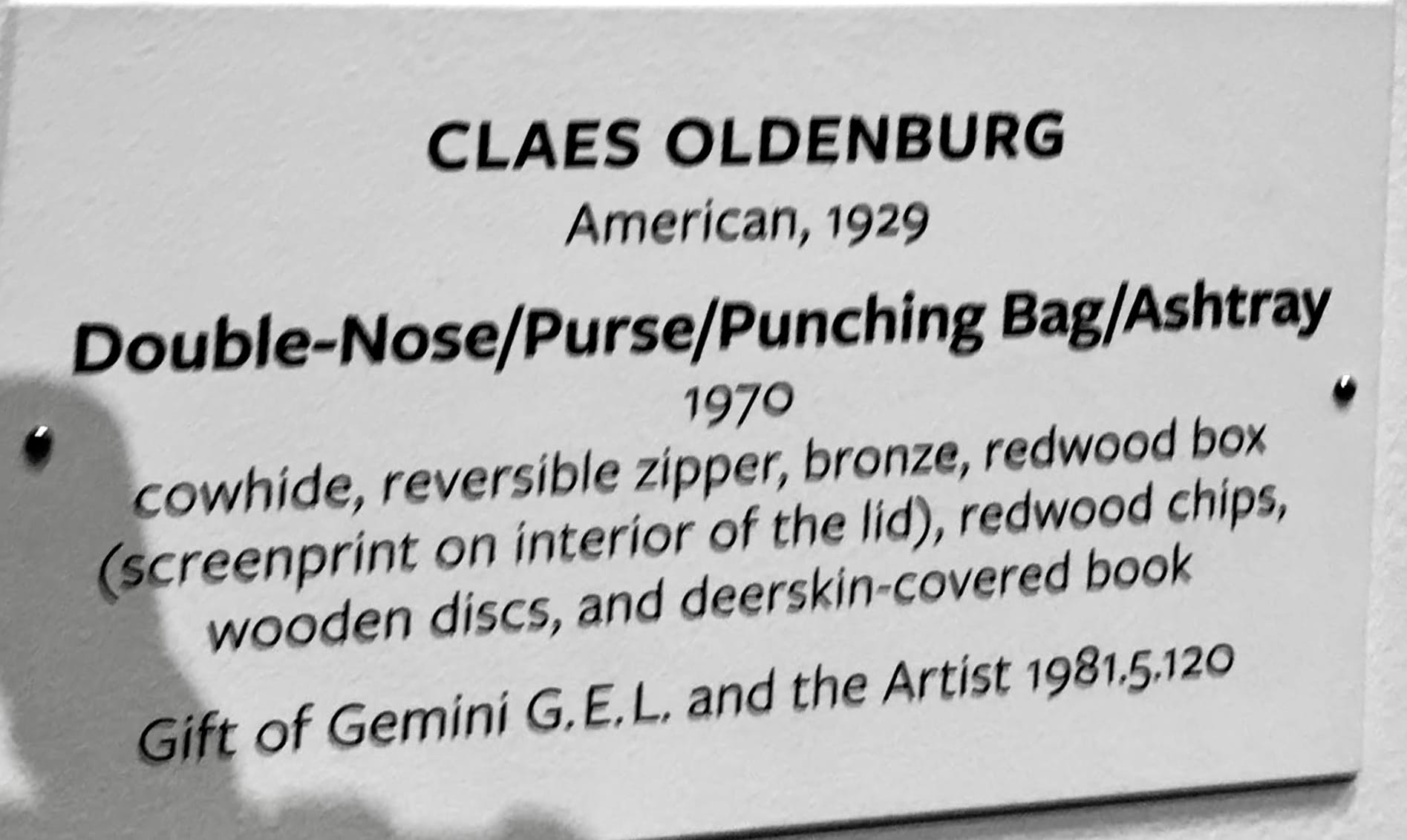
Name-Dropping Cicero and The First Amendment
The dynamic network of hand-painted letters of [Artist’s artwork] enlivens the museum's ground floor and will eventually be the passageway between bike paths connecting North Adams to Williamstown (to the west) and Adams (to the south.) Shifting between writing and image, the sliced and jumbled text appears to jump up and down and move left to right, suggesting not only the speed of passing cyclists, but also the speed and complexity of daily life. A nod to a 1955 textile by Danish artist and architect Gunner Aagard Andersen (1919-1982), the animated design mimics the fragmented way we experience language and information today, which often involves reading, listening, and watching all at once.
[Artist] imagines that if every word spoken were emitted in a space hung forever in the air, her mural would represent a cross section.
[Artist’s] text is partially borrowed from lorem ipsum, a Latin text that graphic designers and typesetters use as a placeholder. Though often thought to be meaningless, lorem ipsum is actually derived from a 1st -century BCE text on ethics by Cicero. And if you look more closely, random English words can be found within the seemingly haphazard mix of letters. [Artist] has buried within the mesh of letters sections of the First Amendment of the U.S. Constitution which protects freedom of speech, freedom of the press, and the freedom to peaceably assemble. [Artist’s] title references this right of assembly, as well as the assembly or construction of language – and the work itself.
Along with language, 20th-century design and typography are important inspirations for [Artist], along with the social programs embedded in the architecture and graphics of the Constructivists, the artists of the Bauhaus, and the Situationists.
On The Cosmic Nature of Beige
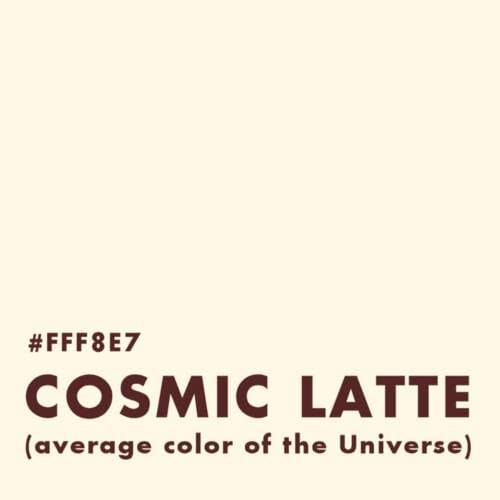
With a commission specifically designed for this gallery, [Artist] brings the starry sky indoors with a constellation of 350 light fixtures. [Installation] refers to the official name given to the average color of the universe, which – in a 2009 study of the light emitted by 200,000 galaxies – was determined to be more beige than what has traditionally been thought of as blue. The artist presents this tannishy-white color with LED light bulbs of various sizes. The groupings model the atomic molecules of powered pigments that [Artist] used to emulate the specific Cosmic Latte hue: titanium white, Mars yellow, chrome yellow, and a bit of cadmium red.
Arranged to mimic the gently arching shape of the Milky Way as it is observed in the Northern Hemisphere in March, the undulating swathe of lights also relates to the Hoosic River visible through the windows. In Japan and China, the Milky Way is called the “river of the heavens” and “river of the sky.” Like many of [Artist’s] works, the installation presents an alternative notion of representation – one that is simultaneously scientific and symbolic.
By Christopher Jones

Member discussion