
Your Gov't at Work: NoVa Reps Hear from Former Fed. Employees
By Cindy Sieden,
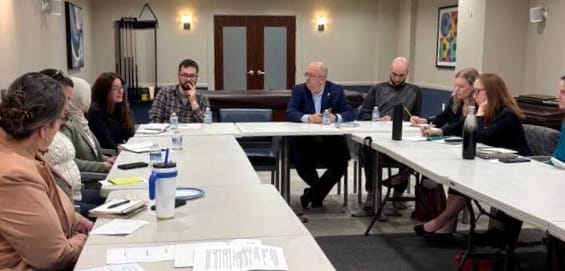
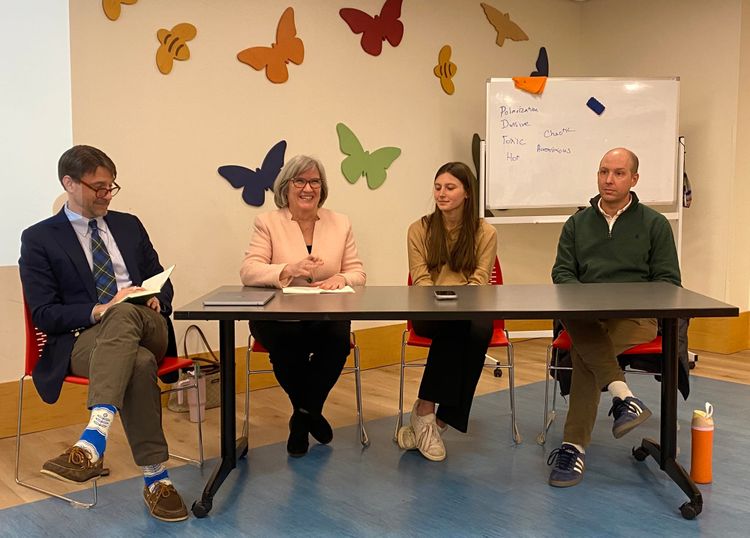
In Alexandria on April 7, the Alexandria Area Federal Employee Alumni Support Network met with a delegation of Va. legislators and staff to discuss the problems former federal workers continue to face since the Trump administration abruptly ended their federal careers.
Participants spanned a wide range of ages and employment situations, including: some who were contractors, some who were in post-docs, some who had been permanent agency employees for decades, and others who were still within their probationary periods. They came from a variety of agencies, including FEMA, HHS, the Department of Agriculture, GSA, USAID, the Bureau of Labor Statistics, and others. Some had found new jobs since leaving the federal workforce, but many were still without a job. They had lost their work due to grants being cut, Reduction In Forces (RIFs), and Deferred Resignation Programs (DRPs), with many receiving no severance pay or still awaiting promised retirement benefits. “We feel lost in the chaos and damage that’s being done,” one member said.
The workers met with state legislators and their staffs from the Alexandria and Northern Virginia area. House Leader Charniele Herring and Senate Leader Scott Surovell sent their chiefs of staff, while Senator Elizabeth Bennett-Parker, and Delegates Kirk McPike, Garrett McGuire, and Paul Krizek, attended in-person.
The workers described their many challenges finding new jobs. Like most federal workers, they've spent years or decades acquiring very niche skills, making them perhaps excellent at the specific government work they performed, but not necessarily more marketable in the private sector. So they need help making this difficult pivot and figuring out how to translate those skills or pick up vital new ones.
They described facing very real age discrimination, and in many cases having to compete with thousands of other applicants for jobs they're overqualified for, often paying far lower salaries than they were making. They urged the legislators to, “please remember the talent and the human cost of not having a place to land.”
The workers talked about the hodgepodge of services available through local and state government and nonprofits, and how difficult it is to find help and to navigate among the various agencies and organizations that have secured funding and resources available to help them find new jobs. They urged the legislators to work with localities and with the Spanberger administration to streamline access to help, and to advertise what resources exist.
One organization that received a shoutout for being a “shining star” was the Workforce Innovation and Opportunity Act (WIOA) program, which has lots of resources, including grants that federal workers can use to build new skills. But they are “crushed under the number of federal workers” seeking help, and desperately need more funding from the Va. General Assembly. On the other hand, the Metropolitan Washington Council of Governments' Talent Capital Initiative – an AI-powered job-matching site, which the House budget currently allocates an additional $200,000 in funding to support – got some not-so great reviews from the displaced federal workers who had tried to navigate its maze of job services. They called it “messy” and “glitchy,” and one participant said, for example, that they entered their information to look for a new job only to be directed to jobs in Turkey that had already been filled. The participants suggested that any further funding sent toward this project should ideally be conditioned on improvements that take into account user feedback, if funding is provided at all.
Participants discussed the Virginia House emergency committee on federal cuts that met throughout last year and heard from experts on the severity and impacts of the federal funding cuts and job losses. That culminated in a report with a handful of practical recommendations to assist displaced federal workers. Unfortunately, none of the legislators who were in attendance were on that committee, nor did they know whether the specific recommendations had been acted on, but they cited some related legislation to assist federal workers that had passed this session:
- Renter’s eviction protections (HB837 and SB273; HB527 and SB628; HB15 and SB48);
- Increase to the amount of unemployment benefits (SB759 and HB1320);
- Preferential hiring in state government for former federal workers (HB494);
- Noncompete clauses invalid if worker doesn’t receive severance (SB170).
Delegate Krizek explained that under the previous Younkin administration, it was difficult to accomplish anything to support displaced federal workers, and that it probably felt like a hodgepodge because the localities had to set up resources on their own under an unfriendly governor; but Krizek was optimistic that under the Spanberger administration, which quickly created a new Task Force to address these issues, there would be improvements.
The legislators also mentioned that while their job is primarily to look for legislative fixes — where there isn’t a particularly fast way to address problems as immediate and urgent as the workers are facing — they are also happy to help their constituents more directly by writing reference letters for jobs, helping recommend small business startups for state contracts, and generally navigating access to state resources. They suggested that constituents .cc them in conversations they’re having with local workforce development personnel as well, which can help them understand what services are and are not working well.
Finally, it was mentioned (though it didn’t really need explicit mention, because many members struggled to speak while holding back tears as they talked about how important the work they had been doing was, how they were mistreated by DOGE/Trump, and how lost and invalidated they now feel) that there is an underlying mental health crisis in the works. One participant even said that if federal workers don’t get help soon, there might arise a “federal worker suicide crisis.”
Cindy Sieden is a Falls Church City resident of more than 15 years. She discovered several years ago that her civic duty extended beyond merely voting when an election arose, and now takes a very active role in following state and local government and helping others understand how those governments work, what actions they take, and how to advocate for issues important to them. She founded the Virginia Progressive Legislative Alert Network (VAPLAN) to that end, and is also a regular contributor at Blue Virginia.


Member discussion