
F.C. Farmers Market a Showcase for Home Kitchen Food Vending
Local kitchen vending is taking off!
Stop by the Falls Church Farmers Market on any given Saturday morning and you’ll find plenty of opportunities to discover new local kitchen-made, cottage food offerings – from freshly prepared breads, to candies, to enticing Belgian chocolates.
This rise in the number of local side-gigging kitchen-based entrepreneurs is a fortunate byproduct of Virginia’s permissive new 2026 Cottage Food Law (H.B. 402) which took effect July 1, 2026. The new law allows kitchen-based entrepreneurs to “sell most homemade non-perishable foods with no permit, no registration, and no inspection under the Home Kitchen Food Processing Exemption.” Now, baked goods, jams, candy, and dried foods have “no sales cap.” And now, “low risk foods” require no license, registration or inspections from the Va. Department of Agriculture and Consumer Services (VDACS). In-state online sales and delivery are also now allowed, according to findhomegrown.com.
On Saturday, Sept. 26, The Falls Church Independent strolled through the Falls Church Farmers market and struck up conversations with two local kitchen vendors who credited Virginia’s new Cottage Food Law with facilitating their side-gigging startups – one a homegrown Belgian chocolate purveyor and the other a fresh breads bakery from nearby Loudon County.
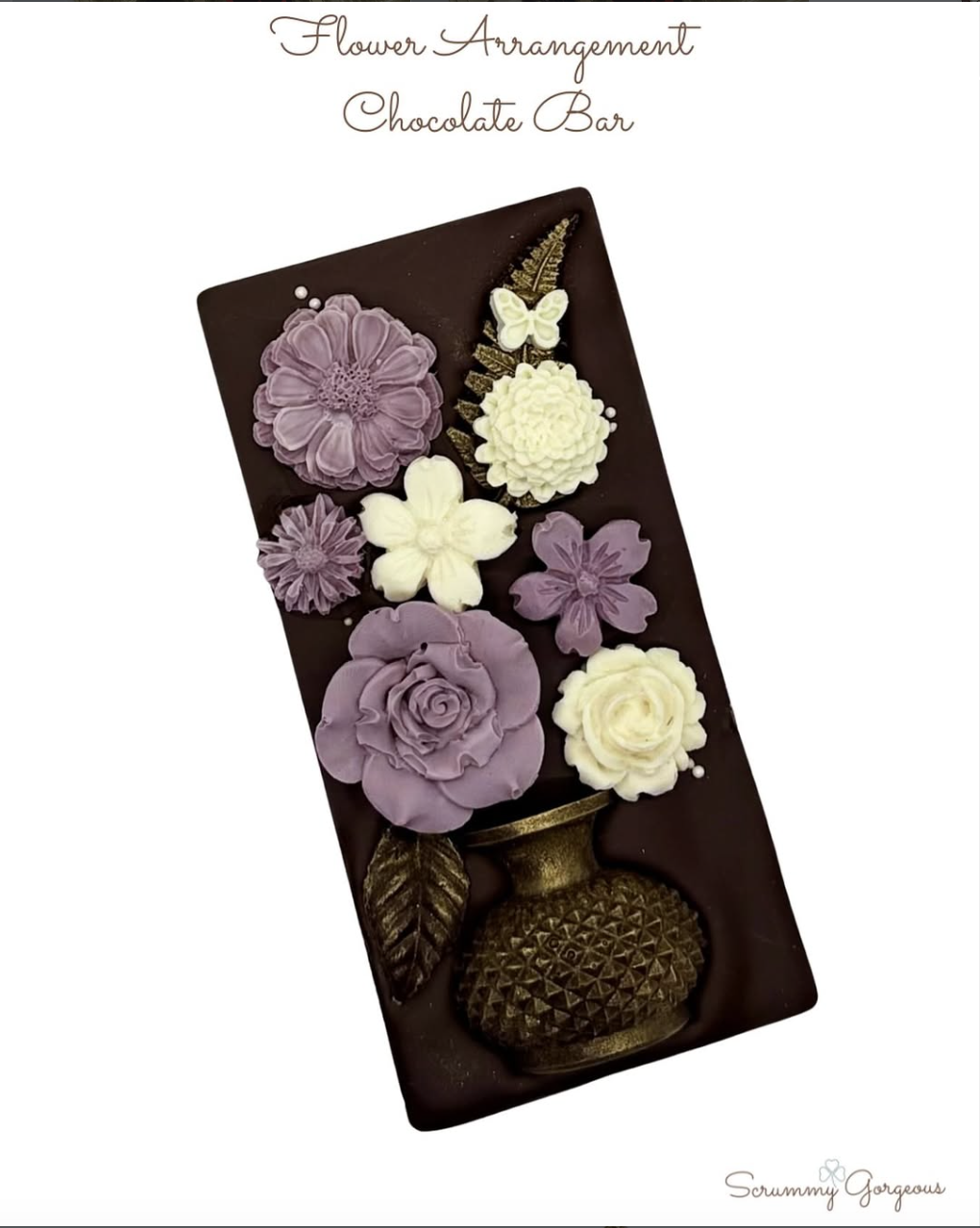
Maureen Cooney of Scrummy Gorgeous specializes in creating “handcrafted Belgian Chocolate” gift boxes and beautifully detailed chocolate bars – we couldn’t resist trying a deep dark one and it was dreamy.
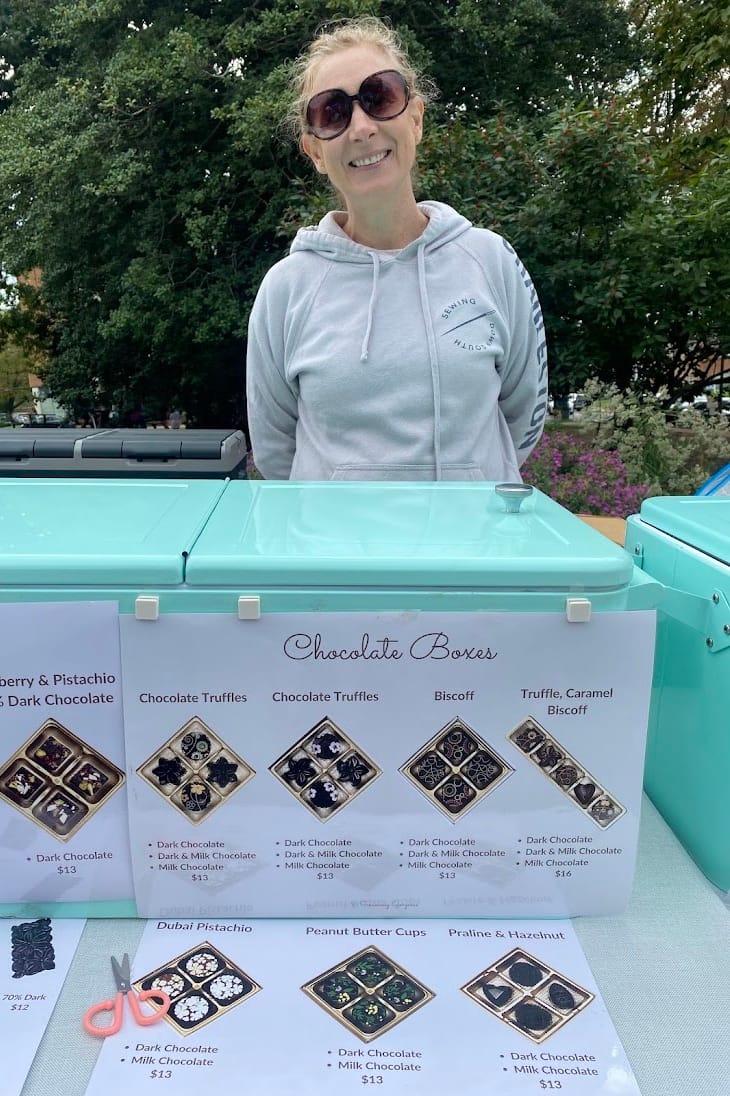
Originally from Ireland, Cooney told us she launched her chocolatiering venture five years ago during Covid, as a “home project.” A “lot of businesses started then,” she said. “My daughter showed me a hot chocolate bomb on TikTok, and she was like, ‘This is cool. Let's buy one.’ And I said, ‘Well, why don't we try and make one at home? So we made one.’"
Finding recipes online, Cooney says she became “slightly addicted to making those chocolate bombs and we were gifting them to people and then I got Oreos and started covering Oreos and chocolate. So I was gifting them to loads of people. And then my friends asked, ‘Could I buy some from you?’ And I was like, ‘No, no, no. This is just a hobby. Then there was someone having a party and I did make them some and sold them,” Cooney said. “And then more people started asking me. Then I ended up going to a little event in Arlington and I had some stuff left over. So I emailed Howard who was managing the Farmers Market here at the time and I asked, ‘Could I come along and sell some of my chocolate?’ And that's how I started in the Falls Church Farmers Market. Since then, I mostly focus more on chocolate bars and actual boxes, chocolate box assortments. So it's really evolved.”
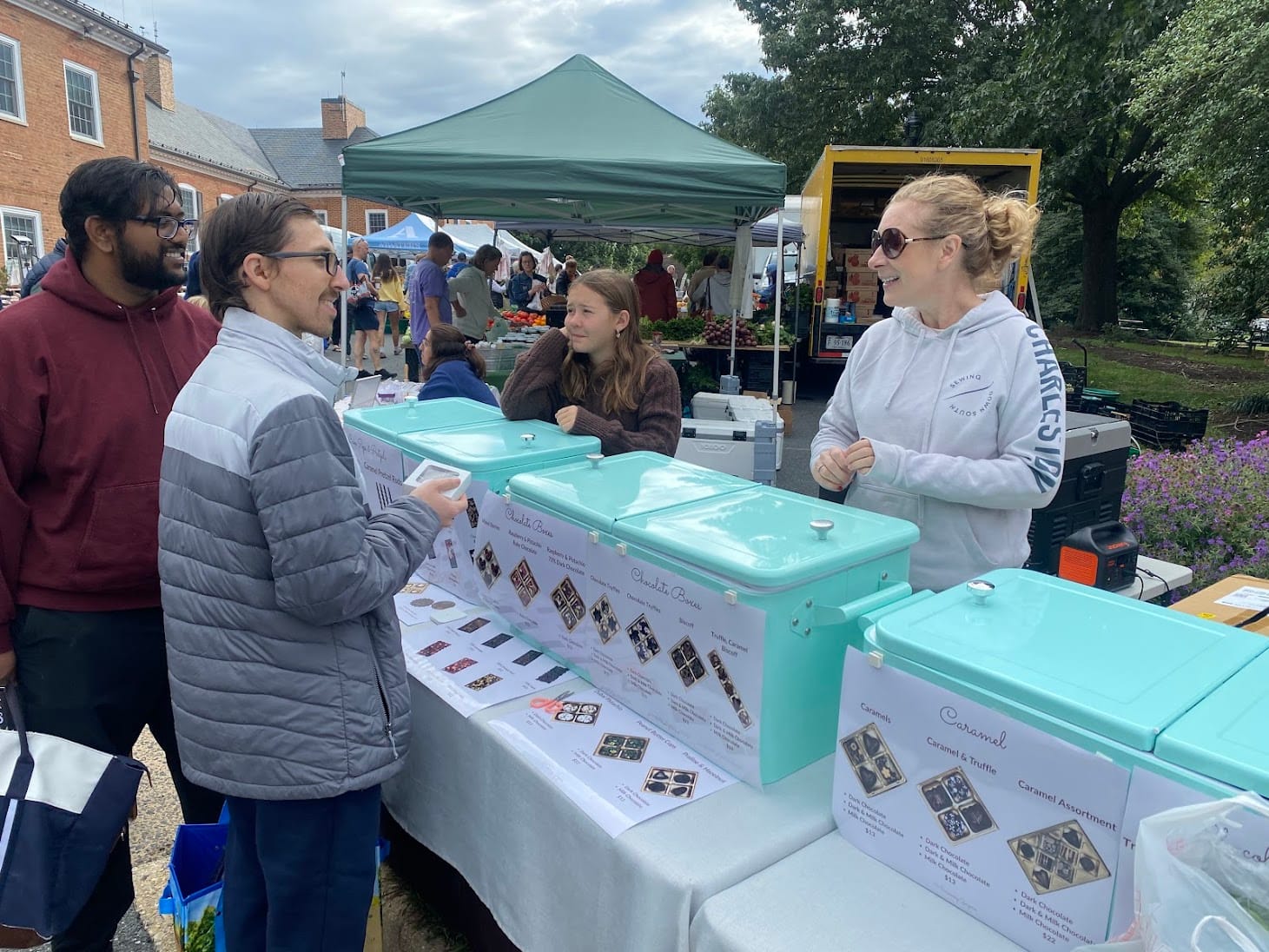
For her day job, Cooney works in technology. But, she said, “This is kind of something that was a passion project that became an accidental business. But I'm entirely self taught with everything, with the help of the Internet, right? These amazing people and these experts online who share their skills, and their knowledge. I've learned everything from them and continue to keep learning.”
Cooney had never been a chef or even taken an in-person cooking class. “I've just always been interested in food, and creating and assembling, and I really enjoyed the packaging side of the business and the presentation. It makes such a good gift,” she said.
Cooney understands the chocolate gifting market. “I have these little four packs of chocolates and a lot of people buy them for hostess gifts or teacher gifts. They're very popular for teachers, right? And then with my bigger assortments, I do advent calendars. And, I do my hot chocolate bombs, but just during the holiday season. They’re a huge hit. And I have so many people now. It’s become part of their tradition over the holiday period to buy them and have fun with them,” Cooney said.
Given the season, we asked snarkily if Cooney’s now inserting pumpkin spice into every one of her delectable chocolates. “I do have some pumpkin spice versions as well. They'll all be coming in the next few weeks,” she said with a laugh.
“So, how’s the Farmers Market here treating you?,” we asked. “Oh, it’s lovely,” she said. “I'm going into my fifth year now. We live in Falls Church as well. So that's great. It's lovely. I've been so welcomed because obviously I'm not from here originally and I've made so many amazing friends. And this is just another accidental part of having a business and living in Falls Church and being at the Farmers Market. It’s really lovely and the people are really genuine. I know so much about their lives. And they know a lot about our lives. My kids are very involved as well. They’re all at college now, but they work here for me.”
We were curious how many years Cooney has lived in the States? “I came here in 2014, with my husband’s job and I lived in Arlington, McLean, and then always loved Falls Church. So we ended up buying a house here and settling here. Lovely. So, when I started, I converted my kitchen doing chocolate, and now I’ve converted my basement into a chocolate factory. I’ve gone from using a microwave and stirring chocolate to temper it to having machinery and equipment.”
Cooney ordered all her chocolate machinery online as well. “It’s kind of kitted,” she said, “But it's a commercial kitchen now, right? My kitchen area, my packaging area, and it's all just set up to go – with many spreadsheets and production schedules. So, yeah, this is how I make it work.”
We asked how her chocolate side-business is faring financially. “It’s great. It’s going really well and it’s growing constantly…. I don’t think I’ll have a brick and mortar, but what I'd like to do is partner with some of the more established local businesses.”
What sort of licensing is required for Scrummy Gorgeous? “I operate under a Cottage Food Law [exemption] right now, which is wonderful. It’s great and nice to have. A lot of the folks here [at the Farmers Market] have that as well. There were huge changes made this summer. What we had before was quite antiquated. You weren’t able to have a website.”
“You had to have an actual cottage?,” we asked jokingly. “Yeah, there were so many different rules, right?,” Cooney said. “But now, you can have a website and sell online in Virginia and ship in Virginia, as long as it’s from your home, basically.”
Cooney helped us understand the difference between a wholesale business and a cottage venture in Virginia. With a wholesale license, Cooney explained, “It's a full commercial kitchen and you're inspected by the Department of Agriculture, VDOCS. There's a lot of paperwork. You have to do some safety courses and then you get inspected and approved. And once you have that approval, then you can wholesale. It’s for food safety, right? And I’ve been really careful about that. But you really need to have done all these courses…. [However,] things that have a shorter shelf life or if there’s acidity involved, the [requirements] are different then" for cottage production.
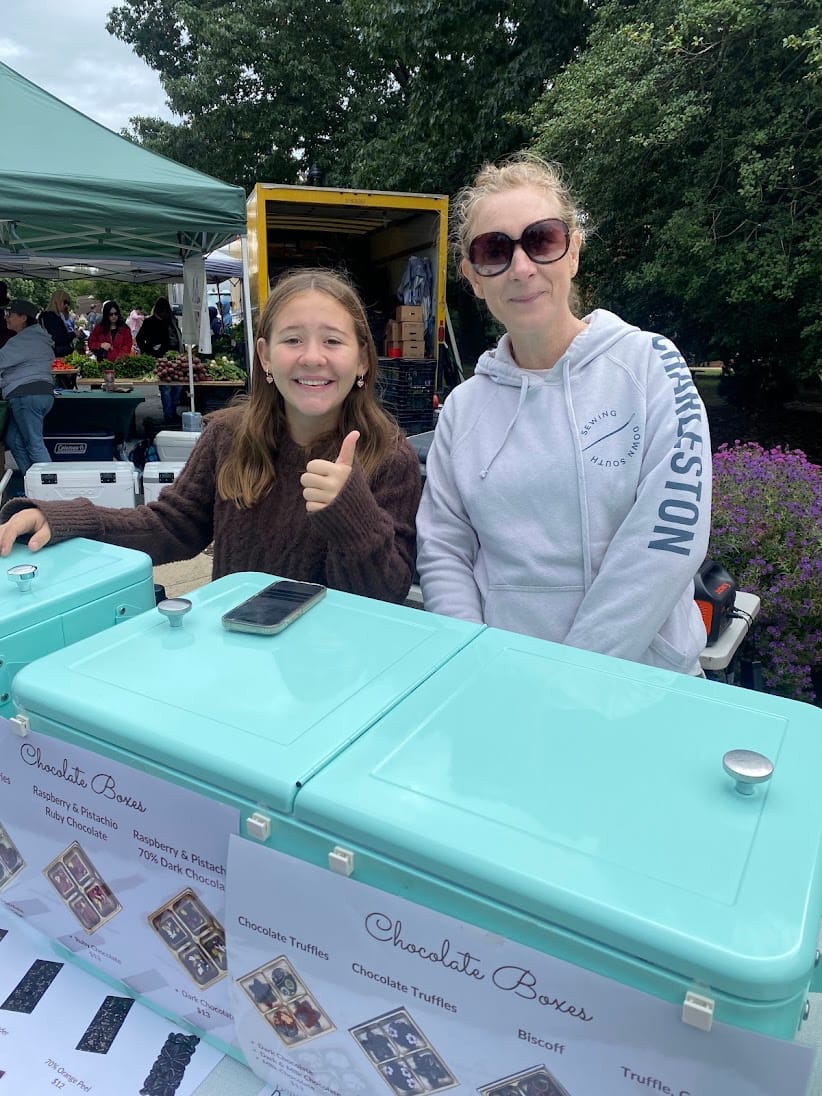
Cooney attended Trinity College, Dublin and speaks Irish with a lilting, pleasing. accent. She and her husband travel to her Irish home town twice a year, in the summer and over the holidays. “I'm originally from a place called Limerick,” she said. We reassured her we would not ask her to recite a limerick, but were curious if there’s a limerick museum in Limerick. She said she wasn’t sure, but didn’t believe Limerick is where that all started anyway.
“We’re very much plugged into both places,” she said, with friends on both sides of the Atlantic. “Wonderful friends here. Everyone here just welcomed us with open arms. And then when we go back home, it's lovely. It's just big welcomes, we meet everybody, and catch up with everyone.”
For Cooney, the Falls Church Farmers Market provides a great sense of community. “I love the farmers and this market in particular because it's not uniform. It's kind of as higgledy piggledy as it is, right. And I think everybody else loves that as well. It's just very unique and very friendly. Yet it's hard work. There's a lot of heavy lifting, early mornings, late nights, getting ready.”
Before moving on, we confirmed that the "Scrummy" in Scrummy Gorgeous refers to "scrumptious," and indeed it does.
Meadow Bread
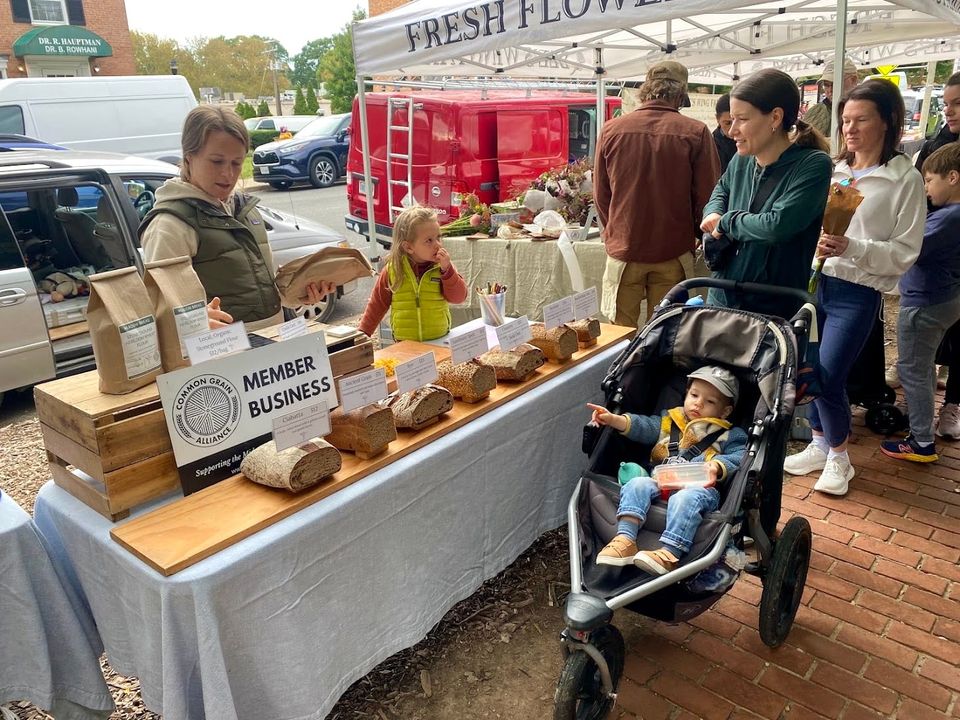
Next we were drawn to a spectacular display of fresh loaves on Meadow Bread’s table, proudly displaying the venture’s membership in the Common Grain Alliance of mid-Atlantic local grain farmers and merchants dedicated to "building a more connected, just, and regenerative grain system across the Mid-Atlantic."
We struck up a conversation with proprietor Maeve Derry, a full-time organic vegetable farmer whose husband, John, a baker, partners in the venture. Each works full time at their day jobs as well.
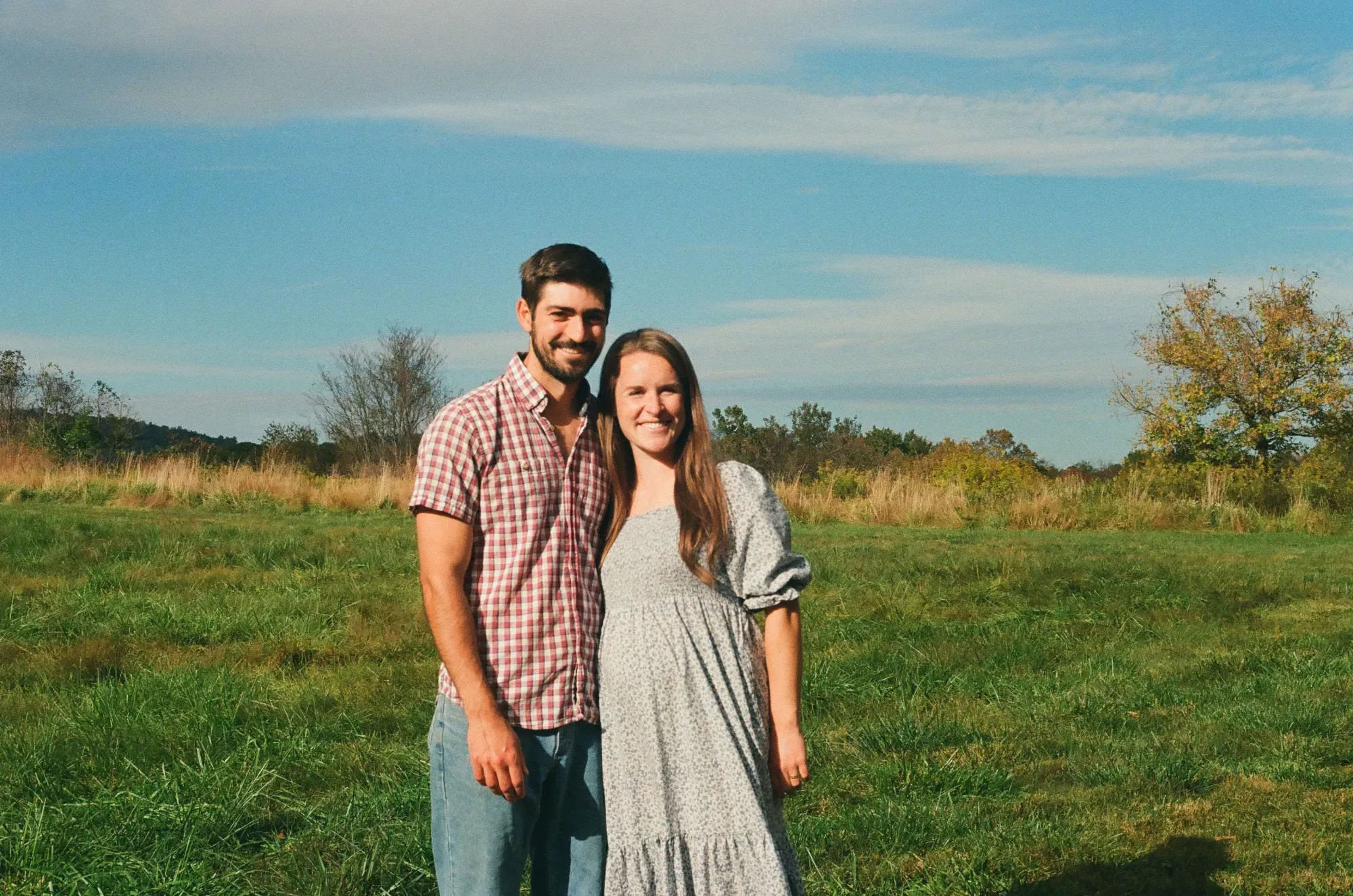
Derry’s husband was away this Saturday playing at an “Irish tenor banjo summit,” Derry said with a smile.
This conversation was a bit more halting due to the long line of loyal customers interrupting excitedly with questions about which fresh loaves were sold out and the specific characteristics of the day’s featured breads. Derry also had to super-mom the situation, sometimes picking up her toddler son to comfort him, or instructing her daughter and two young cousins on how to help at the table or when to run off to play. One customer mentioned seeing $60 loaves of rye in New York City a few days earlier. Another was a fellow Farmers Market vendor who likes to trade a breakfast sandwich for a loaf of fresh bread.
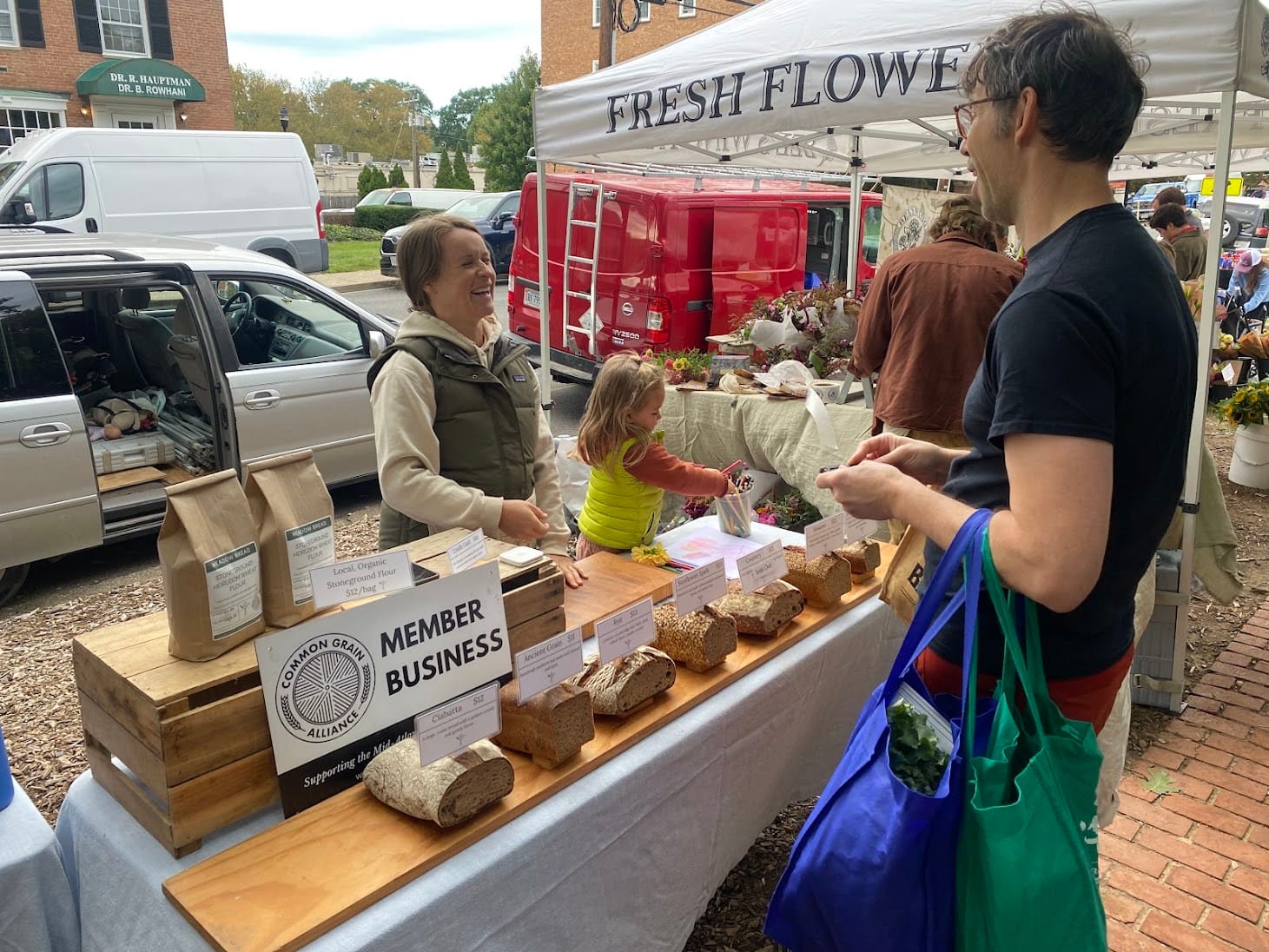
“This is our fourth year in business and our second year at the Falls Church Farmers Market, which is our only outlet,” Derry said. “My husband has been baking for, I guess, eight now…. We're a cottage bakery, so we live out in Loudoun County. And our business shop happens out of our house.”
Derry and her husband John live in (aptly named) Wheatland, north of Purcellville, about an hour and a-half’s drive away. Why are they willing to drive so far? “It's the best farmer's market ever,” Derry said. “We sell all our bread here. It's just iconic. It's still a farmer's market. I think a lot of markets in this region, their character has changed, and they're becoming more like places for people to buy prepared foods or kind of like a social scene. But the Falls Church market is just so old fashioned. There are just shoppers here. People come here every week to buy their food, to buy all of their groceries. They come every week year-round no matter the weather. So this is a huge deal for us coming to this market. Getting into this market was like, ‘Okay. Now our business can succeed.’”
“Before that, we weren't in a year-round market, and we were in smaller markets mostly. So our goal from the beginning was to get into just an excellent year-round market, which in this region to us always was Falls Church…. 100 percent of what we can make is sold here every Saturday.”
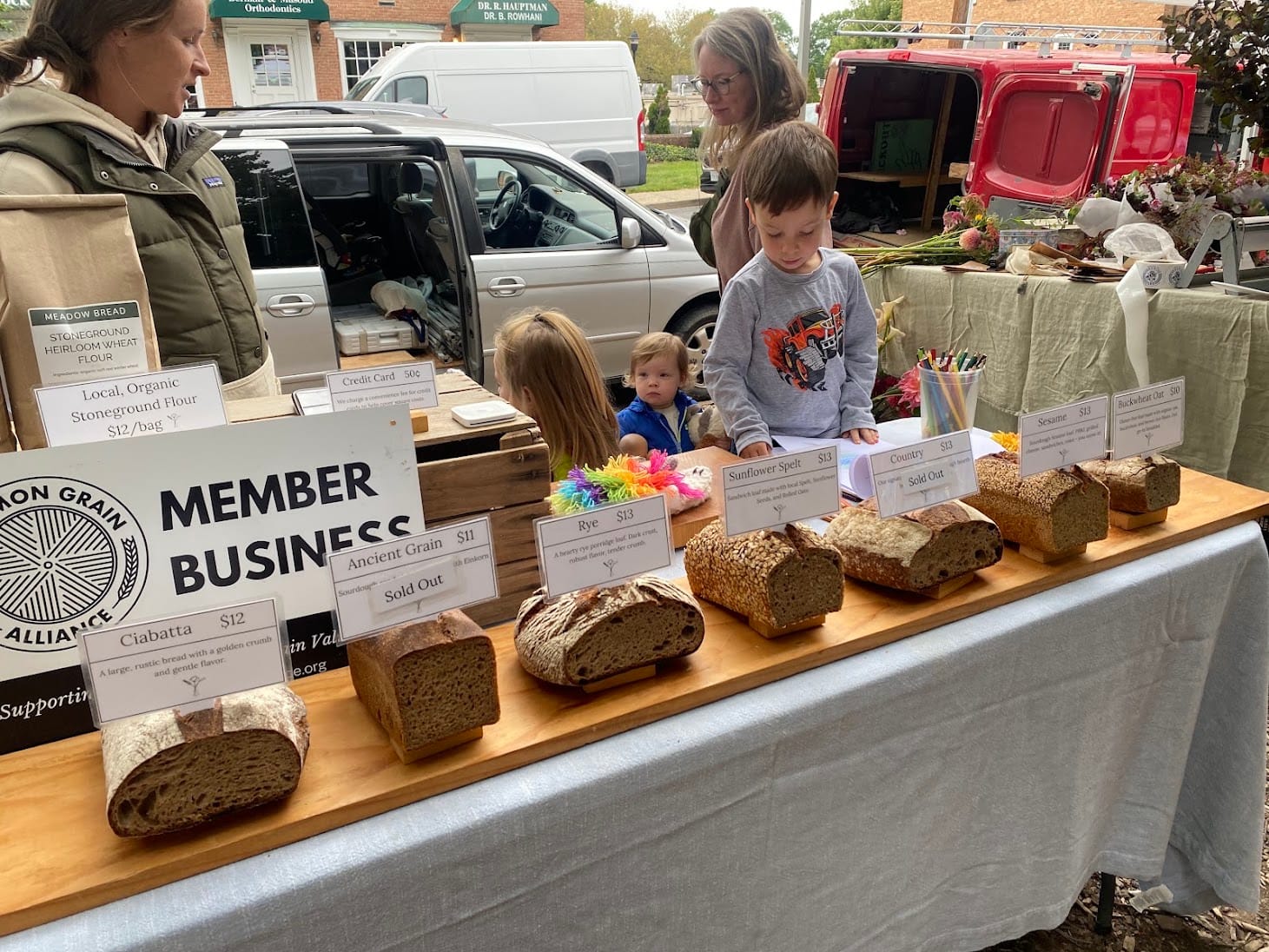
So how is Meadow Bread’s business model doing these days? “It's, like, exactly how we want it to be," Derry said. "We feel so lucky…. We make the amount we energetically can, and then it's all eaten, which just makes us so happy. And farmers markets are the best for that. We don't carry over any other product.”
We were curious if Meadow Bread was seeking to broaden its reach using more social media tools. “No.... It doesn't impact our sales. And the people here at the Farmer's Market don't look at Instagram. They just found us because they come to buy their groceries here. So it doesn't feel like such a great use of our energy, right?”
“And just like, the Germans and Eastern Europeans who love brown bread, but they move to the U.S., and then they’re so sad because all the bread is white," Derry said. "So we have all these fun family relationships with people here who’ve been searching for this bread, and then they get to eat this [points to all the varieties].”
We asked whether Virginia’s new Cottage Food Law was helpful to their side-gigs. “Amazing,” Derry said. “Virginia supports us.”
At D.C. restaurant Seylou, John Derry learned all about organic, locally-sourced bread making. “They kind of ingrained in him how to make the bread, but also their philosophy and principles, which is: sourcing locally and never sifting. So we have those same principles he learned from there...."
“Our highest value is supporting local agriculture, and healthy and sustainable agriculture,” Derry said. “So all of our ingredients come from small farms in Maryland, Virginia, and Pennsylvania. We know all of the farmers. We go to the farms. And we buy grain whole, that's never been sifted. It has more nutritional value and more flavor value, and we think it's really respectful of the crop itself. When you sift, you're taking 40 percent of what the Earth energetically gave to you and you're just getting rid of it.”
For Meadow Bread, “strong relationships with the farmers themselves” is also key. “Yeah, we also have a great relationship with the mill. We have relationships with farmers whom we buy grain from, and then we also buy milled flour. Mostly, some farmers we work with have their own mills. They’re new American stone mills built in Vermont. They've kind of changed grain growing, milling, baking, and selling in this region in the last ten years or so. But we also work really closely with a revitalized stone mill in Nelson County, Virginia. It's called Deep Roots Milling.”
We were curious why stone milling makes such a difference in the bread’s production. “Mostly because of temperature control, but it's also the way it crushes the grain…. it never heats up during the milling process. It creates just a really beautiful product. It's really creamy and soft, and it contains all the oils that went into the mill. They all come out with the flour, which is important to us for nutrition.”
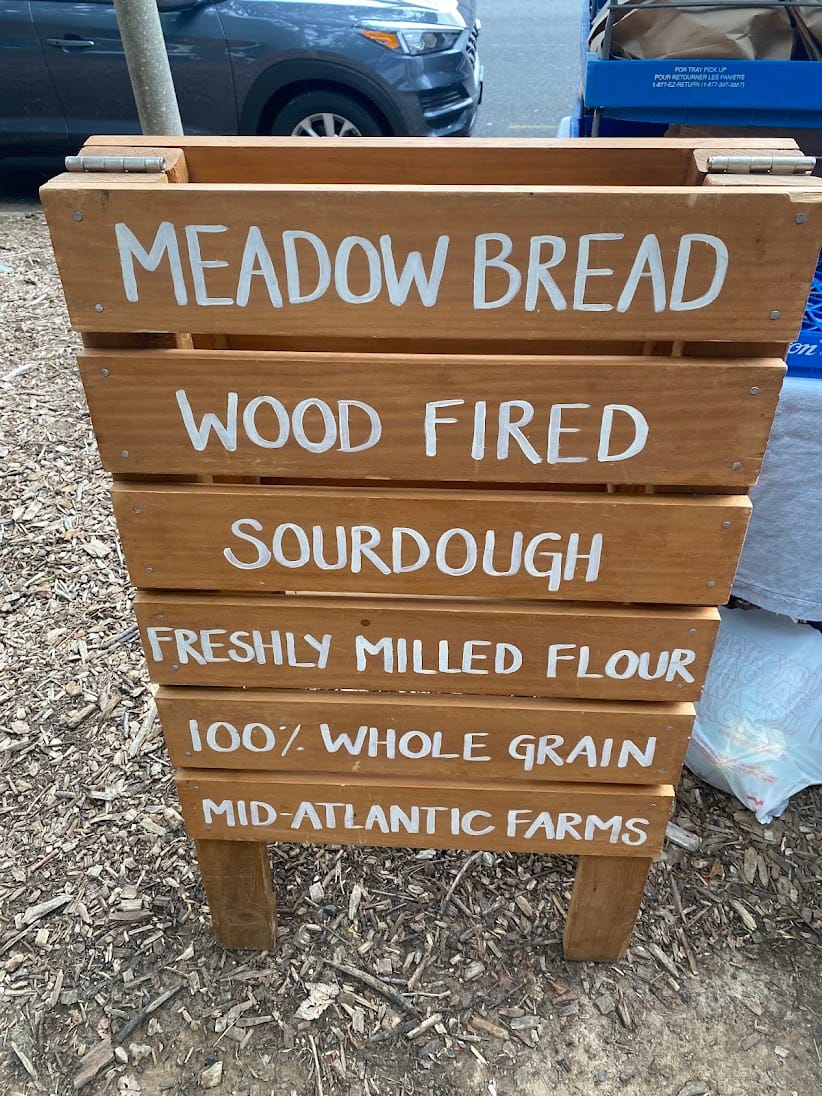
“Most of the farmers we work with are, first of all, selecting seed that is healthy and, specifically going to grow well in this region,” Derry said. “So they're selecting for flavor and nutritional value instead of what most commodity farmers are selecting for, which is just uniformity…. [But our farmers are] using regenerative growing practices. Most often, that means they're using no till practices. Which means you're still driving a tractor over your fields, but you're not turning over the soil in between each rotation. Each time you till the soil, you're releasing nitrogen and carbon, etc. But when you don't till, you're leaving your microbial structure and your soil structure intact, which feeds your next crop.”
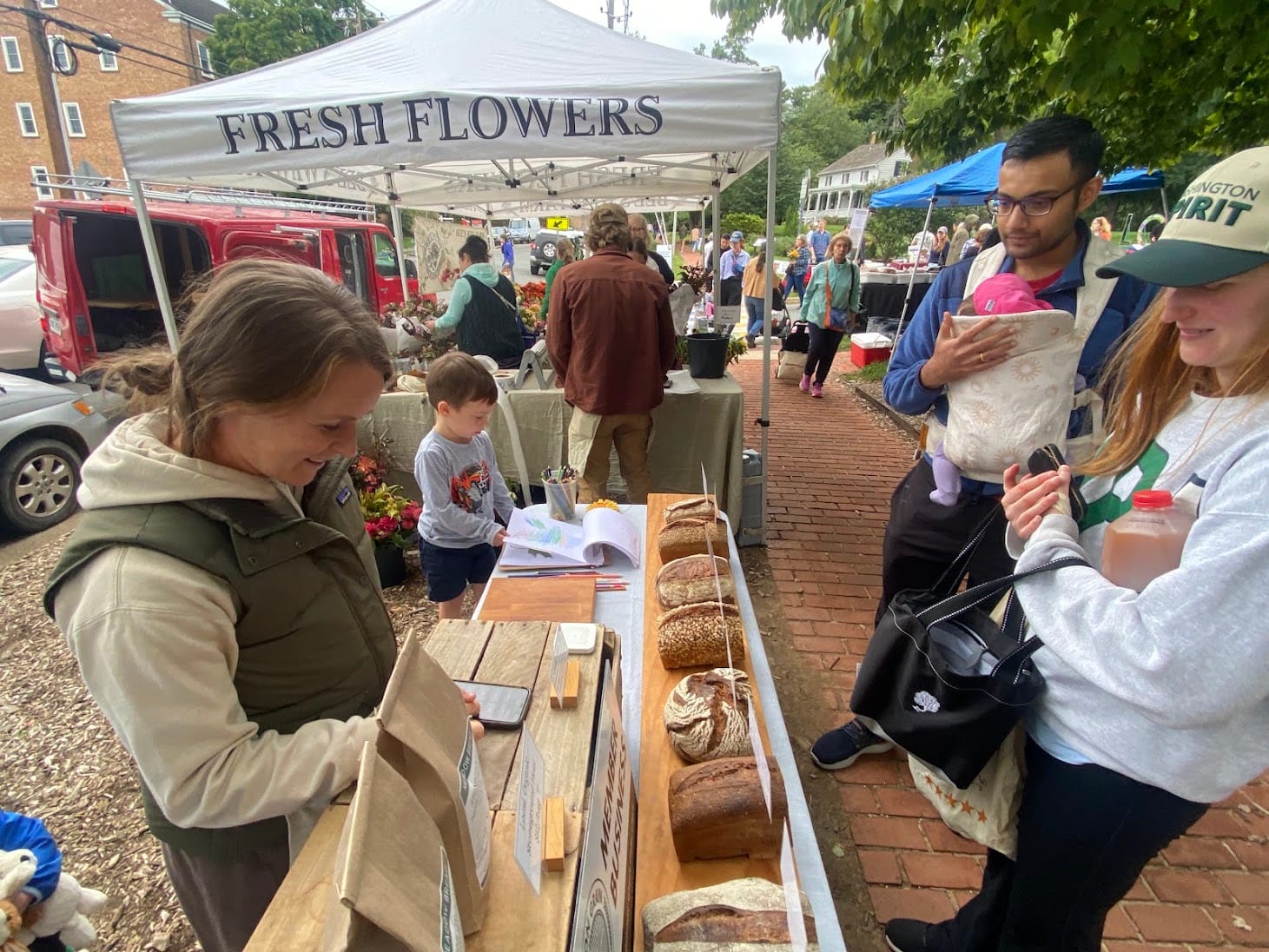
At home, Derry said, they’re emphasis is also on organic, local, healthy and fresh foods. “I guess it's kind of what we're building our lives around. We grow or make most of all the food we eat. And so bread just also falls into that category for us. We think of staple foods as just as important as our fruits and vegetables. They should be local. They should be whole. They should be sourced just as meticulously as any other part of our diets, which I think is like the missing piece in the ‘whole foods’ conversation."
After our chat, we went to the back of the line because we just had to purchase some of that Ciabatta – and it was scrummy, as the Irish say.
For our previous reporting on the Falls Church Farmers Market see below:
 Christopher Jones
By Christopher Jones




Member discussion