
How Are Meridian's New Student Cell Phone Policies Faring in 2026?
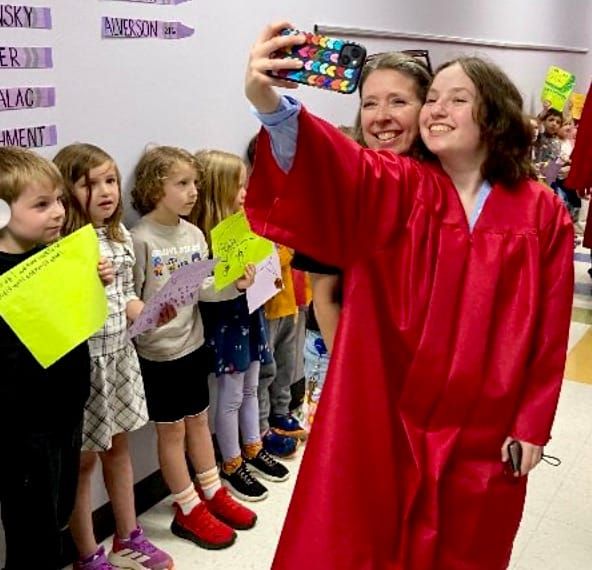
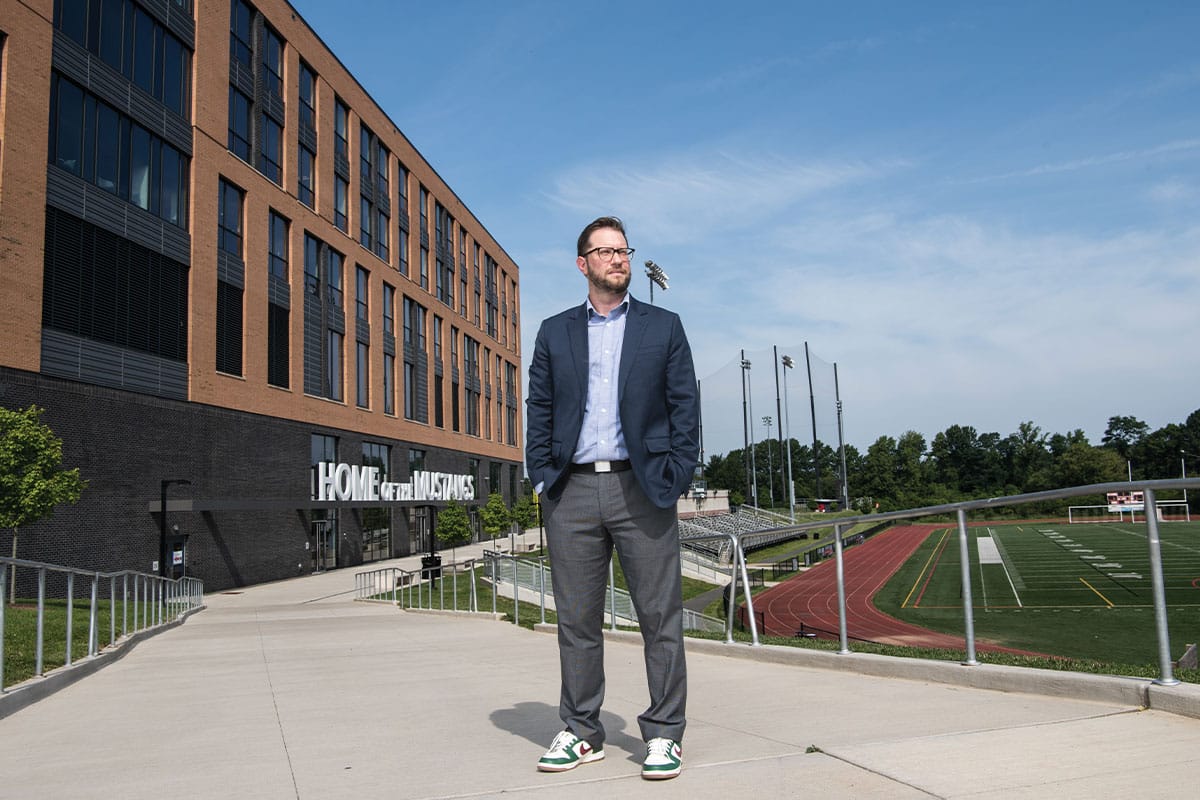
How are Meridian High School's new student cell phone policies faring so far in the 2026/2027 academic year? On Nov. 13, The Falls Church Independent visited Meridian's campus to pose this question to Principal Peter Laub.
We last wrote about Meridian's "new cell phone policies" in Nov. 2024, as the Falls Church City School Board sought to carve out a more nuanced set of secondary school policies than then-Va. Governor Glen Youngkin's July 9, 2024, Executive Order 33, requiring all public school's in the Commonwealth to fully ban student cell phone use over the entire school day, i.e., from "bell to bell."
Here's our Nov. 2024 article:
 Christopher Jones
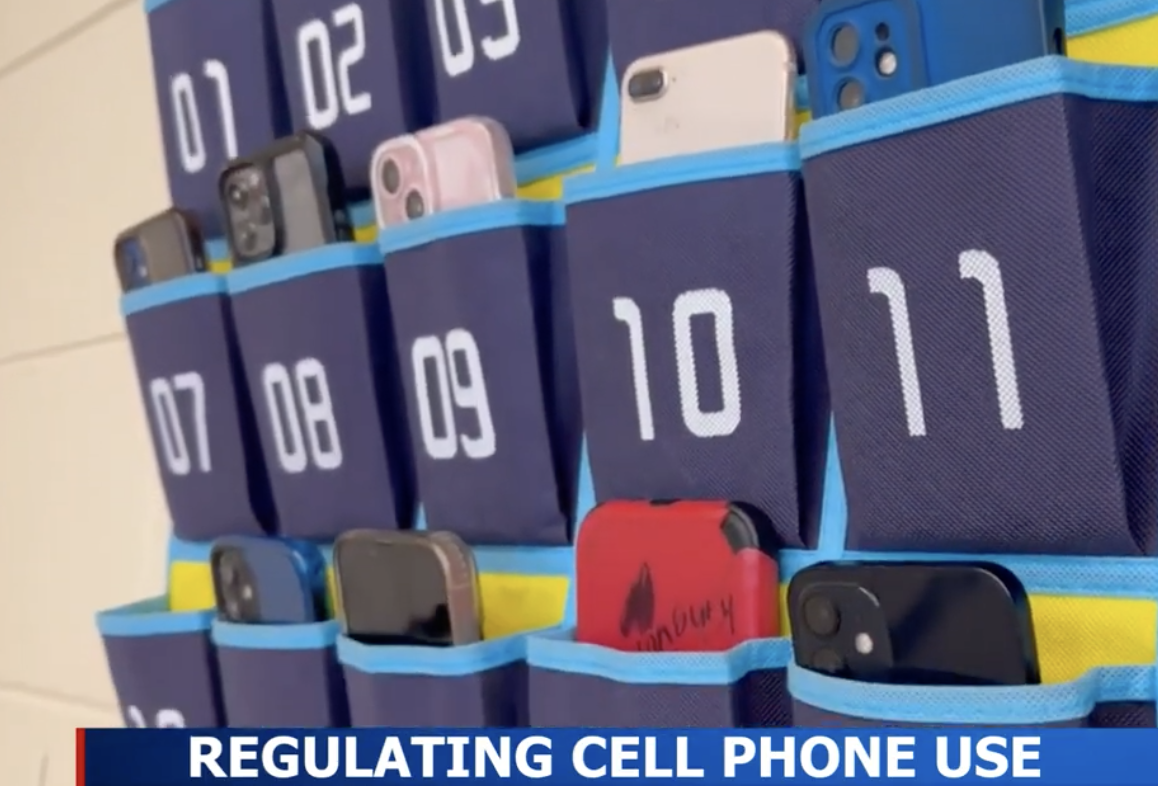
Following Gov. Youngkin's 2024 decree, however, Principal Laub testified before the F.C.C. School Board, that while Meridian's students – many of whom would be attending college in a matter of months – should be required in all "instructional spaces," to put their cellphones away, students in an International Baccalaureate program who were supposed to be learning "self-direction" ought to be allowed personal cell phone access during student self-directed times such as Mustang Blocks, lunch, and passing times.
In Nov. 2024, Principal Laub's reasoning won the day, and phone cubbies were set up at the head of each classroom.
By the current 2026/2027 academic year, however, Falls Church City Public Schools (FCCPS) were required under Virginia law to fully adopt the statewide ban on student cell phone usage from "bell to bell."
A 'Significant Change for Everyone Involved'
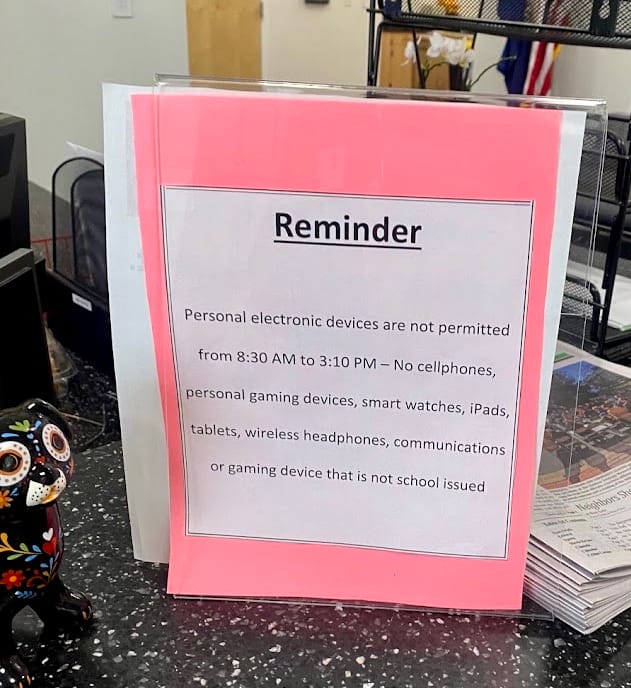
We asked Principal Laub how he thought the new cell phone policies in the high school were going, now that the first quarter of the 2026 school year was done.
"It's going fine," Laub told us with some circumspection. "It's not perfect. But, you know, I don't expect perfection immediately. It was a significant change for everyone involved, especially the students. But, all told, it's going fine."
"Just this week, I was in a meeting with the Student Council, and a few of them were like, ‘Look – We're fine. We've adjusted. And, we're happy with it.' So that was good feedback to hear from the kids," Laub added.
The Pain Point for Both Kids and Staff
What are the biggest changes for the students? "The shift to 'bell to bell' meant that now, during lunch and what we call Mustang Block– which is student self-directed time – That was the big change. And that's been the pain point for both kids and staff. Because that's when kids are like, ‘Oh, this is when I used to – on the positive side – check my calendar and communicate with my boss, clubs, or whomever. Or, just listen to music or text my friends during this time.' And so that's where the imperfections lie, certainly. And it's been kind of a frustration. But we're getting better and everybody's adjusting."
So, how are the students coping? "Well, I think they're coping by just saying, ‘Okay. I'll do it another way,’ right? So, they're using calendars on their laptop, instead of on their phones. They're using our school-supported platforms to communicate, like Schoology and email. And, they're doing a lot of emailing to each other in ways that, you know, weren't there before. So, instead of having their phones out and being tied to that, they're using their laptops as a replacement for some of those."
A Walk Through the Halls Looks the Same
"But, here's the thing," Laub continued. "You can walk the halls during Mustang Block time and you’d see kids doing a range of behaviors, from sitting around playing cards, chatting with their friends, doing a project together, or sitting by themselves looking at a computer screen because they're catching up on their work. Or, sitting by themselves looking at a computer screen of a video of football highlights because it's during their free time. And, you would have seen a lot of that last year as well. So, it doesn't really look that different. And, on the whole, I'd say it's going okay."
How about if a student needs to communicate with a parent/guardian about a ride after school? Would they be emailing them?, we asked. "Nope," Laub said. "They come down to the office and use the phone because that's what we used to do, right? Before cell phones."
Many Parents Still Adjusting
Turns out, however, that many parents have yet to adjust to the new cell phone strictures. "We've definitely had plenty of communication in the other [direction]," Laub said. "We get a lot of parents that still text their kids during the day from the office. They'll sit in here and say, 'Well, I'll just text my son.' And, we're like, ‘No, you can't — Your son shouldn't have their phone on them,' right? So they're in the habit too. So, it's been a habit to break off for all of the stakeholders, right? That's the thing – it’s everybody. Not just the kids."
We were curious if students sneak off campus to use their cell phones. "Our seniors apply for something called Senior Honors Privilege to be able to leave campus to go to lunch, or something. That happens [around] the second semester. Do we have kids that are sneaking off to the bathroom during class to check their phones? Yeah." But, short of posting staff in the bathrooms, there's not too much to be done about that, Laub implied.
"So, it's like a cultural adjustment," Laub said. "But, it's going smoothly.... I mean, everyone's adjusting. And 'adjustment' implies discomfort on certain levels. Adjustment implies imperfections. When I spoke to the staff, I said it's been one quarter of us trying this new thing, but we really need to see it out fully to" understand the dynamics better.
"And, for some, it's been really hard," Laub continued. "For two reasons. One, is, the policy says phones need to be away from 'bell to bell.' But, it's frustrating, right? If you're just walking the halls and some kid is [makes a gesture of sneaking a look at their phone under the desk] in the class, it's frustrating. And I think the second thing is.... we used to have students come put their phone over here [in the designated phone cubby] and teachers really liked that because it was an assurance that during this time, and in this moment, you don't have access to your phone. But now, I think there's heightened concern that now that we're not doing that, that kids may be doing this [sneaking a peak gesture] or doing this in the bathroom."
No Airtight System Possible
So the new "bell to bell" policies may have driven some students to use their phones in a more furtive way?, we asked. "Right," Laub agreed. "There's some concern about that. You know, this was happening before, because what kids were doing was putting a fake phone [in the phone cubby]. And then going to the bathroom with the real phone. Or using their real phone in their pocket, right? So, no system here is going to be airtight, right?"
"Short of doing what you have to do if you work for the FBI or something. where you walk in, and you have to turn over all your electronics, and then you're hauled out in handcuffs if you violate that," Laub said with a laugh. "But, I don't want that to be our society. That is not the society I would like to live in."
And the constant need of enforcement puts a strain on many of the adults in the building. "I think that's been an adjustment too for them," Laub said. "So, I don't want to minimize that because I've been sympathetic to that. And I want to practice some patience as we work through this."
Student Laptops and Emails Take Up the Slack
We were curious if any of the adults complained that they couldn't reach students for important events like club or sports meetings, assemblies, etc. "No," Laub said. "They can find them in other ways; they don't have to text them.... Teenagers all have their own email accounts because they need it to get their own Instagram accounts or to set up their own shopping accounts or whatever. But they also need it in school to sign up for all sorts of school things. So they all have a school assigned email address. So that works for [contacting the students.]"
A False Sense of Society
Laub is concerned that students are not being instructed on how to integrate their phones maturely and properly into their day-to-day lives, as adults are expected to do. "I mean, you and I know the difference between email communication and phone text communication," Laub said. "We use one for one thing and we use one for another. Kids are learning that too. So what I find really challenging about this 'bell to bell' policy in general is that it sort of neuters the school's ability to teach kids some real life skills around managing a phone. Because this is a tool for life."
"This is a tool," Laub continues, pointing to my phone. "You’re recording me on a phone. And, I'm willing to bet you were checking our emails, confirming the time of this appointment on your phone. And that's a skill I'd like to build in these kids. They're going to go off to college next year, in just a few months. Or, they're going to go off into the workforce. And you better be able to do this in the workforce.... And in between, you're using this for everything. So it's a little bit frustrating because we're giving them this false sense of what a society is, like, ‘No, you don't use this now.’ So again, they're finding replacement activities on a laptop. They're capable of doing that, just as you and I are capable of doing that. But we find [our phones] really convenient. And that said, I'm respectful of all the – if not scientific – research, then at least the literature and the feelings among the community that, this is super distracting. And can pose problems."
IB Values at Play
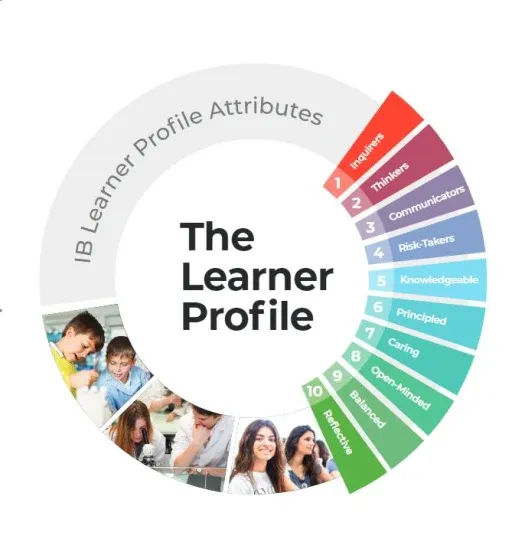
We asked Laub to specifically address how IB values come into play on the cell phone question. "Yes, I think the IB values are going to outlast whatever piece of technology exists, and they're going to supersede it, right?," Laub said. "The idea of being collaborative, the idea of being a critical thinker and learning self-management skills – those are the types of things we teach. And this makes it hard. Screens make that hard for teenage brains."
We were curious whether Laub had heard positive feedback from the school counselors that perhaps the students have become more focused because they're on their phones less during the day. Or, have they become more interactive with one another? "That's a great question," Laub said. "I think I’ve heard the neutral feedback from the kids of, like, 'Hey, we're managing it,' which is good. But, when I said this publicly to the Board last year, I wanted to know what does success look like? Because our kids on the whole, and our survey data shows it, generally our students are pretty engaged in school. They're doing well academically. On the whole, they're feeling connected to each other and to [the program] ... Like, it's not perfect, but on the whole, we were on a pretty good trajectory."
Enforcement Strains on Community
So there were no alarm bells about cell phone use before the current bell to bell policy?, we asked. "Correct. And there are other school districts and other places where there were alarm bells. So I understand from a legislative standpoint where we're coming from. But [now we're developing] a notion of what success looks like without cell phones. Because I could define success around school and what we want out of these kids while just leaving [phones] out of it.... I don't need phones to help define what that is. But we're implementing this, and it has caused some headaches for staff.... I think a teacher put it to me the other day that rather than creating opportunities for connection for adult and student, it has created opportunities for friction. Because if my first interaction with you is, 'Hey. You have your phone out. Put it away,’ then, I don't necessarily want to build a relationship with you if I'm a student.
We wondered if any parents had complained they didn't have sufficient access to their kids during the school day? "Definitely," Laub said. "They say, 'What? You know, we don't agree with this.' And, Ms. Shay, my administrative assistant who sort of fields some of those [comments] reminds everyone that it's state law and School Board policy, and we're just like all the other schools" in our phone policies, "So not every parent is happy with the situation."
In Case of a Lock Down
We were curious whether any parents expressed concern that in an emergency – such as a school lock down – students and parents would not be able to speak by phone. "Well, that's an argument that comes up from students and parents," Laub said. "I think there are conflicting feelings on that, right? It was interesting. I forget if I talked with you about this, but a couple years ago, we had an opportunity to have our emergency management people from the City of Falls Church do a training with us as a staff in the auditorium. And they were talking about what might happen in the event of a mass evacuation of school or something. And this guy made some sort of off-hand comment like, ‘Well, the kids will all have their phones anyway….’ And we were all sort of like, ‘Yeah, no, that's not how it's going to work.’ A mass evacuation might actually be that a bunch of phones get left at school. And it was just one of those times where I thought, we all have to sort of recalibrate what that would be like in an emergency. And that said, I've also read where the police have said, it's really unhelpful when everybody has their phones out," in an emergency.
Social Media Harms
While Laub wishes students had opportunities to learn responsible cell phone use during the school day, during their self-directed times, he acknowledged that psychological harms might indeed arise from students' use of social media. "I think the Catch 22 of cell phones is that we often see students who’ll say.... I struggle with my own anxiety, and I need this to communicate to my parents to help me with that... And then it's like, well, is that causing the anxiety or exacerbating it? And that's really hard. And, there's no definitive answer either way."
We asked Laub whether he personally believes cell phones and screen times can be addictive for students? "Yes," Laub said. "I guess so. I say that with no scientific background to that about addiction. But, I don't dismiss [the concern.] I think more so screens challenge the way we think as human beings. And as an educator, I’m deeply concerned about that."
Does Laub support the School Board's recent joining of a class-action lawsuit against social media companies for social harms to students? "Yes, I don't know the specifics of the lawsuit, but I recall one about a year ago in the state of Washington. I remember a school district there basically claiming that [the social media companies] are building in features rather than bugs to keep eyeballs on the screen. And that's probably not great. Going back to my concern around the way we think as human beings, I want to help educate people to be independent critical thinkers. And if there's a system available for free to all kids that's designed to short-circuit that way of thinking, and, by design, to do that, then, yeah, I would like to limit that feature."

"But I feel like social media is a completely different sort of beast than just phone use for kids, though I know you can access social media from your phone. So, would I want to ban social media for kids? Probably. Yeah. I'd be way more into that option from bell to bell. As an educator, I'd say, 'Let's do that.'"
Which alleged social harms arising from social media use is Laub concerned about? "What harms do I see with social media and with kids? Oh, man. Self image. Body shaming, bullying. Perpetuating feelings of anxiety, feelings of disconnectedness. I think it takes a strong-willed person to see past some of that stuff. And teenagers, I love them and I love working in a school, and sometimes they struggle with that."
Plus, their brains are still developing. "But, it's how they communicate," Laub said. "We live in a society in which this is how teenagers communicate and interact with each other. So, I think there is a future in which schools can help teach students how to do this, right?"
By Christopher Jones


Member discussion