
Old School: The Write Stuff
By Carol McEwen,
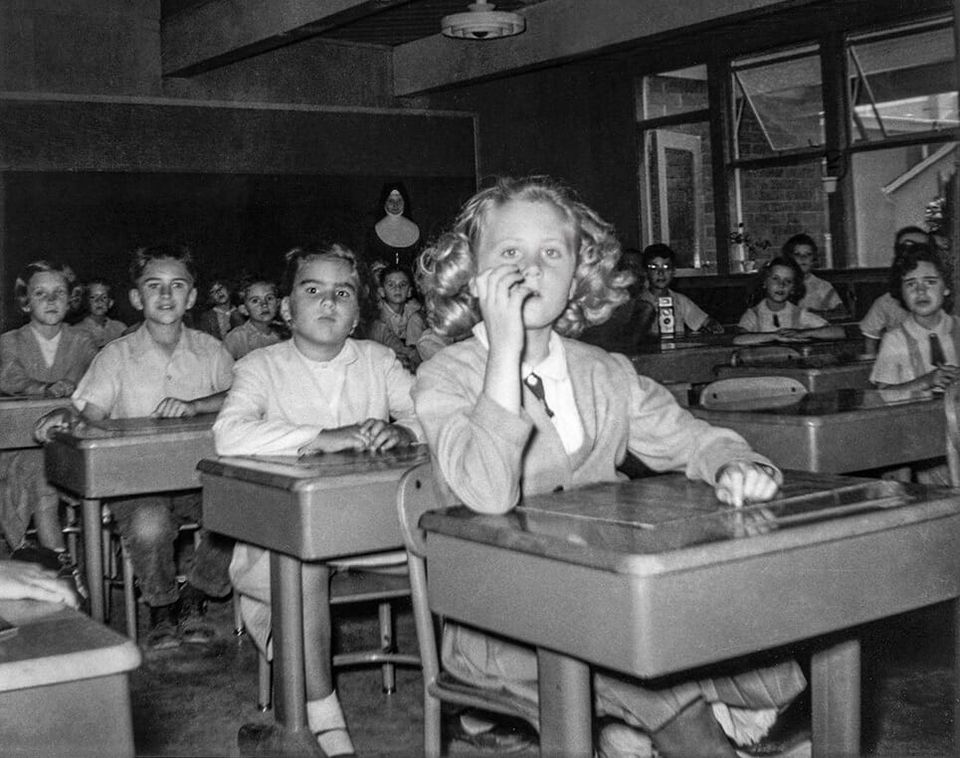
My sister-in-law and I were talking recently when she mentioned a high school student who had received a hand-written note from her and said, “I can’t read cursive.” We tsk-tsked a while about today’s truncated curriculum. “What?,” we cried. “No penmanship taught?”
That brought back memories of my school training when learning to print, in First Grade. A tablet of paper, attached at the top, had a pair of thick black lines widely spaced, with a dotted line between them. First we worked on lower case letters and were told to make the letters “stay at home” so their tops only touched the dotted line and their bottoms touched the lower solid line.
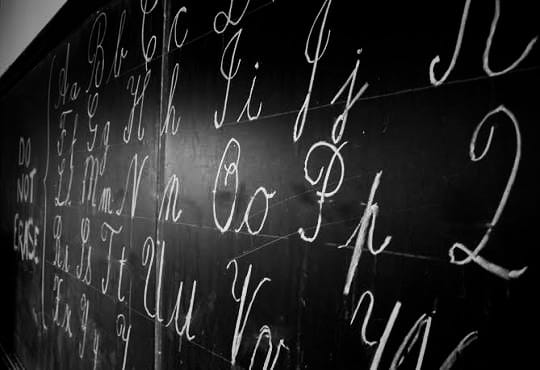
With a frown of concentration and my tongue between my teeth, I struggled to make nice round letters with my fat pencil. After a mistake, I’d erase and tear the paper. It was a big deal for me, too, to remember where the stick belonged on the circle for b’s and d’s. I get sweaty just remembering it. After mastering the little letters, we moved on to capitals, above and below the dotted line. They seemed easier, since we had more space to use.
During Third Grade, the really hard stuff began with cursive, difficult for a dexterity-challenged kid like me. Luckily, I was a “rightie.” The teachers often discouraged “lefties” since they had to contort their arms into pretzels when writing. I remember thinking they looked like they were writing upside down.
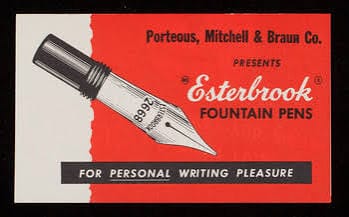
We graduated to ink in Fifth Grade. I loved my pink Esterbrook pen with its changeable ink cartridge. (Despite what my grandkids think, I did not use a quill pen and dip it in my desk inkwell, although there was a hole for one.) Ink meant no more erasures. Oh, the pressure!
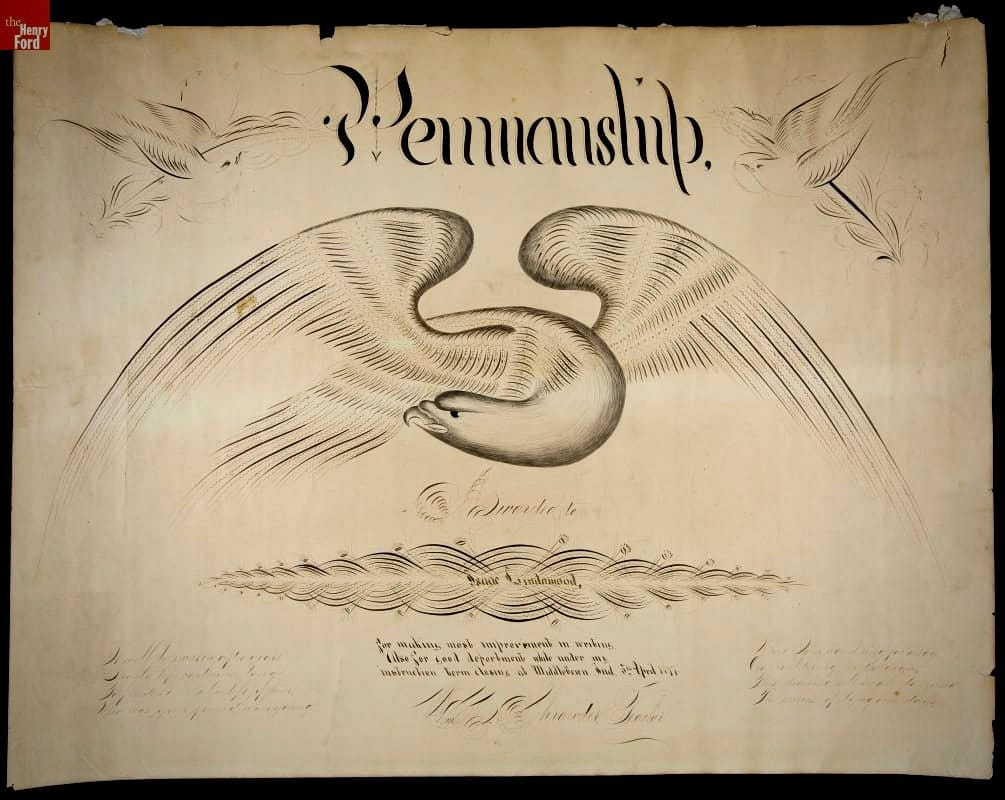
Each year, a writing sample was added to our portfolio, labeled My Writing, in careful teacher-generated printing. It followed us from grade to grade, with a new sample added each year. The teacher and our parents could see our progress, but also where we needed work. A childhood friend, who attended a grade school across town, remembers handwriting contests, with the winner receiving a free Sheaffer pen. In fact, she tells me her husband, who grew up many states from us, participated in such a contest and won a pen with his beautiful script. I have no such memory, probably because my writing looked like the product of a clueless five-year-old who’d never held a writing instrument.
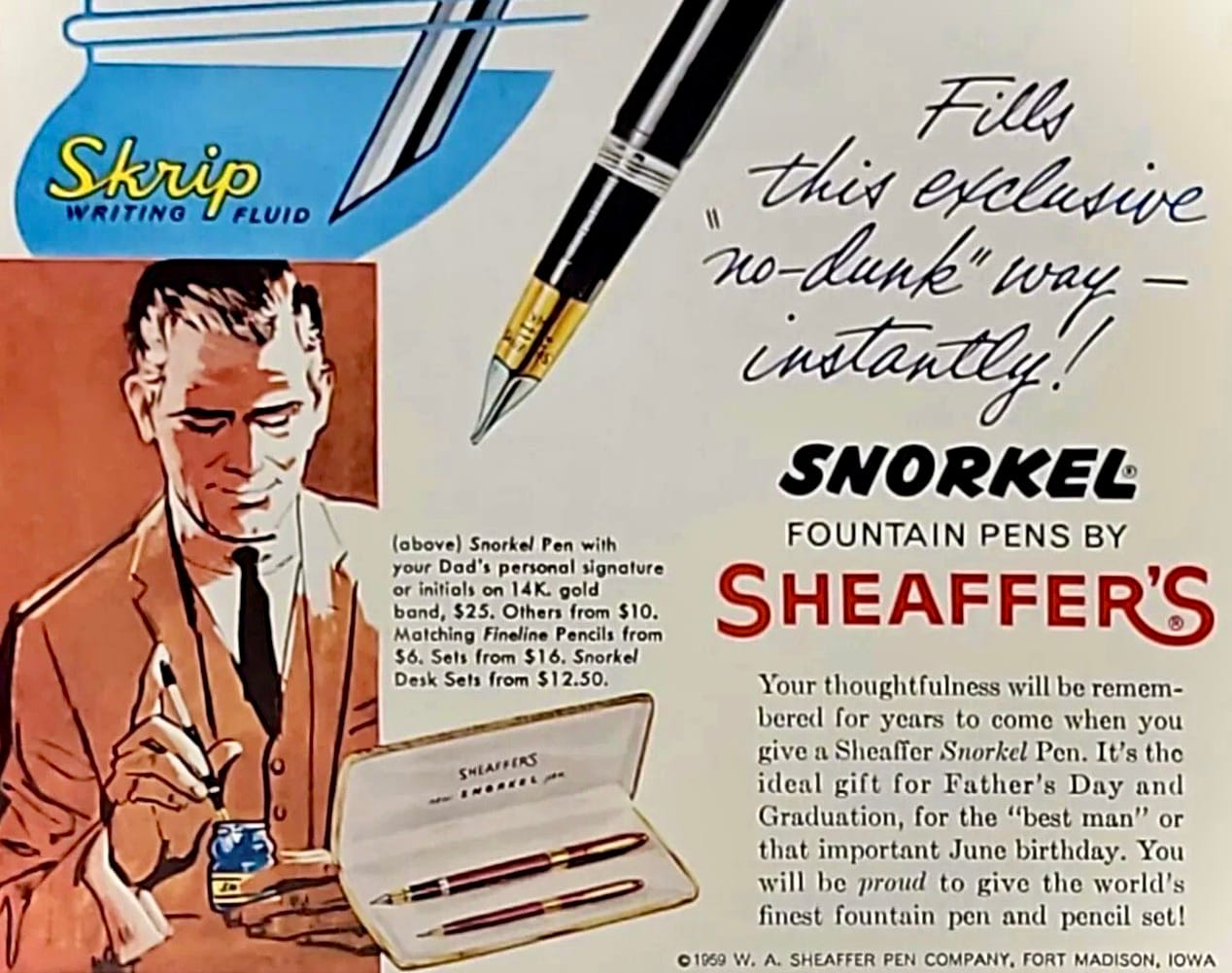
The training we got as kids couldn’t hold a candle to the penmanship taught to the generations before us, however. I remember being in awe of my dad’s signature on my report card. He used a ritual of making small circles with his hand before putting pen to paper — like an athlete warming up. When he finished writing, the capital C in his first name and the E starting our last name looked like small clefs on a musical scale — truly gorgeous.
Instead of penmanship, kids today are taught computer skills: researching topics, basic coding and storing data. I’m thinking of working out a deal with my granddaughter. This Old School person will write her thank-you notes in cursive, if she’ll make me an Excel spreadsheet for these posts.
Carol McEwen is a writer for Stroll By The Bay, Mirimar Beach, Florida, and authored the weekly Old School column for the Arlington Sun Gazette/Gazette Leader. She may be reached at: carolwrites4fun@gmail.com.
Member discussion