
The Struggle Before the Grade: How Parents Can Know When to Ask for Help

By Dr. Ariel Sparrow,
Most parents don't need to be convinced to care about their child’s education. They already do. The harder part is knowing what to pay attention to, what the information coming home from school actually means, and when it's time to do something.
A child can come home happy, complete homework every night, and appear to be doing just fine while a parent quietly wonders whether the work is really where it should be. Is my child keeping pace with classmates? Are the skills actually sticking? Is this frustration typical for this age, or is something becoming harder than it should be? If the teacher mentions a concern, what am I supposed to do with that information?
For families who do not work in education, these questions can be particularly difficult because schools have their own language and processes. Parents may hear about benchmarks, screeners, interventions, progress monitoring, accommodations, 504 Plans, IEPs, enrichment, tutoring, and grade level expectations without necessarily knowing which of those things applies to their child or what should happen first.
The good news is that parents do not need to understand the entire education system to advocate effectively for their child. They simply need to know what to notice and what questions to ask next.
I Think About This as an Educator and as a Mom
I've spent my professional career in education, first as a teacher, then as a school-based administrator, and now working more broadly in student achievement and academic support. Yet becoming a mother has given me another perspective entirely.
I find myself thinking about my own son’s milestones and progress. Is he developing the skills I'd expect at this stage? How does his progress compare with other children his age? What should I be reinforcing at home? When is something worth asking his teachers about, and when should I simply give him more time?
Even with my professional background, I sometimes have to remind myself to check in, ask questions, and resist the temptation to assume that I should automatically know the answer because I work in education.

That experience has made me think differently about parents who are trying to navigate school systems without an educational background. Wanting the best academic outcome for your child does not automatically mean knowing how to interpret everything a school sends home. It also does not mean knowing exactly when additional support is warranted. Sometimes parents simply need help figuring out what the information in front of them means.
Look at the Experience of Learning, Not Just the Grade

Report cards matter, but they are only one piece of information. By the time a report card arrives, a child has already spent weeks receiving instruction, completing assignments, taking assessments, and practicing new skills. The experience leading up to the grade can tell parents quite a bit.
Homework may begin taking significantly longer than expected. A child may need repeated reminders just to get started. A skill that seemed secure earlier in the week may suddenly feel unfamiliar. Reading may produce more frustration. Math may require substantially more adult help. A child may begin making negative comments about being “bad” at a subject or avoiding work that once felt manageable.
One difficult homework night is not a reason to panic. Neither is one disappointing quiz. Children have hard days, encounter challenging material, and develop at different rates.
What deserves attention is a pattern. If the same difficulty continues appearing across days or weeks, or your child increasingly requires more support to accomplish tasks that should be becoming more independent, it may be time to gather more information.
The Challenge May Not Be the Subject
Another reason parents can find this difficult to navigate is that an academic struggle does not always mean a child cannot understand the academic content. A student may understand the math but struggle to organize the steps required to complete the assignment. A strong reader may repeatedly forget which materials need to come home. A student may have excellent ideas for an essay but become overwhelmed by figuring out where to begin.
Organization, working memory, planning, time management, attention, and task initiation are all connected to executive functioning. Difficulties in these areas can make schoolwork look like an academic problem when the student may actually need a different kind of support.
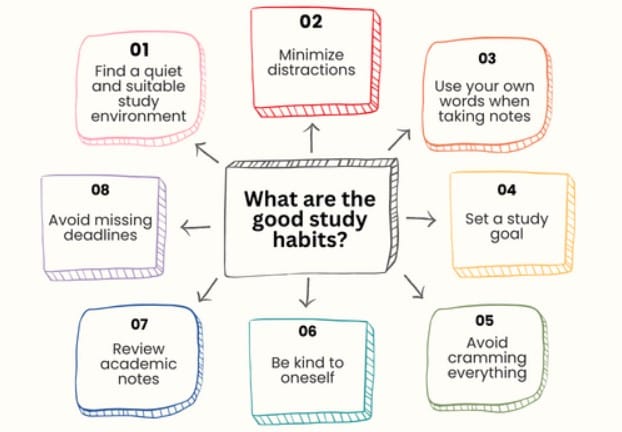
This distinction matters because more practice is not always the answer. If we misunderstand the barrier, we can give a child more and more of the very thing that's already causing frustration without addressing why it's difficult.
The better question is not simply, “What subject is my child struggling in?” It is, “What is making learning harder for my child right now?”
You Do Not Have to Know the Right School Terminology
This is where many parents become hesitant. They know something feels off, but they don't know whether the concern is significant enough to raise or what they are supposed to request.
You do not need to walk into a conversation already knowing whether your child needs an intervention, accommodation, evaluation, tutor, or something else. In fact, deciding on the solution before understanding the problem can sometimes send everyone in the wrong direction. Start by gathering information.
Your child’s teacher is one important source because teachers see students learning alongside peers, responding to instruction, and completing work independently. A simple check-in about whether your child is meeting expectations, working independently, or needing repeated support in a particular area can provide useful context.
The goal is not for parents to become educators themselves. It is to gather enough information to understand whether what they are seeing deserves a closer look.
From there, the next step may be surprisingly simple. Your child may need additional practice at home. The teacher may already be providing targeted support at school. There may be a specific foundational skill that needs reinforcement. Executive functioning may be the larger barrier. In other situations, the concern may warrant a more formal conversation with the school. You do not have to know which one it is before you begin asking questions.
Early Support Does Not Mean Something's Wrong
There can be a tendency to wait for clearer evidence. Parents wait for the interim report, the conference, the first report card, or sometimes until the child is actually failing. But seeking information early is not overreacting, and providing support does not mean something is wrong with your child. Sometimes early support is small. A student may need help strengthening one foundational skill, developing a better organizational system, practicing how to retrieve information, or having additional individualized time to work through a concept that has not quite clicked.
Addressing those needs early can also protect something that's much harder to rebuild later: confidence.
There is an important difference between a child thinking, “This is hard right now,” and beginning to believe, “I am just bad at this.” When academic frustration becomes part of a child’s identity, adults are no longer addressing only a skill gap; we're also working to rebuild the way that child sees themselves as a learner.
Sometimes the Next Step Is Simply Talking It Through
Sometimes parents simply need a place to start. You may know that something does not feel quite right academically without knowing whether it requires additional support, a conversation with the school, more practice at home, or simply more time. That uncertainty is why I offer families a free 15-minute academic consultation: a brief opportunity to talk through what you're seeing and think together about what the next step might be.
Maybe you received an assessment result and are not sure what to make of it. Maybe homework has become a battle. Perhaps a teacher mentioned something at pickup or in an email that's been sitting in the back of your mind. Or maybe you simply have the feeling that your child could be doing better, but you don't know what question to ask first.

The consultation is not a commitment to tutoring, and the purpose is not to convince every family that their child needs additional services. It is a brief opportunity to talk through what you're seeing, consider what information may still be missing, identify questions you may want to ask the school, and think about what a reasonable next step could be.
Falls Church and surrounding area families who would like to talk through an academic concern can schedule a free 15-minute academic consultation here:
Schedule a Free 15 Minute Academic Consultation
Ultimately, advocating for your child does not require knowing every acronym, understanding every school process, or having an educational background. It begins with paying attention to your child, trusting yourself enough to ask questions, and being willing to gather more information when something does not feel quite right.
The question does not have to be, “Is my child failing?”
A much more useful place to begin is, “Is my child making the progress I would hope to see, and if not, what do we need to understand next?”
Dr. Ariel Sparrow is an educator, former teacher and school-based administrator, and owner of Club Z! Tutoring of Falls Church. Her professional work focuses on student achievement, academic intervention, MTSS, executive functioning, and helping families better understand and navigate their children’s learning needs. Through Club Z! Tutoring of Falls Church, she supports students and families through personalized one-on-one tutoring and educational consultation. Dr. Sparrow can be reached at: asparrow@clubztutoring.com.





Member discussion