
Virginia Village Redevelopment: City Council Approves RFP, Ensures Community Input
In a tightly structured yet grueling five and a-half hour Action Meeting starting Monday evening and ending at 1:11 a.m. Tuesday morning, July 23, the F.C. City Council voted 6-1 to officially issue a Request for Proposals (RFP) for developers on the redevelopment of Virginia Village, the 4.5-acre site “along South Maple Avenue, between Bowl America and the Tax Analysts building.”
Because the Virginia Public Procurement Act legally bars the City from releasing full proposals with developers’ proprietary information before a contract is awarded, the Council decided developers must nevertheless submit for public review comprehensive “Executive Summaries” of their proposals. Featuring basic visual blueprints and massing models (i.e., indicating the proposed structure's overall volume, scale, and shape) these summaries will be released to the public in early August giving the community a four-to-five-week window to review and comment before the project’s Evaluation Committee brings its final recommendations to the City Council in September, 2026.
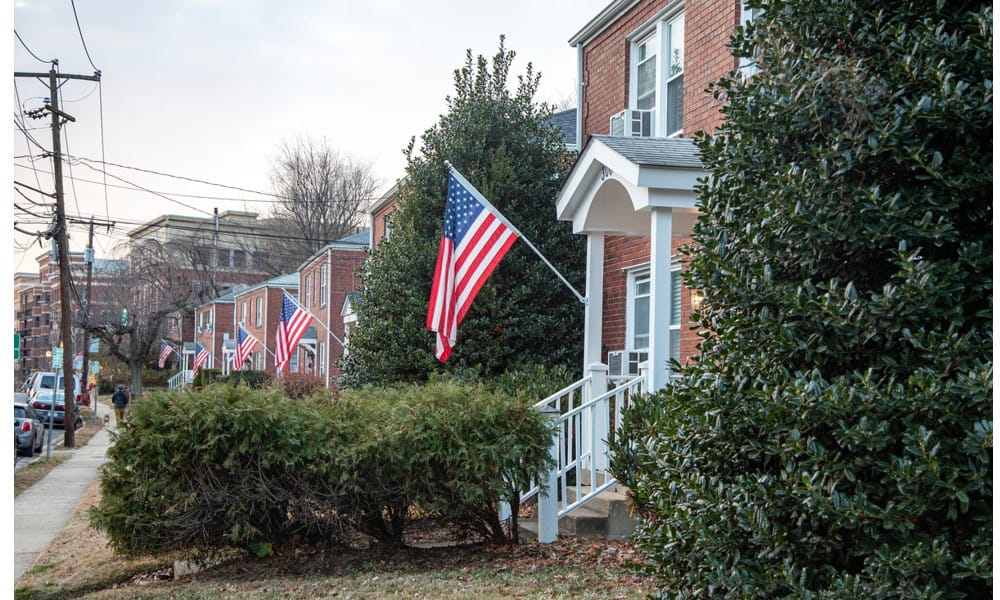
According to the City, Virginia Village has “some of the only market affordable housing in the City, with 20 four-unit apartment buildings.” Over the past decade the City has “strategically purchased” nine of the “Virginia Village properties.... with the goal of preserving and expanding the neighborhood’s affordability through redevelopment.”
So, City planners, representatives, and officials are engaging with Falls Church City residents – especially in adjoining neighborhoods such as Winter Hill and within close proximity – to solicit community feedback on the broad outlines of how the City might either refurbish the site’s worn 85-year-old brick four-plexes while adding much-needed affordable housing to the units, or whether to build a multi-story mixed use apartment complex on the site with even more affordable housing units. Or, some sort of “hybrid variation” of the options.
According to the City’s Planning Office, “Prior to redevelopment, the City is revisiting the South Washington Street Small Area Plan (2013) and the Downtown Small Area Plan (2014) to ensure that their recommendations for the Virginia Village area are aligned” with the “community's vision and needs, recent Comprehensive Plan updates, and City policies.”
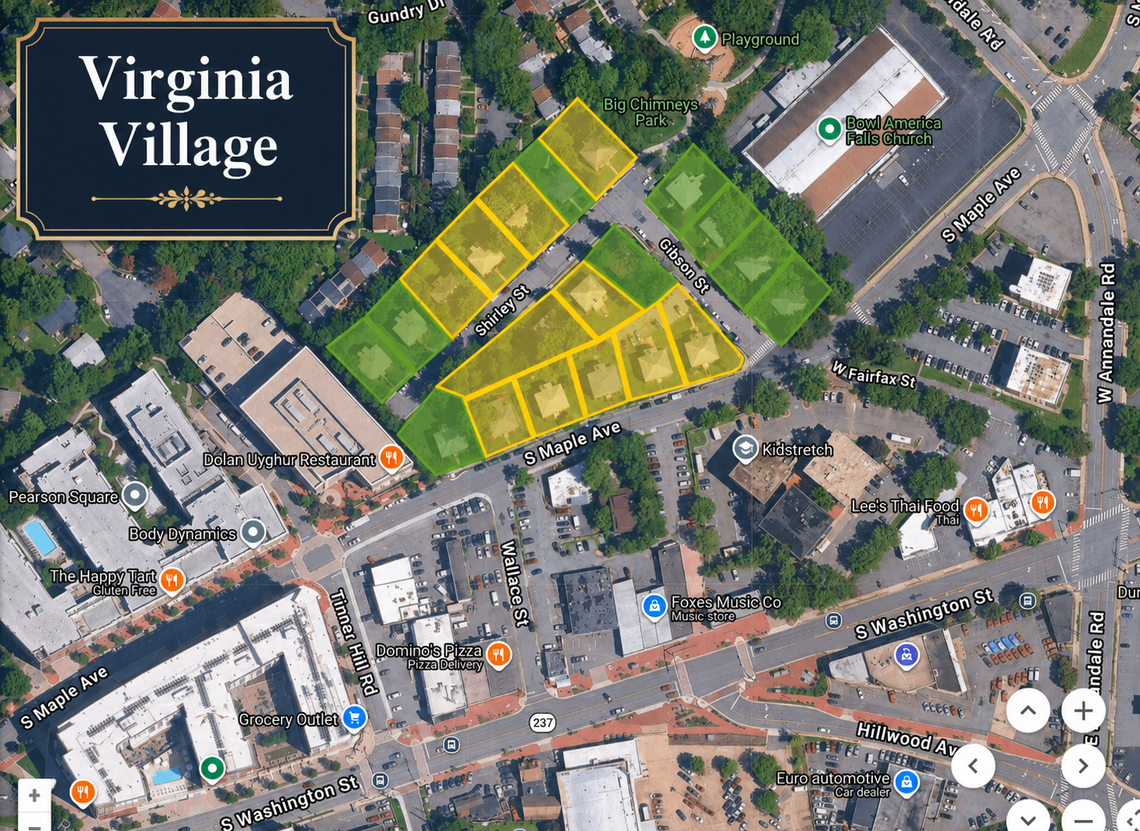
The City asked the public to consider and perhaps comment upon the following “Proposed Redevelopment Options” for Virginia Village:
- Option 1 (Rehabilitation & Minor Expansion): Preserves the existing footprint of the city-owned quadplexes while applying major modern updates. This scenario allows for minor expansions, such as adding a floor or small bump-outs to the current structures to increase the number of units. [1, 2, 3]
- Option 2 (Low-Intensity Redevelopment): Razes the existing 1940s-era structures to build new, low-density apartment communities. This option envisions multi-story buildings reaching up to four levels. [1, 3]
- Option 3 (Larger Infill Redevelopment): A comprehensive tear-down and rebuild that maximizes housing density. This scenario allows for multistory structures ranging from five to seven stories high in specific, targeted zones to significantly increase the city's affordable housing inventory. [1]
Since March, the City has held a series of public meetings to solicit community feedback on developing the Virginia Village RFP and the various pros and cons of each option.
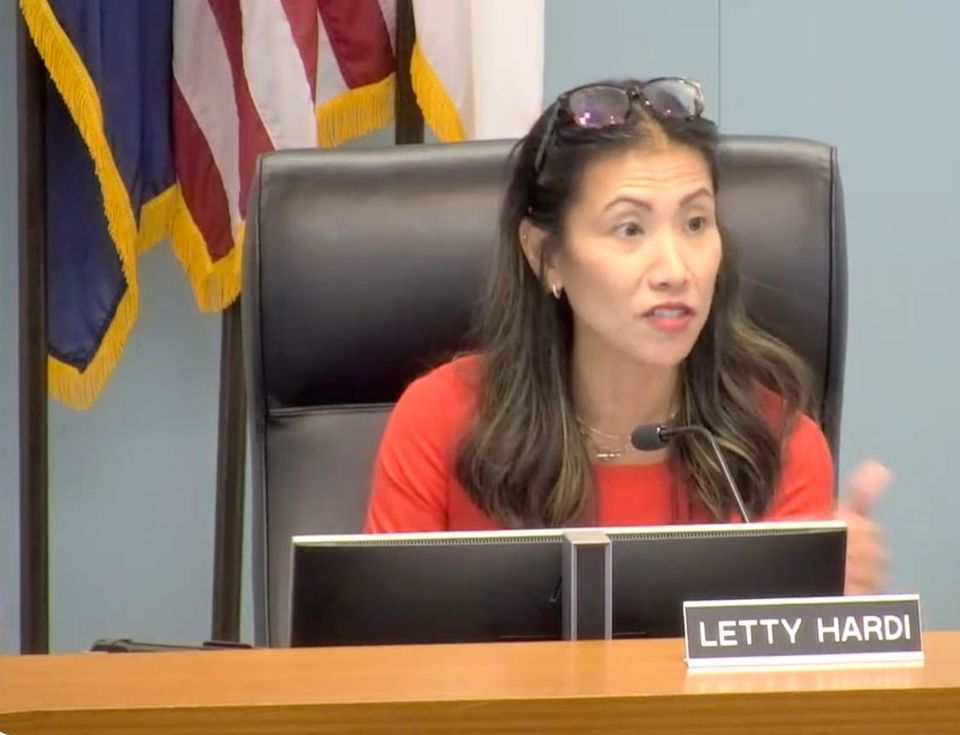
In her June 19 constituent newsletter Mayor Hardi emphasized how important community feedback is to the project as it moves forward. Urging residents to let their voices be heard, the mayor described what to expect from the June 22 Action Meeting: “....City Council is poised to consider first reading (i.e., vote 1 of 2) on the zoning for the Virginia Village site and authorize the release of the RFP so we can hear how the development community might renovate or redevelop the city-owned quads.”
“A few thoughts,” the mayor continued in rapid-fire. “We’re just beginning. If we move forward next week, this is the beginning – not the end – of a process that will likely stretch into 2027 – full of ifs and decision points to come. There will be multiple opportunities for public input, proposal review, negotiations, additional zoning action, site plan review, and affordable housing funding applications before any project moves forward…. Hopefully we’ll get back interesting proposals from the development community at the end of the summer, we’ll have high-level presentations of the proposals to the community, a committee will be reviewing and scoring the proposals, City Council will choose a proposal and partner in the fall, negotiations on interim and comprehensive agreement with the partner, final zoning changes (vote 2 of 2) in the late fall, then a site plan process in early 2027, and affordable housing funding application with Virginia Housing in March 2027.”
As an adherent of the concept of “abundance” – the critique that in recent decades, liberals have put too many regulatory roadblocks in the way of publicly beneficial building projects – the mayor warned against too much delay in the process. Not only does the City have a waiting list of over 700 people applying for affordable housing, but prices of homes and construction are bound only to rise given current market conditions. “....The concerns we’ve heard about setbacks, height transitions, and neighborhood compatibility deserve thoughtful responses,” Hardi continued. “At the same time, we should be careful not to layer on so many restrictions that we discourage the very proposals we’re hoping to attract…. The goal should be to create zoning that both respects the surrounding neighborhood and allows for financially feasible, affordable housing options to be built. If setbacks are too deep or height limits too restrictive, we may significantly reduce the number of affordable homes we can create….”
“....The community conversations about building form, transitions, height, and compatibility are happening today,” the mayor emphasized. “Adding another layer of review later, even a skinnied version, would add time, cost, and uncertainty to a project where the financial margins are already tight – all of which means less housing or more expensive housing or no housing at all. While a typical development process brings people along to help shape the project, we’re having those exact discussions and debates right now.”
During the June 22-23 Action Meeting, City officials and Council members heard a wide variety of impassioned in-person and online public testimonials on the Proposed Redevelopment Options. The statements were heartfelt, well-considered, and based on the true lived experiences of the speakers several of whom have lived in the City for multiple decades.
While the viewpoints predictably ranged from Nimby (not-in-my-back-yard) to Yimby (yes-in-my-back-yard), no speaker openly opposed the City's ongoing priority to develop more affordable housing units.
And following the statements and throughout the meeting, every single attending Council Member emphasized the critical importance of public engagement in the redevelopment process as the City moves toward clarifying its specific priorities for the Virginia Village site and formally requesting proposals from developers.
Public Comment Highlights from the June 22-23 Council Action Meeting
Here are condensed and edited transcriptions from the individual in-person testimonies at City Hall during the Public Comment segment at the outset of the meeting. While some of the statements contain factual errors later corrected by Council members or City officials, they've been transcribed directly to provide readers with a better sense of what’s currently on people’s minds with regard to Virginia Village. We would recommend watching the entire meeting to gain the best understanding. Please forgive any incorrect transcriptions of names.
Is the City pursuing a sensible strategy that preserves its legal flexibility and planning options going forward, especially if there's public disapproval? Are some of the speakers making unfounded assumptions? Are some of them jaded from earlier development battles in the City, or are they generally inclined to be supportive of the City Council's choices? Do some of them share perspectives you haven't considered before? Which positions are closest to your own on the Virginia Village question?
Sonya Breehey
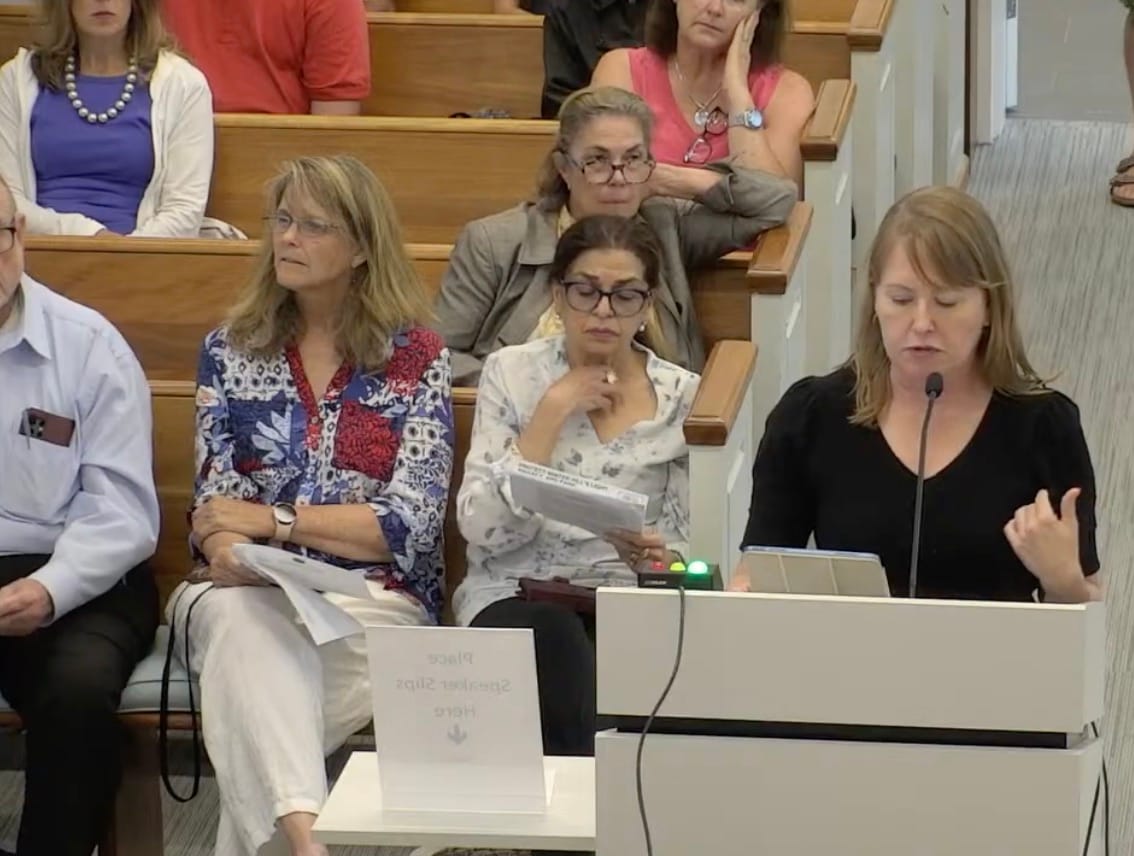
Good evening. My name is Sonia Breehey. I'm the Northern Virginia Advocacy Director for the Coalition for Smarter Growth. We're a regional smart growth advocacy organization here in the D.C. region and I live here in the Falls Church community just across Route 29 from Maple Avenue. I'm here tonight to speak in support of City efforts to preserve and expand affordable housing options in the Virginia Village neighborhood. This is a unique and important opportunity for the City to provide much needed affordable housing and support its housing goals. Leveraging the City properties to either preserve and improve the existing affordable units or identifying opportunities to ideally provide significantly more affordable housing is a winning proposition. Virginia Village is a great walkable location served by multiple bus routes and is a short bus or bike ride to two Metro stations. Providing more affordable homes here would allow people to live closer to their work, provide access to quality schools and other opportunities the City has to offer, and contribute to a diverse and vibrant Falls Church. I appreciate the proactive community outreach you've undertaken, listening to the community feedback and incorporating much of that into the request for proposals. Detailing the three potential scenarios of varying size and scope while also setting the parameters for each allows flexibility based on what may or may not be feasible and will help identify the winning development scenario that both works for the community and meets the City's vision. I appreciate and support that the RFP seeks to expand affordable units to serve larger households, ensure quality modernized units and sustainable design, provide affordable units at 30 to 80% of the Area Median Income [AMI] with 30% targeting much needed lower AMIs at 58% and below. Also ensuring setbacks, building heights, and step downs to provide well-designed transition to neighboring Winter Hill and Big Chimneys Park. Maintaining pedestrian access to Big Chimneys Park and including shade trees, open space and placemaking. Staff developed a thoughtful and inclusive RFP that will help to identify the best opportunity to preserve and expand affordable housing in the Virginia Village.”
Teresa Clark
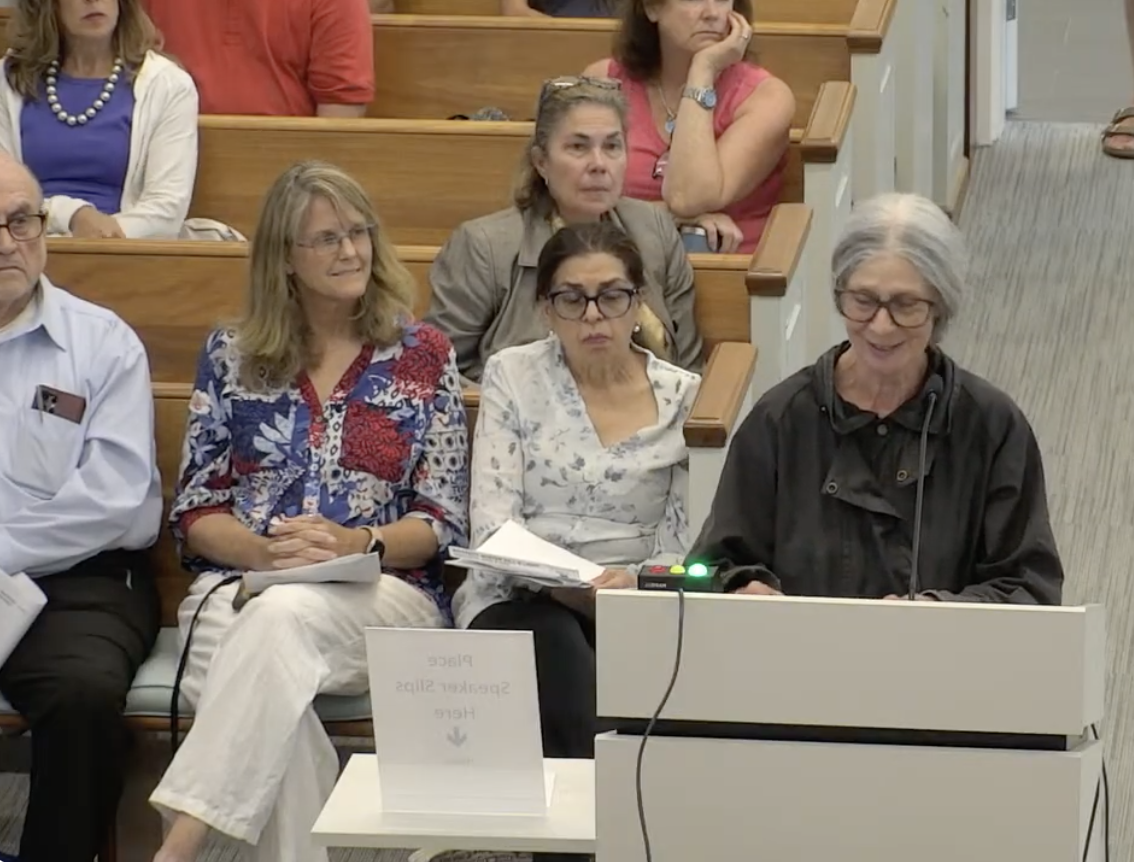
Hi, I'm Teresa Clark. I live in Winter Hill…. Basically, I've been here for 35 years and I just love and enjoy living in Winter Hill. Having the affordable housing near us, I think it's a wonderful idea. It's great for the community and everything. The only thing I'm concerned about is with the stories – I suggest having a three-story building with a setback at a maximum of 40-feet from the garage and the service. I would not suggest having it facing Winter Hill. And also having outside space which I think is very very important.
Joseph Carmody
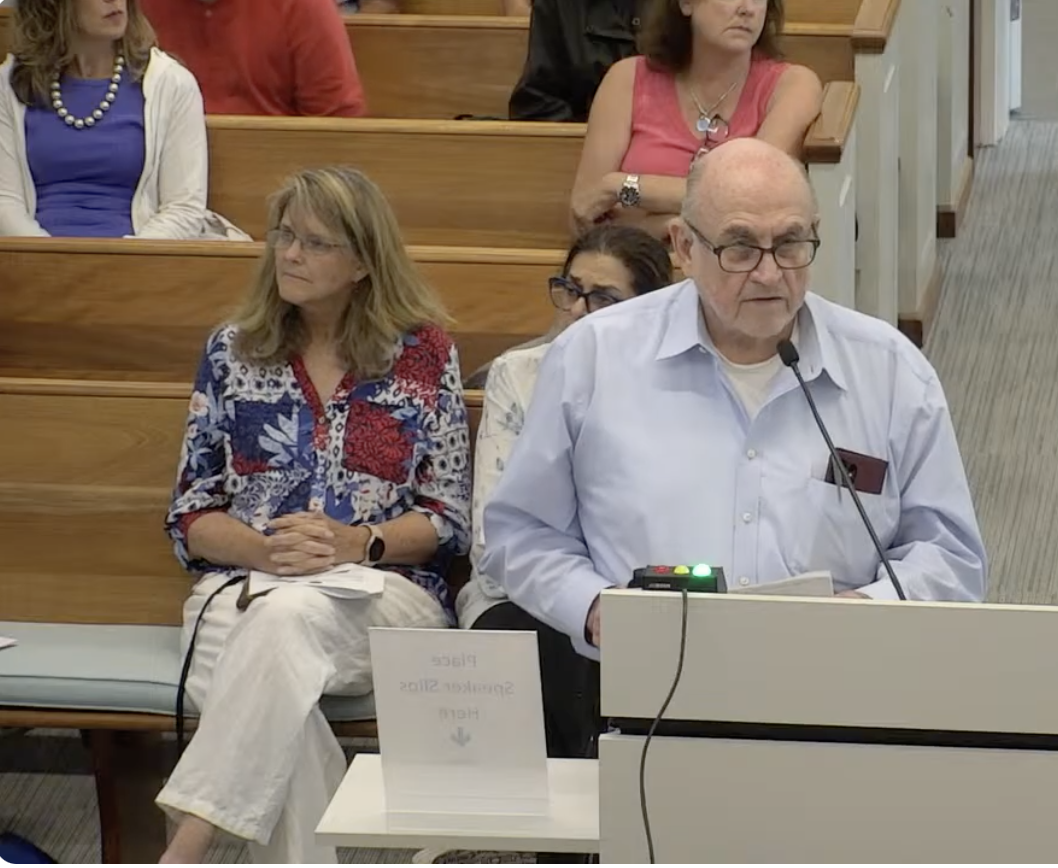
Good evening and welcome to everyone who supports affordable housing. I have previously submitted comments, but my comments tonight are grounded in the meeting we had with the mayor and a couple of walking-abouts…. I'm Joseph Carmody. I live…. in a home adjacent to the affordable and subsidized housing. My primary concerns are with the planned competitive bidding process that puts the cart before the horse and puts the mayor, Council, and the community in a take-it-or leave-it position regarding the final configuration of the affordable housing of Virginia Village. My advice is based on recent meetings. As I said tonight, you will have a first reading of the zoning modifications. At the same time, you're planning to authorize the RFP that incorporates suggestions, but no real requirements.
Based on my experience, I'm afraid you should use a somewhat modified process. First, complete the first reading of the zoning modification, thus leaving the zoning requirements open for public and developers’ comments. I think it's important to get developers’ comments. This would permit the Council to have more input and control over the final RFP. Second, publish a draft RFP with minimal requirements that solicits from the public and potential development outlines of proposed housing configurations, and the zoning requirements necessary, to make those configurations both feasible and affordable. Do not limit yourselves merely to capacity statements that will only elicit brochures from developers. Most importantly, the suggested sequence allows the Council and therefore the values and communities you represent to maintain control and decision making over the final configuration of the new housing.
In summary, finalize the zoning, then compete the RFP based on the developers and community's input solicited through public comment on zoning and drafting the RFP. I'm asking to defer publishing the final RFP and to finalize the zoning and RFP based on the public and developers' comments, then run the competitive procurement process. I believe this is the way for the Council and the public to retain control, meet the mayor's and Council's stated goal to successfully build quote a 'high quality community that fits within the surroundings,' while meeting the City's need for much more additional affordable housing.
Carl Anderson
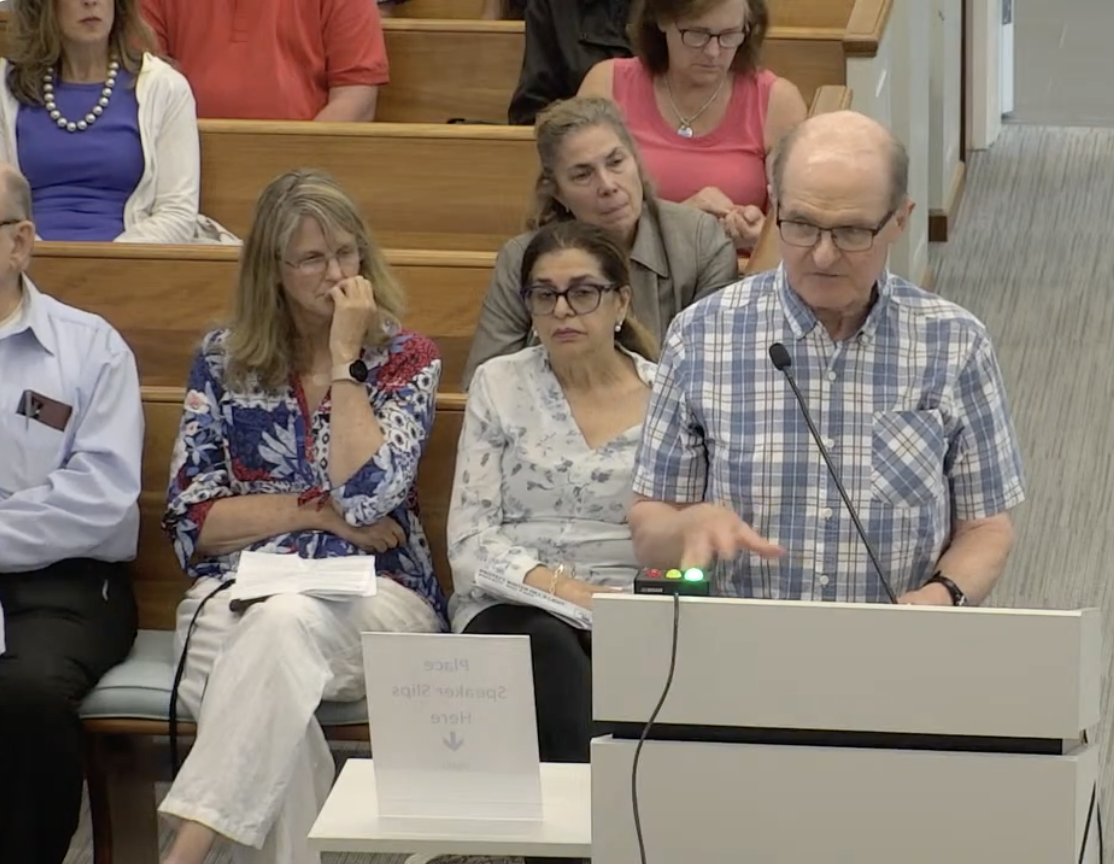
I'm Carl Anderson. I've been a resident of Winter Hill for 48 years now. First of all, I want to say I fully support affordable housing and I think we have two beautiful models or existing beautiful models already in Winter Hill. You have the subsidized apartments on the west side of Annandale Road and you have the apartments on James Street and then you have the apartments on South Virginia Avenue downhill from the Winter Hill town homes and they all have a lot of greenery around them. There's a lot of green space. The residents can get out and mingle with the other residents of Winter Hill and it adds to the community feeling that we have in Winter Hill.
The second thing I'd like to say is I didn't want to come here tonight. I don't like saying this because I don't really trust the City Council to do the right thing. I've been watching really ugly buildings going up for the last 10 years. You always allow exceedances for height. You allowed the elimination of buffers so that the buildings look like warehouses coming right up against the curb. And it's like if you look in Arlington and look in Falls Church, it's like the Arlington County Board and the Falls Church City Council are trying to turn Northern Virginia into northeastern New Jersey. I went to school at Rutgers and I was really appalled at the urbanization up there….
Finally, one of the problems I have is that I just feel like the people are not really listened to and a lot of other people I think feel the same way I do. And that's maybe one reason you don't see more people here because 15 years ago I told myself I was never going to come to another one of these meetings, but here I am only because somebody asked me to. But, I'll just finish with this: my comment I sent in this morning. Mayor Hardy recently sent out a June 12 update stating that our goal should be to create a high quality community that fits within its surroundings. I would like for the mayor to be held to her words. Falls Church already has too many high rises that look like industrial warehouses. I recall that when Pearson Square – which is at least an attractive building, I'll give it that; Pearson Square is a beautifully well-designed building – but when it was built in the early 2000s, from five to seven homes in our community were structurally damaged. They were the homes closest to Pearson Square blasting and excavation operations. At the time, I was president of the Winter Hill Homeowners Association, and I wrote to the City protesting the damage to our community and describing what I knew of the damage. I'd been able to go into a couple of homes. I just think it's very telling that the City did not respond to my letter and that's why I say we have a government ‘of the developers, by the developers, and for the developers.’
Heather Pressler
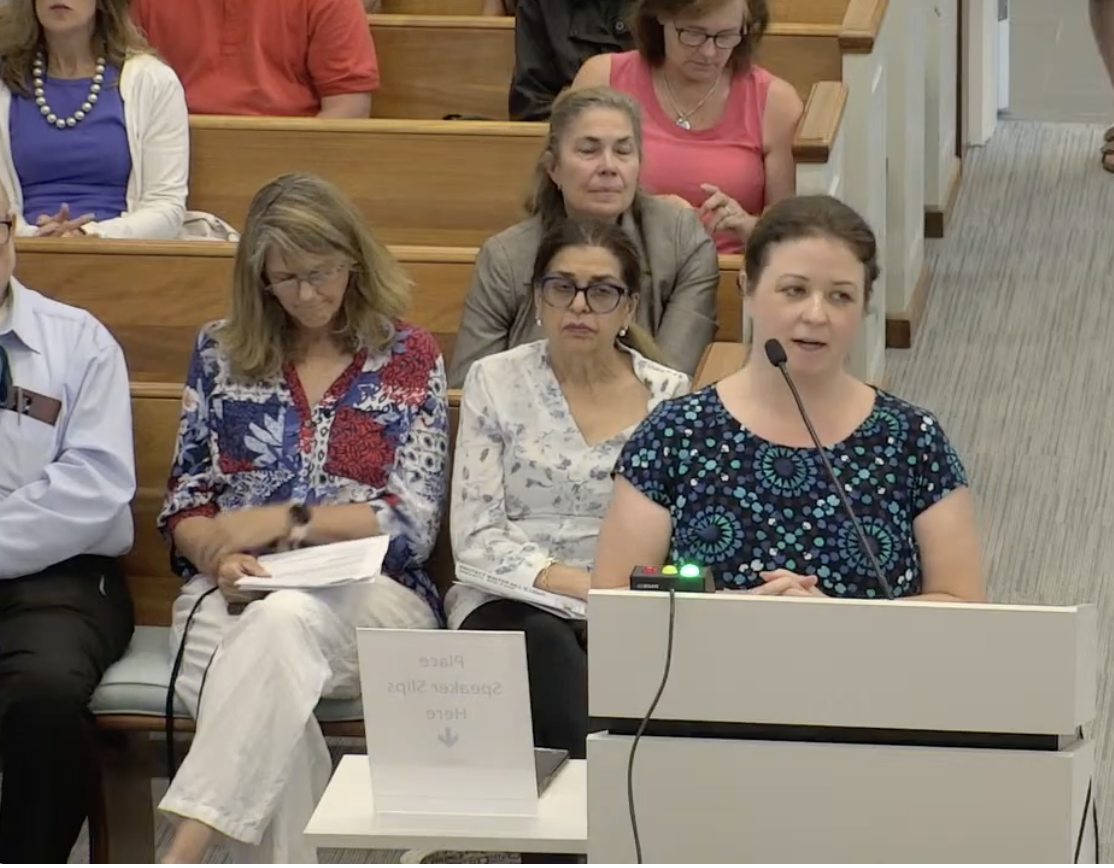
Carl, thank you for your comments as well because I actually had the same hesitancy to come here today because I've been to several meetings on this project in particular, but other projects in the past as well and have felt the same sadness about coming to this meeting because I just feel like I don't make a difference when I speak. But I agree with a lot of the comments that have been said so far with regards to us not having zoning set in place before we have an RFP that's going out. No standards that we know of that this building is going to meet. And then behind closed doors, one proposal will be picked, that one comes forward, and nobody gets to comment on it because it's too quick of a process. And I've also expressed this in writing that I feel like this has been a long time in the making, and I want to see this happen, but I want to see this happen with proper input from the community with us being able to have a discussion about what our new neighbor – meaning the giant building presumably – is going to look like and how it feels. And having that set in space in time. I also think it needs to be set fairly for the whole City. I kind of feel like Winter Hill has been the butt of some of these projects recently where these projects are right next to our community and being built on special RFPs at all times, which means other parts of the City don't have to have those next to them.
We had an example of an acreage next to Oak Street Elementary that was much larger than this parcel that we're talking about here and that was turned into a residential park and not developed. And I know there were many reasons for that. However, it definitely feels like that was done because someone doesn't want it next to their house. If we put it next to Winter Hill, that's fine. I think it just needs to be a standard that we set for all parcels of certain sizes. So, if we're saying that all parcels of 2-acre sizes can be developed with a seven story building, then that needs to be fair and the whole City needs to agree to that…. So, I think it just needs to be fair zoning rules across the board when we're looking at the development of the City in general. And again, on this particular project, my concerns are that this has been a very quick timeline.
We don't have enough time even in the most important phases of this project to have community comment or feedback. And then it's just done and then it's either we're going to fail …. or we're moving forward with something that maybe the community is really opposed to …. I moved to the City as a single mother and so I was potentially one of those people and I will say that a lot of my friends at that time were the same in Winter Hill and the ones that moved away were the ones that couldn't purchase property. It wasn't that we were looking for rentals. We were looking for purchasing. So, I don't know if that angle has been examined at all for some of these future affordable housing projects, but that was really the problem with keeping residents in Winter Hill.
Peter Markham
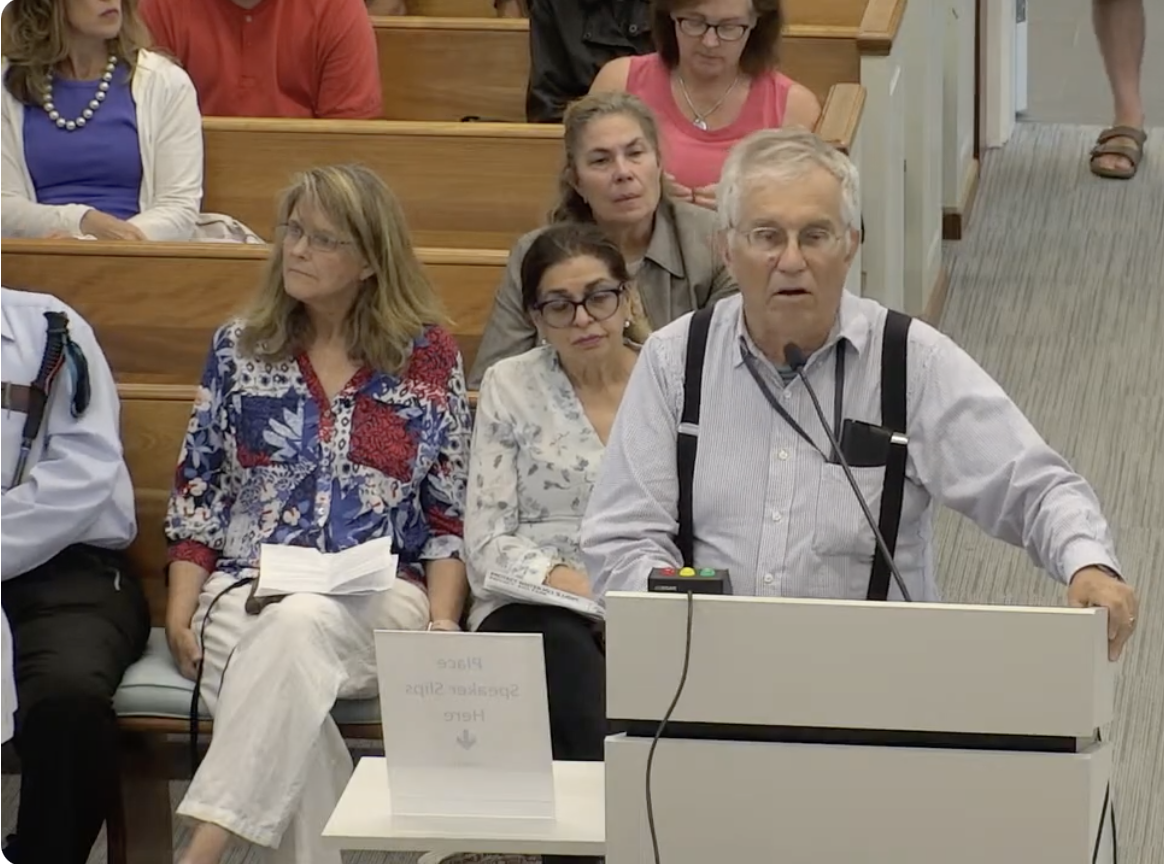
Fred Thompson is ill and couldn't make it tonight. I'm reading from what he has written and I think everyone at the Council has received a copy of this. Fred and I are for affordable housing and Virginia Village. Fred has some suggestions of which you are probably already aware and which have been echoed by some of the people in this room.
Fred's main suggestions are that the RFP clarify the basis for the award, allow and encourage alternate proposals, eliminate the 6-7 [stories] conundrum [on option C / 3], and use the zoning standards and proposed TO 26-15 as the technical guidance for the builders…. the EAC will choose and propose the award to the respondent whose proposal provides the maximum number and range of affordable units while minimizing any costs incurred by the city…. [We also suggest] allowing and encouraging alternate proposals….
Beverly Warnock
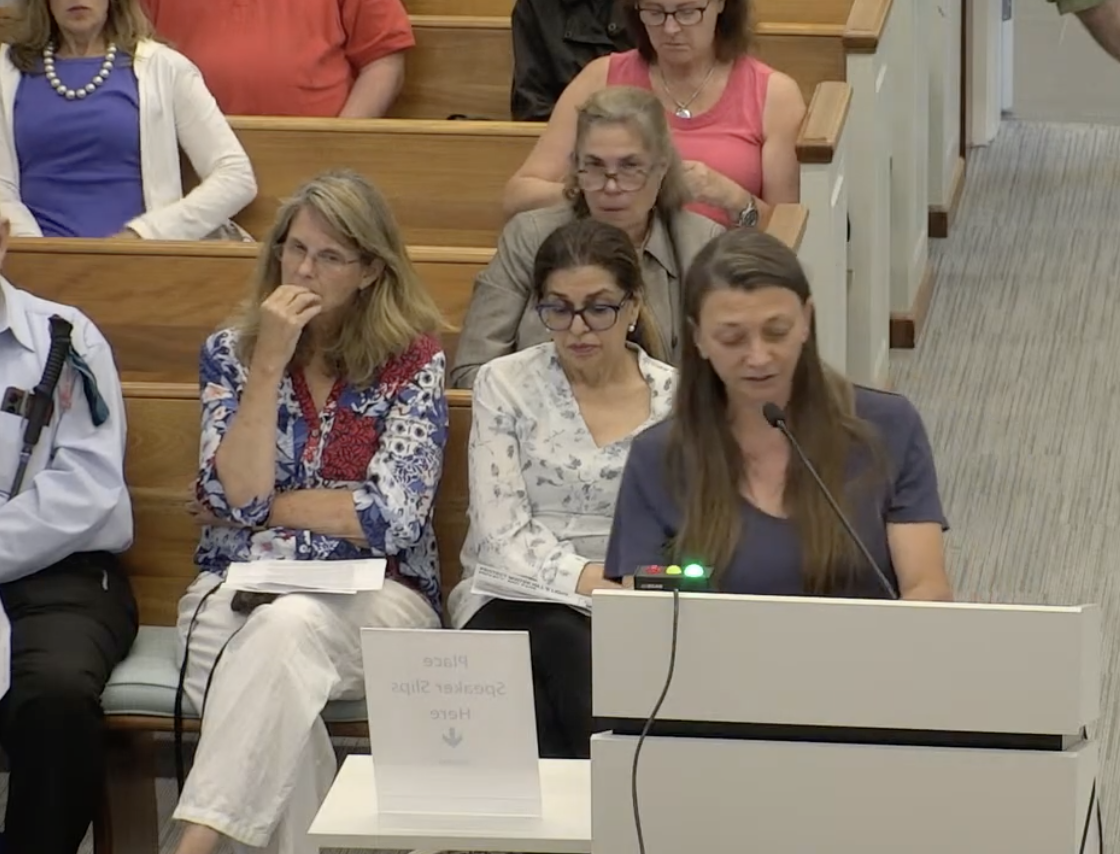
My name is Beverly Warnock and I'm speaking on behalf of myself and my father, a private property owner and resident of one of the independent quad-plexes in Virginia Village. He has owned this property for 60 years. To be completely frank, this entire process has been disheartening. Our background is not in municipal planning and zoning. When we listen to these meetings, we are trying to decipher code and planning terminology. Throughout this project, private owners were given repeated assurances that the City wasn't going to do anything to our land. In fact, Matt and Jack stated in a community meeting that property owners could simply reject any new zoning, thereby maintaining our current zoning and avoiding your guard rails. Is this really the case?
Throughout this, I keep asking, ‘What's the catch’? What is the financial and economic impact you are making on our property? Please speak to that. As we sit through these sessions, it has become painfully clear that the city is proposing sweeping actions that will fundamentally restrict our property rights. You may call them guard rails, but to us they are significant uninvited restrictions. Mayor Hardy, at the June 15 work session, you stated, 'Hopefully this process is signaling to the non-City-owned quads that we're pretty serious about doing something and now would be a really great time to join in because the 'by right' bar is a pretty high bar.' Hearing that felt less like an invitation to collaborate and more like a high pressure tactic to box us in. But these aren't just units on a grid map. They are people's homes, investments, retirement plans, family legacies.
This neighborhood is my legacy. I was brought home from the hospital to Virginia Village. It was my first apartment after college, and my plan is for it to be my retirement place. To the Winter Hill residents who support this redevelopment plan, I ask you this. How would you feel if this proposal included your home? How would you feel if others dismissed your concerns because they believed their macro benefits outweighed the costs to you? The difference between your neighborhood and mine is smaller than you think. The same respect, transparency, and consideration you would expect for your property, for any of your property, must be extended to ours. Public input is only valuable when it is truly considered and not just a checkbox being checked. This isn't about opposing progress. It's about ensuring that progress doesn't come at the expense of fairness, informed consent, and respect for the people who call this community home. Please slow this process down…..
Rebecca Johnson
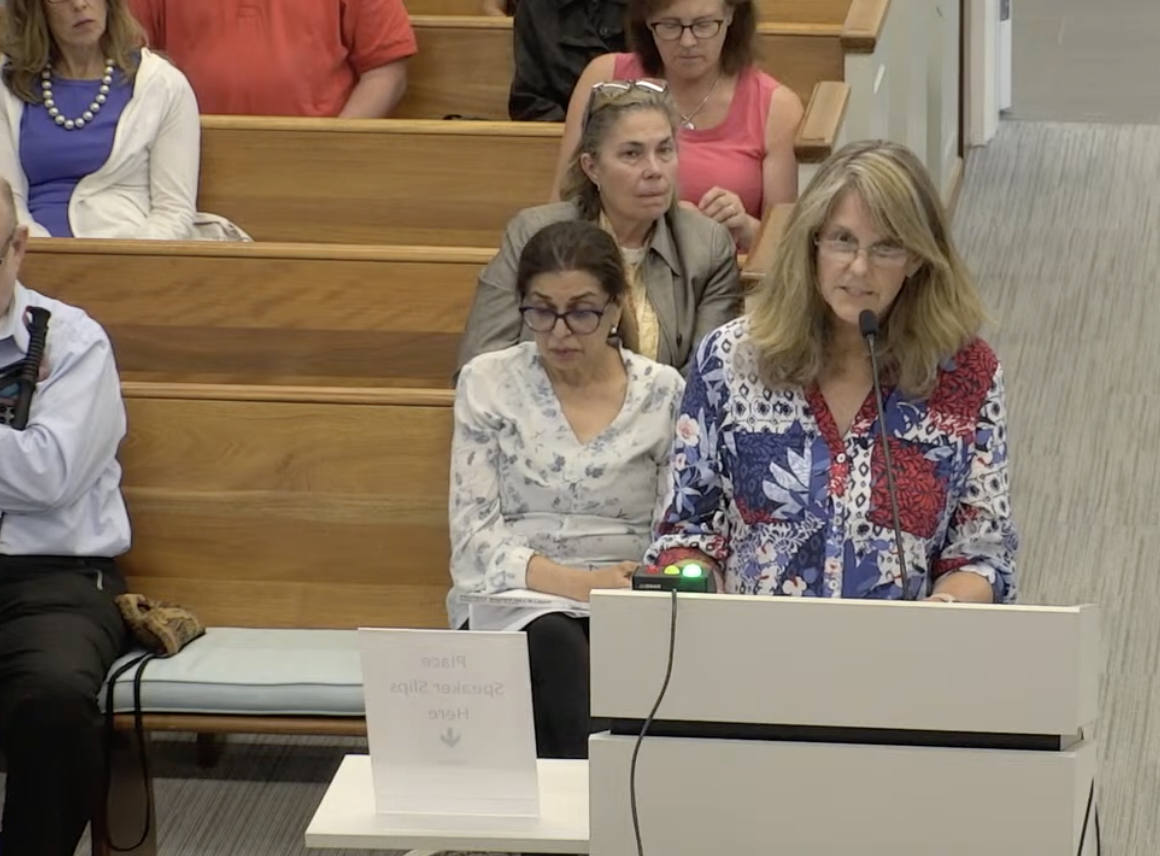
…. I appreciate the comments from the previous speaker and actually have walked the streets with the Council members as well as walked the streets with the owners and the streets with the tenants of the Virginia Village. History is near and dear to my heart. I understand that the priority before you is housing, low income and affordable, and specifically delivering more units. And I agree that we should have more affordable units in Falls Church. But the question is not whether we grow. It's whether we do it in a way that is complete, responsible, and aligned with the [historical] values of the Council.... Virginia Village gives you this rare opportunity if you require it. This is not just an aging housing stock. It is a defining part of Falls Church history built during the World War II war worker housing expansion that shaped this City. And importantly, a formal historic survey with the Virginia Department of Historic Resources has not yet been completed. This would allow that the Village become a historic overlay district and allow the opportunity for owners, both City and non-City, to tap into historic restoration tax credits to restore these homes. Moving forward without that step closes the door on the opportunity for these owners.
I'm also going to bring up a term called ‘blended preservation’ which I've written about previously. Blended preservation is an opportunity that is not anti-growth. It is actually disciplined growth. We have seen this type of blended opportunity in Arlington and Georgetown. I have cited this for a specific inclusion into a Small Area Plan that Mr. Dave Snyder asked me to include. There's a footnote to the Arlington one for your reference. Blended preservation is the fastest path to getting units approved and built without opposition, without delays, without lawsuits, and without redesigns. It allows you to add units, diversify housing types, increase density while maintaining the architectural scale and community fabric that already exists. It reduces displacement. It protects the adjacent E.B. Henderson site, that's a DHR site. It protects Big Chimneys Park and creates a financially viable path forward through tax credits and low income to be used. I ask the Council to please consider not approving any zonings today until we do get a Historic Overlay Survey through the DHR. I also want to have the RFPs to support preservation in addition to units preservation.
Hal Lippman
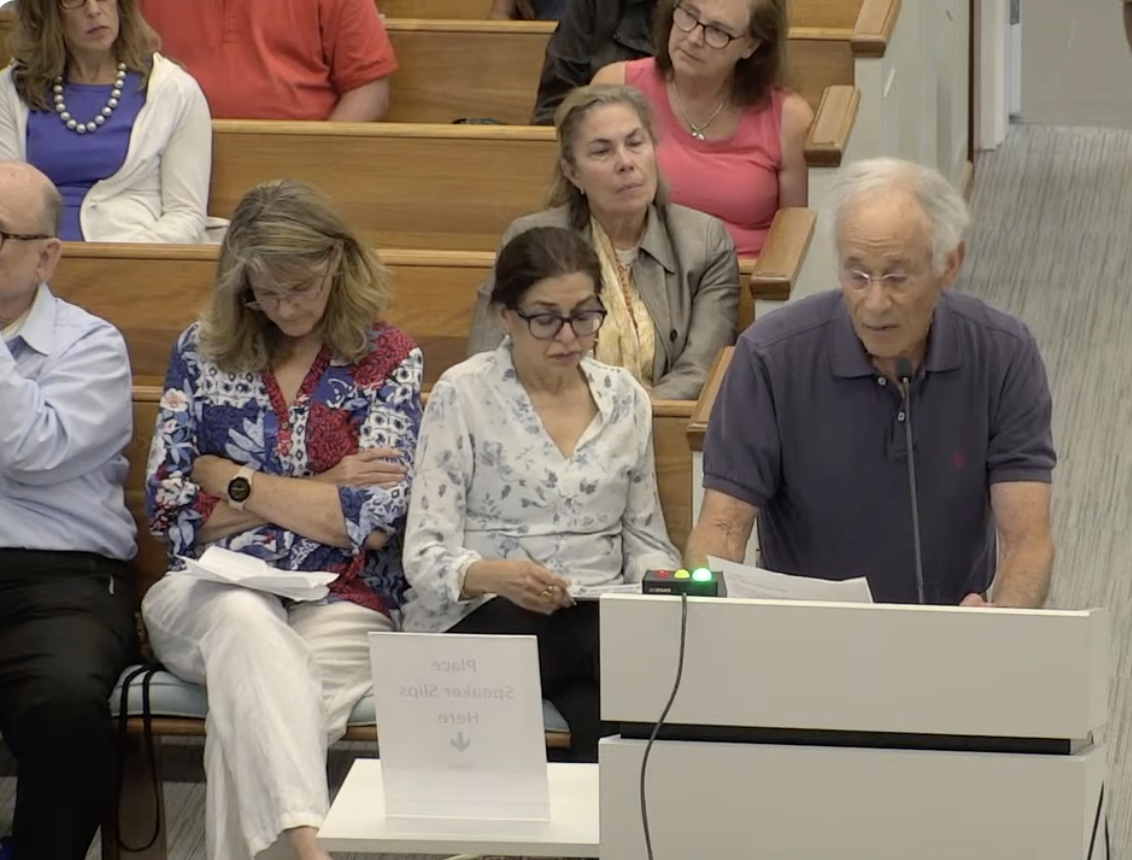
Please let me say that as a former Council Member and Vice Mayor, I have every confidence in the Council, even if they don't do what I think is important and right. Now, good evening, Council members. I'm Hal Lippman, and when I appeared before you last month, I was speaking for myself, [but] I can now add that I am speaking as president of [Citizens for a Better City] CBC. In my statement on May, I expressed concerns based on the 2021 Joint League of Women Voters / CBC series of forums on affordable housing in the city. As I noted, the two basic themes of those forums were the issues of economic and racial diversity, which over the years City efforts have been unsuccessful in realizing….
Let me explain why by sharing some important data points. Since 2006, aside from pre-existing affordable units, the city has brought 204 units into its inventory, of which 189, that's 88%, have been at between 60 and 80% AMI. That's the Area Median Income. By way of comparison, in 2021, the AMI was slightly under $130,000, which amounted to almost $80,000 of the 60 at the 60% level for a family of four. Now the AMI is $164,000 which at the 60% level is almost $100,000 for four persons! What does this mean in terms of our failure to address economic and racial diversity? Just 3% of rental properties in our city are at 40% AMI. That's currently $65,000 for four persons. And about one-third of our current waiting list applicants are at 30% AMI or below. That's just under $50,000 for four persons. In this regard, it must be noted that incomes for lower wage earners such as hotel workers, retail workers, house cleaners, and janitors range from between a third of the $30,000s and the $40,000s. Hourly employees such as kitchen staff, fast food workers, baristas, and servers, and weight staff are all in the $13 to $17 an hour range, which at full-time amounts to about $30,000.
Clearly, our efforts over the past 20 years have not focused enough on these and other such lower income wage earners. Furthermore, over the past 20 years of the City's affordable housing efforts, the percentage of African-American residents has remained stuck in the 4% to 5% range. In effect, among other things, we've never addressed the legacy of the long ago actions by the then Falls Church Town Council to de-annex roughly one-third of its territory back to Fairfax County to reduce the influence of Black voters in local elections.
I hope we can get it done. I continue to believe the City has never focused adequately on the essential issue of bringing about a more racially and economically diverse community. I'd like to recommend lowering some of the AMI figures in the current proposal. They're all too high. I think we should be focusing on 30% AMI and then I would gather that the Council is not going to have a chance to consider this tonight. So, I respectfully ask that it be addressed in the near future.
Nevin Jaffer
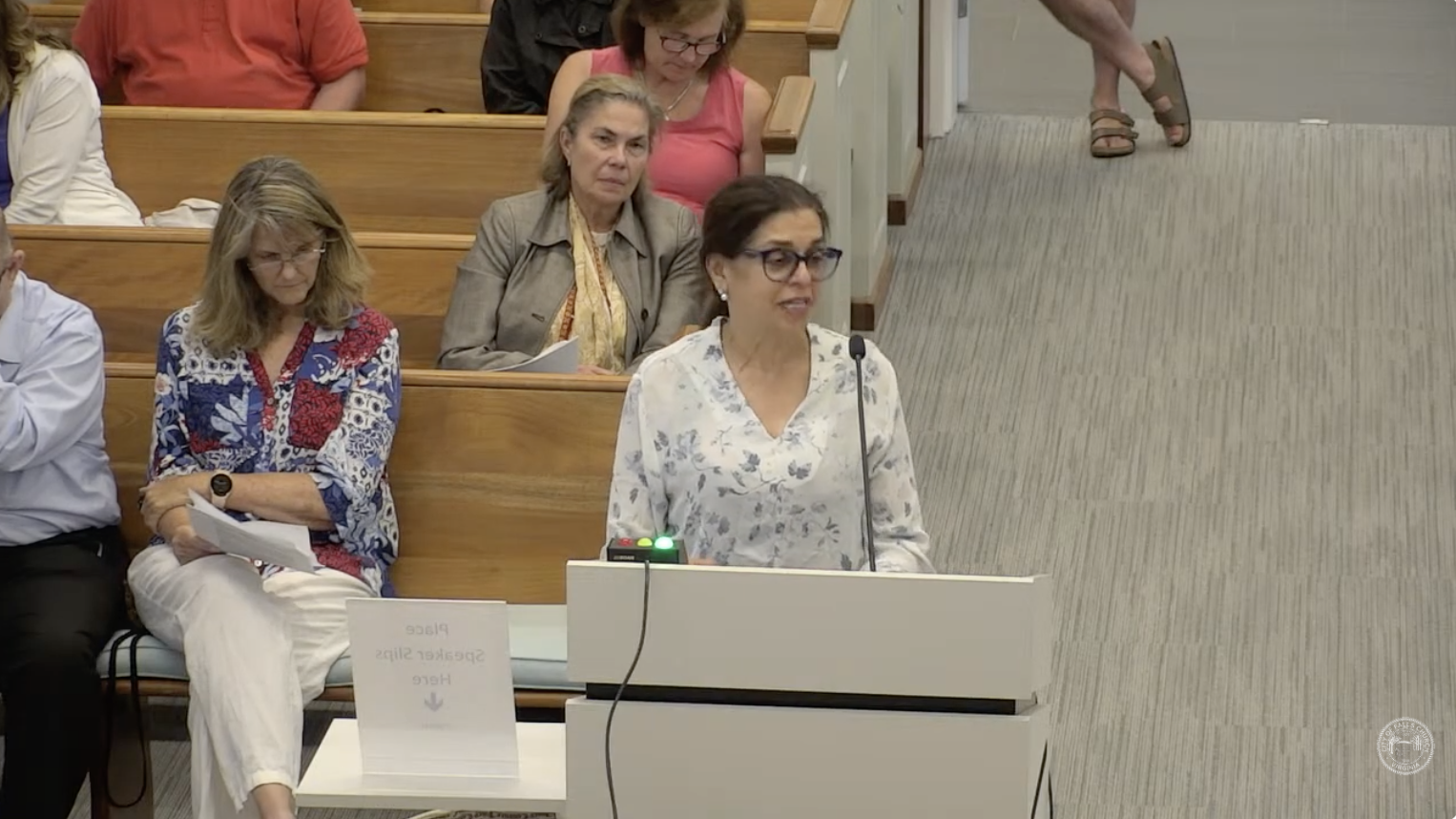
So, Winter Hill is a really lovely and cute neighborhood. The greenery, the neighbors, everybody knows everybody. It's the walkability. It's just a really lovely place. But the thing that's going to happen – low-income housing – is critical. I understand. But I think it needs to be spread out in the City rather than being concentrated in one area. If you just leave it in the area where it's going to be a vertical structure, the structure is going to be so daunting and aesthetically unappealing and will not – I mean especially the whole idea of the way it's [now] so open and bright and lovely – I think it's going to kind of pull away from that whole sunlight and bright place that we have right now and I also think that the real estate value of our homes might be negatively impacted.
Joseph Schiarizzi
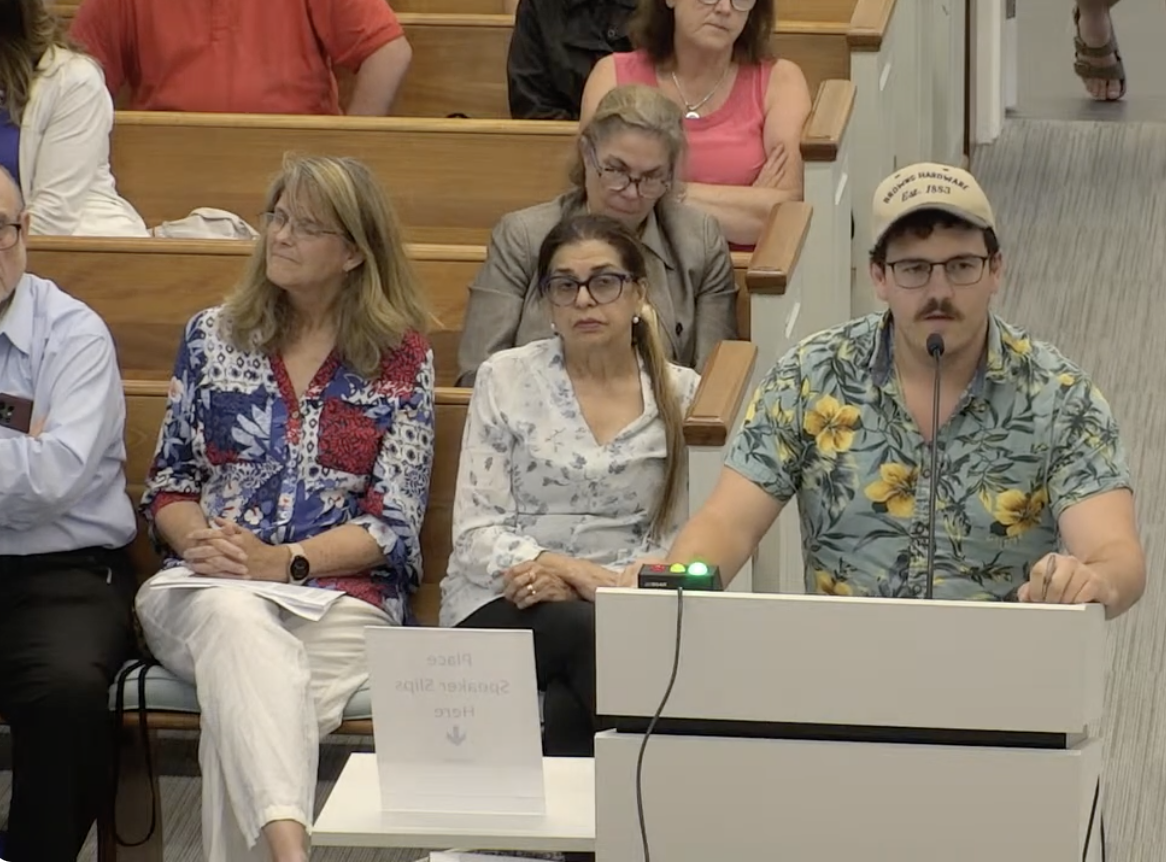
My name is Joseph Schiarizzi. I live on Gundry Drive in Falls Church in the Winter Hill area. My home was built ‘by right’ by a developer – Ahhh!! [makes sarcastic scary gesture.] So is everyone else's in Winterhill, by the way. I just want to start off and say I have every confidence this Council will make the right choice. I have every confidence we are being given [a chance to be listened to] tonight. And just for example, last year, City Council rejected a special exception proposal on the empty lot behind the Burke and Herbert Bank because [the proposal] was lazy and it wasn't a good proposal. So, I know that this Council will reject bad proposals by developers and that you all are doing a great job and putting in the time and reading every word and I appreciate that.
I also want to thank Council for doing an RFP. I think this is way better than any development project or zoning change I've seen done in the City in the last 10 years, because with the RFP, I get to see what the developers are proposing before we change the zoning. So, I don't have to look at a gray box. I get to know what's actually going to get built there before we even decide if you're allowed to build it or not. I think that's a great idea. Please keep it up. Please do not delay the RFP process.
The urgency for affordable housing is too important to delay it. I think the City Council should consider issuing a municipal bond to fund a larger development project. We have all of the units that back up to the Bowling Alley and Gibson Street is also owned by the City. We could take over the street and expand that size so there's no garage facing Winter Hill and do something much bigger that doesn't tower over Winter Hill that's completely on the Bowling Alley side. I believe, please correct me if I'm wrong here, but I believe about 950 families applied for those affordable housing units. The City obviously can't meet that right now with what we have. So, I think that's a good baseline place to start for the number of units we should be targeting with this RFP. And we should build at least 900 units. If that's 50 per floor, then that'll be roughly 20 floors. And if we took over Gibson Street, we could build that backing up to the Bowling Alley, not towering over any existing Winter Hill homes.
And to do that, I think we also should give a particular number to the owners of every other building in Virginia Village and let's buy them out. Let's give them an actual number, an actual offer. I'm kind of disappointed that hasn't happened yet…. Last note is we need a lot more affordable housing in Virginia as a Commonwealth. We're not meeting the needs of our community and we also need affordable housing to have dignity. Also none of the units in Virginia Village right now have a single handicap ramp. They're not handicap accessible. We did a proclamation about that today and I think they should all be accessible in the future.
Maria Belen Quellet
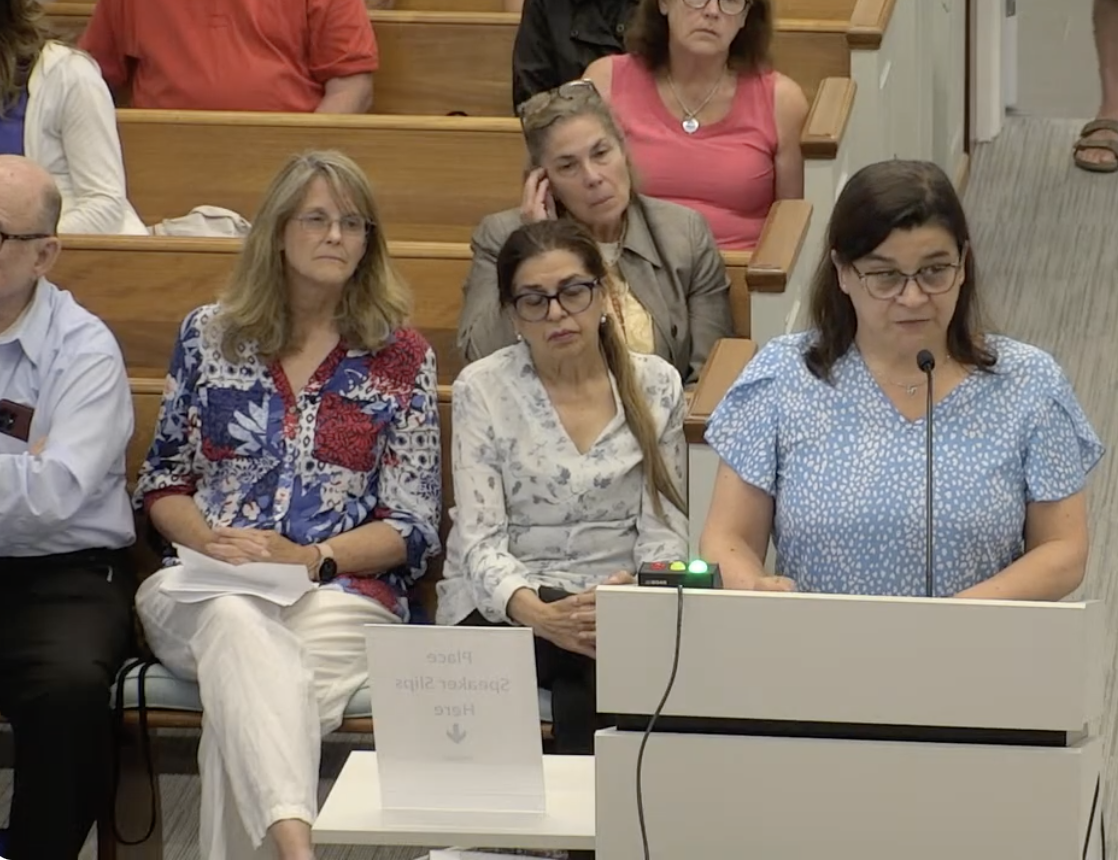
My name is Maria Belen Quellet. I am a tenant in one of the city-owned apartments at Virginia Village. I've been involved over the past several months, and invested significant time and energy in discussing the future of Virginia Village. We attended meetings, shared concerns, asked questions, contributed ideas, and City staff did a very good work in listening and capturing what we had to say. So, thank you for that. But I do think that it is time for the next step. And as I said, I think an RFP is a tool for understanding what is possible and gathering the information needed to make informed decisions. I'd rather know than not know what could be done. For decades, Falls Church has worked to provide affordable housing to residents with limited income. Today, more than 900 households remain on the City's affordable housing waiting list. Virginia Village is part of that story. I feel privileged that I had access to that program, but I don't think affordable housing should be a privilege. More people should be able to access it. The buildings are aging. The need for affordable housing remains significant. So to me, issuing an RFP will not determine the future of Virginia Village. It will help us better understand our options.
Stephanie Powell
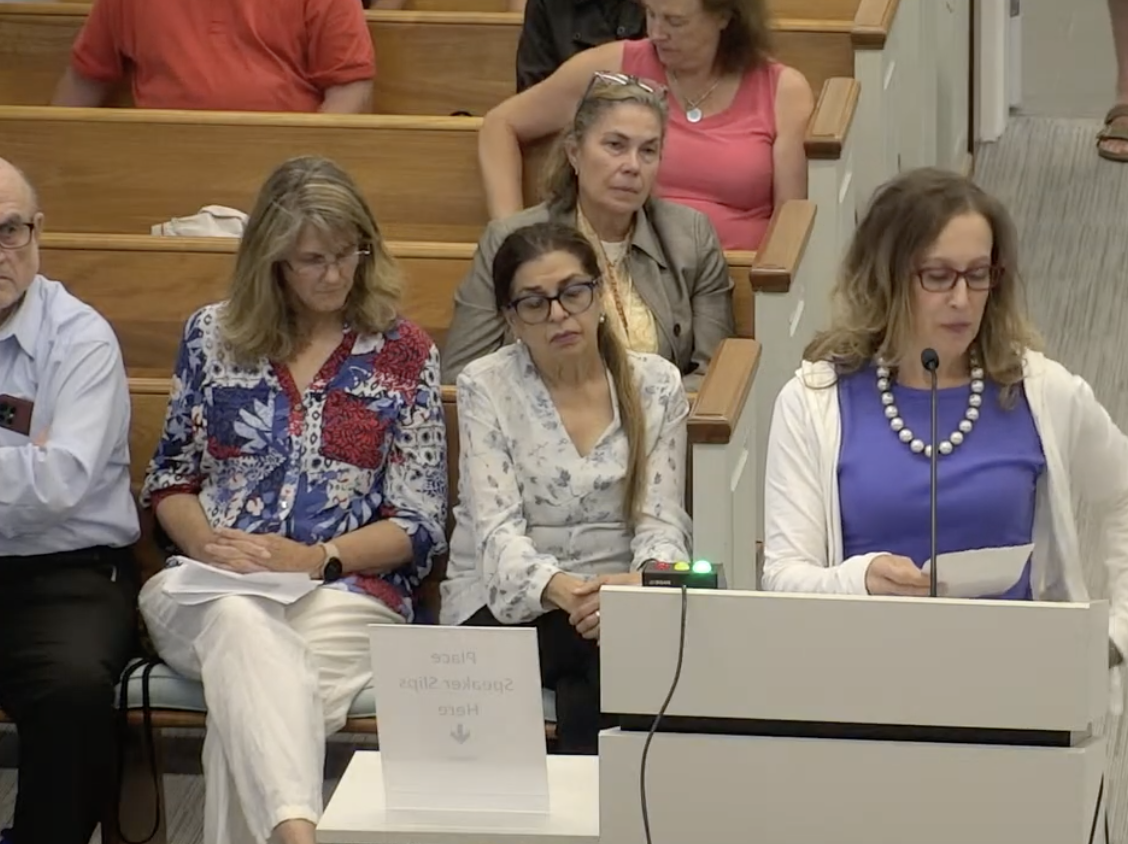
I have concerns about the proposed development of the Virginia Village project. My name is Stephanie Powell and I stand before you today as a homeowner for 11 years in the Cherry Hill Townhouse Development on Gundry Drive. As a homeowner, I have three major concerns that relate to the proposed development of Virginia Village that will sit behind Cherry Hill and connect to Big Chimneys Park. Specifically over the past five years I've experienced close-hand repercussions of living close to Big Chimneys Park and the West Broad project with Harris Teeter. Specifically, my parking spot is the private lot of that [and] we own that [but,] it's used as the current handicap access to Big Chimneys Park. Because of the popularity of the park, which I really like, there have been massive amounts of pedestrians accessing the park through our private parking lot which creates a huge liability situation for us individuals as well as our Cherry Hill properties. And this is in concern to us having egress in and out of our spot. So my first concern is that I seek from you all to relocate the handicap access to the lower part of Gibson and Shirley Street, which is part of this Virginia Village project. That can only be accomplished by stipulating this specifically in the RFP prior to it going to the developers. So that can make sure that this is in their plan.
The second issue which was actually provided when I went to two of the different sessions and it doesn't seem to appear in the RFP list is that they create a loop in regards to traffic whereby Shirley Street would connect back to Maple Street at the end of the City's property which they own which is beside the Tax Analysts building. This increase in proposed dwellings will not only increase traffic in this area, which is a currently very heavily congested, especially in the morning with bus stops, but also right now, we have a current one-way in and one-way-out situation. I'm proposing that you make a loop so that it would allow for a consistent traffic flow in and out of the new development. And once again, this item was not listed in what will be the RFP. So I believe that is important. I don't think I'm going to have time for my third point, but basically it's the question of what were all the meetings for? Hardly any of these specifics have been included from the meetings in the RFP. I believe that this is irresponsible of you all as Council and I would ask that you reconsider and pause the RFP until we can get these specifics entered.
Alex Maricola
I'm Alex. I rent in Falls Church. I think I've met some of you guys sometimes. Surprise! I'm going to talk about Virginia Village, too. This is a good thing. The RFP is good. You guys should push that forward and move this along. What I'd really like Council to think about is weighing the impacts. I think a lot of people have come up here and expressed their concerns and they're all very valid concerns, but I don't hear a lot of real impact to the harms of having more affordable housing. Specifically the harms of having tall buildings in a neighborhood. There are already tall buildings in Falls Church. You guys did this entire study that's available to everybody which some people apparently haven't seen showing the impacts of shadows and how there really aren't going to be any shadows hitting the park or really going into Winter Hill. So, I would just like Council to think about that for every extra study you guys require, for every other review of a plan, for every extra meeting that has to be added, somebody doesn't have an affordable place to live for that much longer. I understand sometimes it sucks having a large building be built near your house but you’ve got to weigh that against somebody not having somewhere they can afford to live. So I'd really like Council to think about and internalize that and reflect that in their actions going forward. I have all the the faith in the world that Council will come to an agreeable resolution to all of this, even if it's not always the one I prefer myself.
Robin Remy
I'm here tonight to encourage the Council to move forward with the Virginia Village RFP as it's drafted in its current form. Honestly, I came tonight prepared to talk about a lot of 'by right' and special exceptions. But honestly, hearing a lot of the comments tonight, I think I'm going to pivot a little bit. So I know you guys have heard me talk about this a lot before, but just for the benefit of everyone in the room, I think that housing is probably one of, if not the most, personal topics that local government addresses, outside of healthcare, which we don't deal that much with, right? Housing is so personal to everyone. I've heard a lot of emotion in this room tonight and I just want to say I'm very, incredibly, deeply empathetic to every single person who's in this room who lives in Falls Church who owns property in Falls Church and has concerns about what this development might do.
But I also want to say, as some folks have mentioned, there are 700 people, hundreds of people – I believe it might be over 700 people – waiting on a list just to get the opportunity to live in the City of Falls Church. I personally would not be able to live in the City if it weren’t for affordable housing. And I think that when we weigh the impact of a 35-ft setback or six stories versus seven stories, when you weigh that and put that into perspective, what it means to actually be able to live in a city or not, be able to increase the diversity, both financial diversity and all sorts of diversity for the people and the families that are sitting on that 700-person-long wait list. I think that really puts into perspective how much a five-foot height or six or seven story differences really makes.
So I just want to say again, I'm deeply respecting everyone who's in here and feels very personally about their home and about their property they live in. I want to say that I feel the same way. So I empathize with that and I understand, but I just want you to consider that, and weigh that in contrast to not being able to live in this City, not being able to take advantage of the amazing walkable city that we have, the great small businesses, all the things that make the City great and that make us want to live here. There are so many people who would like to live here, too. So, I do also support ‘by right.’ Hopefully you guys will talk a little bit more about that tonight. But I would encourage the City, please, to move forward with this tonight without any further delay.... I also just want to say for the benefit of anyone in the room, if you don't think that the City has taken your comments into consideration or you don't think that the public process has been public enough, I would really encourage you to look at the materials from the very first meetings and compare them to what's in front of City Council tonight because I think you'll see lots of comments from the community have been taken into consideration and staff has spent a lot of time to put some very detailed studies together that specifically address those concerns.
Alex Jasura
I just want to say first that I am heartened that, at the end of the day, it seems like everyone is on the same page and supports affordable housing. I hear that from both sides. It seems we have two distinct factions. One that says 'We support affordable housing. Please build it.' And one that says 'We support affordable housing, but….' and cites myriad reservations of varying logic.
At the last meeting I attended, the hazard faction kept sighting shadows over Big Chimneys Park in particular. I live in Winter Hill. I walk through Big Chimneys Park every day. It's on my way to everything. So, ever since that meeting, I've been looking for the shadows, seeing if the current quote unquote ‘high-rise next to the park’ casts significant shadow across it. And I haven't really noticed any. I've seen that most of the shade in the park comes from the big trees that have been growing there for some time, and I presume nobody is in favor of cutting those down. I think that a lot of the concerns that have been cited about this project are of a similar nature. I am really glad you guys are listening to public comment and I do want you to take into account everyone's comments. Genuinely I just hope that they are weighted by logic. And at the end of the day, it's great to know that everyone supports affordable housing. So please build some.
Mary Lou Pickel
Dear Mayor and Council, I appreciate the effort you put into your work to make Falls Church a better place.... I would reiterate some of the things you've probably already heard, but when it comes down to it, Winter Hill and Virginia Village is a community, and we want to remain a cohesive community. Our kids play together. We look out at each other's houses. We are close. I feel the best way to do that is to make any new development in Virginia Village on the same scale as the one in Winter Hill. So scenario B, three- to four-story town homes, I think is the way to go. You will achieve affordable housing, which we support. You will preserve and improve the entrance to Big Chimneys Park. You won't make people run around trying to find how to get into the park. All without pursuing the most aggressive development scenario which will significantly disrupt the residents of Virginia Village and the larger community. I think you should go with the RFP toward a scale that fits the small amount of land you have assembled. A six or seven-story building is not the right solution here. It's out of scale. It will dwarf the community and overshadow the homes and park. And it's different in the winter time. The shadows are much longer and last for more months in the winter. As far as process goes, you should set the zoning first before the RFP goes out and the zoning is not ready for prime time. So, that should not be voted on tonight. You should also retain your right and power which is the people's power to require a special exception to make sure you get this project right because this is an important project and the zoning is complicated and, try as you might, you may not foresee all that will happen when you make big changes like this. You need to retain your power and authority and not approve a ‘by right’ zoning here. Again, please slow down, table this tonight, and get this right.
Kathy Kleinman
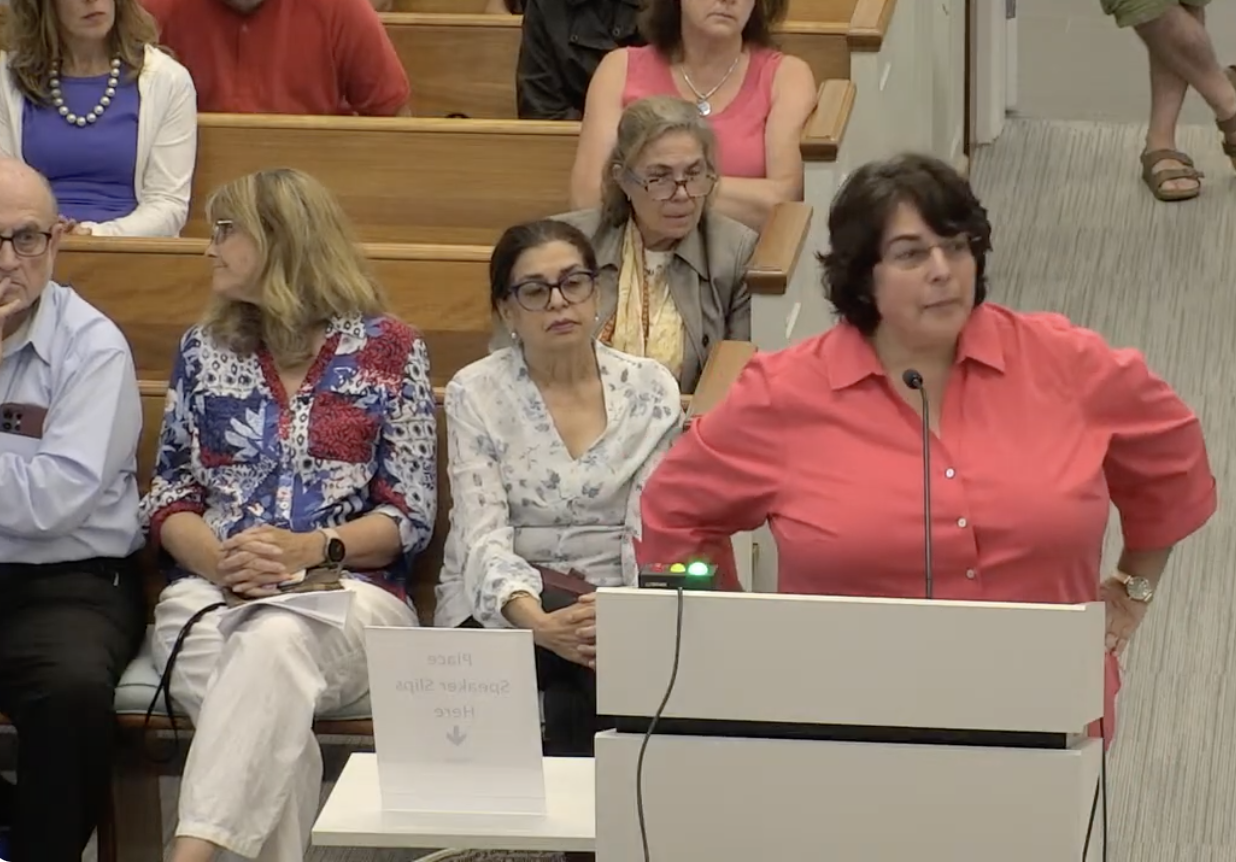
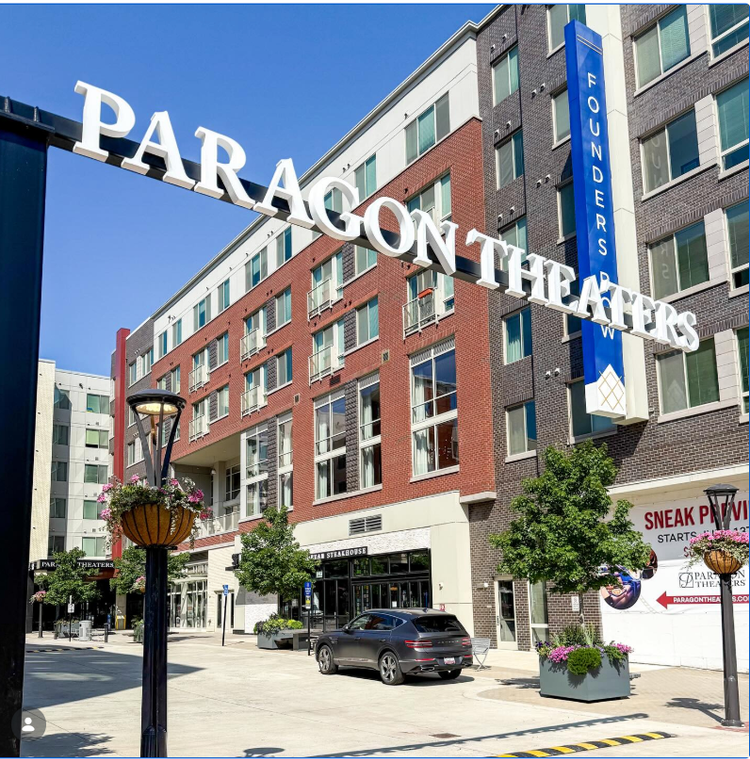
I'm Kathy Kleinman and I'm not part of the Virginia Village or Winter Hill community. I am a survivor of the West End Park and and Founders Row discussions and spent many many hours at this microphone. I feel like we all want affordable housing and we want it in this spot and to that end it's a huge win for you and for us. But I'm dismayed by the clear telegraphing that what seems to be requested is a big ugly building and that doesn't fit scenario C of the RFP. This large, dense, tall infill – really shoving in a building where it doesn't belong – like putting a wall of Founders Row right next to the park or right next to the town houses that are currently two-story town houses. It doesn't work. We wouldn't have allowed that to happen in the West End. You wouldn't have allowed that to happen in the East End. And it shouldn't be happening in Virginia Village and Winter Hill. Which is why if you take off scenario C, you've got something really workable. A and B are excellent. A is keeping the current buildings and renovating them. But B, frankly, I think is even better because you can create infill of the same structural aesthetics in this blended preservation, make it higher, make it denser, but everybody in the community will be able to breathe. They'll all be able to see the park. There'll be lots and lots of of housing for families and no one's going to feel like they're stuck in the big ugly building because that's going to create real differences in the neighborhood. Because people will know they've been shoved into the big ugly building and that that's where the affordable housing is versus being in brick buildings of a size and a density maybe a little higher, maybe a little wider, but that are keeping with the community feel and structure. You don't want people in affordable housing to feel different. We don't want a Cabrini Green of Chicago. We don't [want it to be] a project. We want these people to be active parts of our community. So you have better options. Take C – take the big ugly building off the table – and stick with A and B and revise them for the blended preservation you have in so many beautiful materials. I'm also going to urge you to really open up the process. I could be wrong, but I understand the RFPs are not going to be transparent. Those of you who have been around for a while will remember that initially we were going to do RFPs for the high school that were not transparent. They've got secrets in them. They've got costs. We demanded that they be transparent, that the process be transparent because it was our land, our building, our high school. And we opened it up and we said no secret RFPs. Again, I'm not sure exactly what you're doing here, but if it has anything to do with secrecy, please make it open and transparent because we own the land. You and I, and we all own the land. So, goodbye to option C. And let's really open up this process so everyone can be involved because that's where we get the best decisions and the best buildings.
Laura Gogal
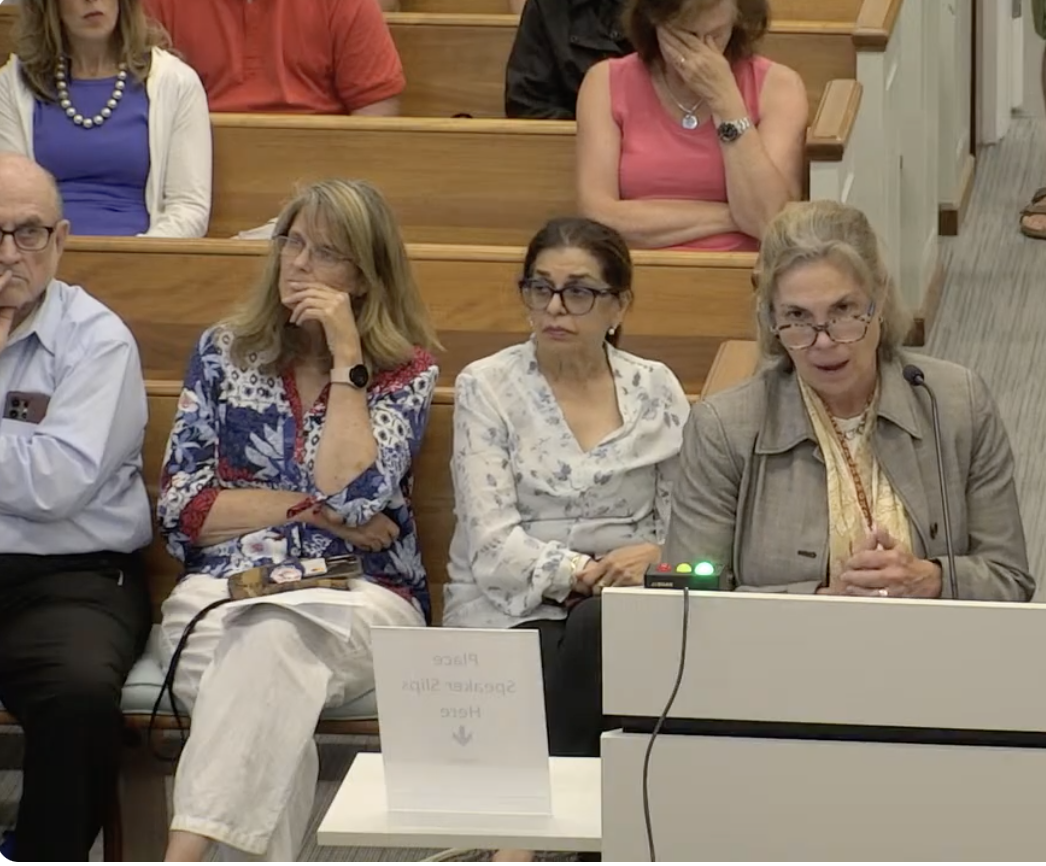
I'm just coming to the process and trying to understand. I don't live in the Winter Hill area. I live sort of in the same area that Kathy Klienman's talking about over by Founders Row. But I'm trying to understand how we could be issuing an RFP when the zoning is just on first reading. So, I'm hoping somebody tonight will speak to that. Explain why we would issue an RFP before the zoning is determined? And I also just know as an attorney who does a lot of work with RFPs for my own organization that you get locked in by your RFPs too often. Many a time an RFP – what things you don't include, things you do include – really ends up locking you in. And so I do worry that if we haven't had a full enough process yet to be sure the RFP includes things like location of handicapped ramps or how we're going to deal with setbacks and other things like, that it will be very hard once those have come back to make those changes or to get those concessions from the developers who submit proposals.
So I do think it's really worth – I don't know what the rush is and why we need to do the RFP tonight. Maybe again someone can speak to that because I haven't really been as engaged in this process. I've just learned about it recently. But I worry that by issuing the RFP tonight, the City is not serving the citizens of the City well. I think we should be doing a process that makes sure we're covering everything effectively before we lock ourselves in. You know, we don't have very many of these parcels. This is a rare opportunity. I don't know why we don't take the time we need to make sure we're doing it correctly.
Abram Mark Massie
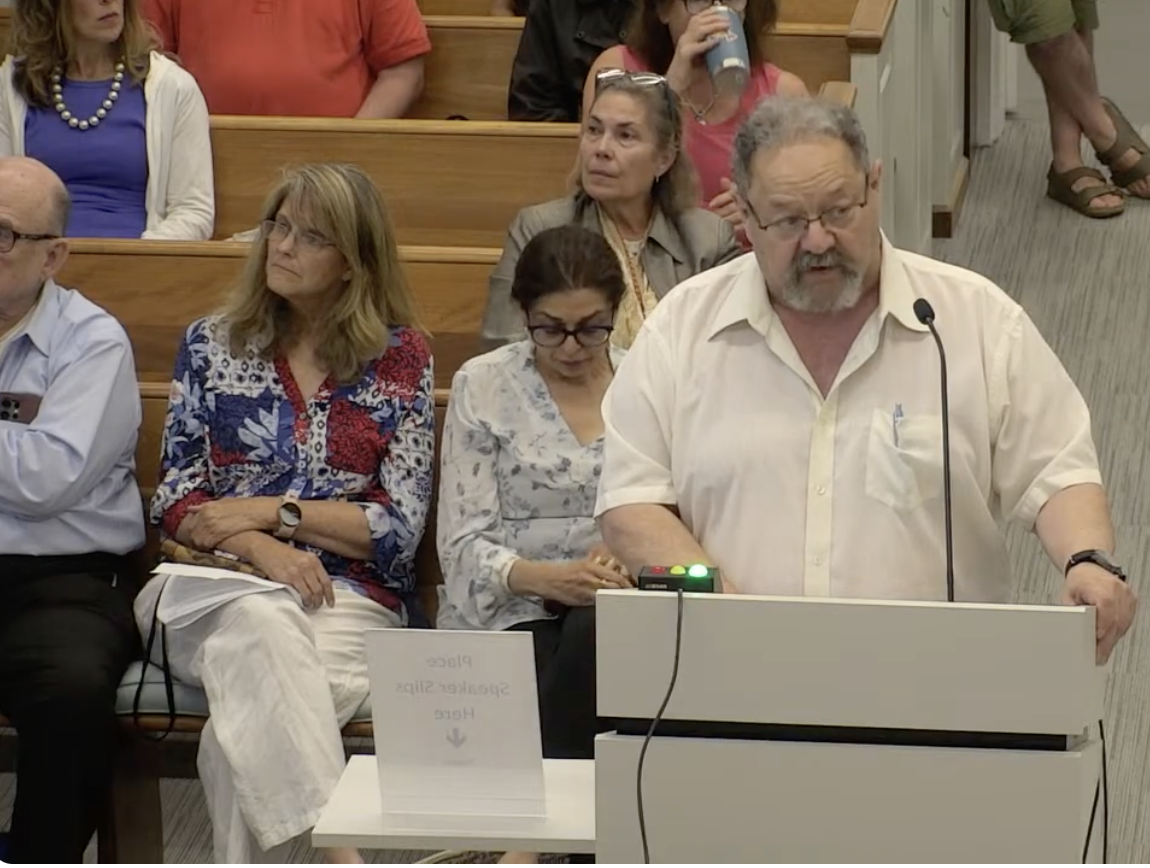
I want to express my support for the modifications suggested to the smaller plan by Rebecca Johnson. These modifications directly and coherently inform any further community development activity in that area. To me, it is extremely strange that a zoning process will occur after a request for proposal. In essence, what is being done here is, "Hey developers, we want some affordable housing, but don't let the zoning questions bother you. We will rig the zoning for whatever we consider the most favorable bid."
And by the way, who exactly is ‘we’ in the last sentence? At this point, that appears to be a closed group of individuals with little to no citizens’ input nor citizen oversight. Note that this RFP is use of City-owned land paid for by City taxes, by citizen taxes. Further, many of the future residents of this community will be receiving City provided rent support. In other words, our taxes will be paying for people's rent and all of this without public citizen involvement in the RFP approval process. Two, this whole affair is being rushed through such that it is extremely difficult for local citizens who work and create the money for these projects through their taxes to have enough time to review these materials and impact their creation and thus control the future of their community.
This City has gone far too long with nearly unbridled development. Apparently among real estate developers and the proponents, Falls Church should have the skyline of Rosslyn or Crystal City. Falls Church is losing its ability to claim it is the nicest Little City near Washington D.C. Please slow this development down to ensure that the citizens, not real estate developers, control who and what we are. Finally, I want to say if you're going to push the RFP through, please remove option C. I too was part of the process of putting or accepting the huge monster that was originally being built near my home at West and Grove Avenue. So, it took one heck of a lot of work to get that building to something that citizens could accept.
Rohini Winters
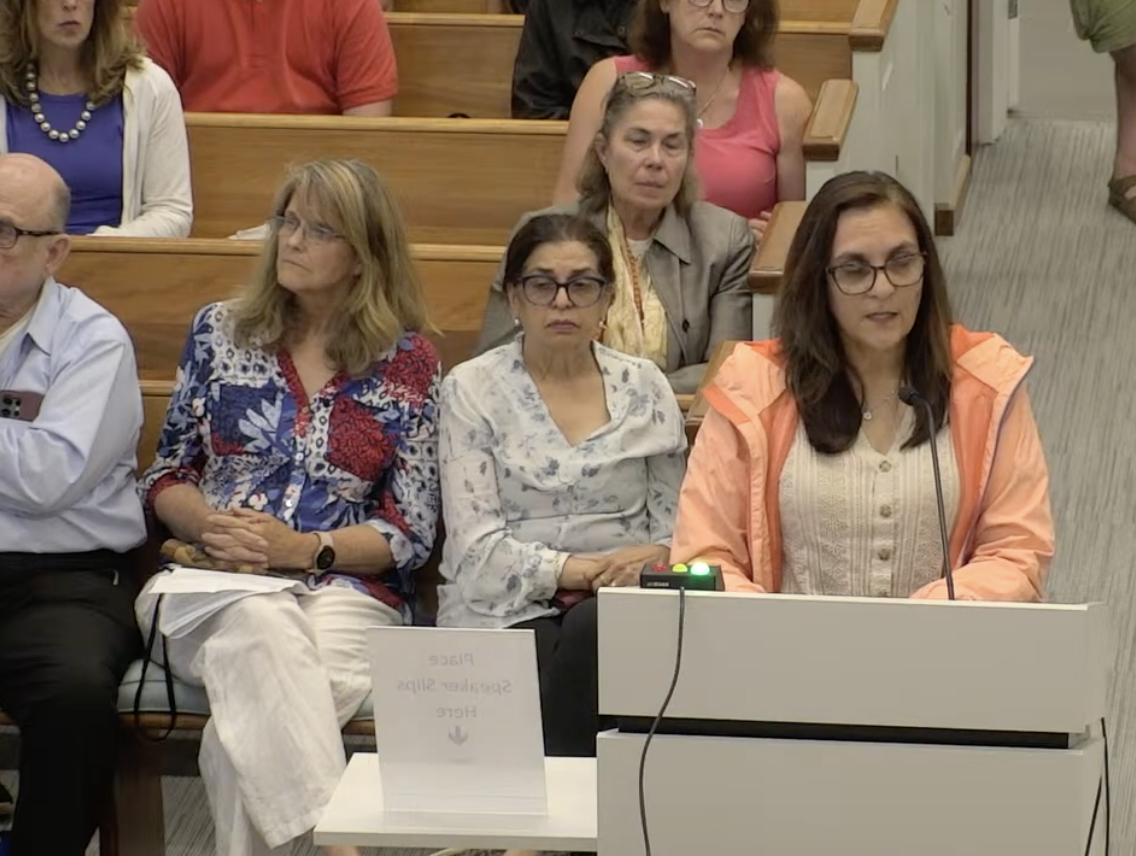
We spend a lot of time trying to teach our kids if it sounds too good to be true and if they're trying to rush you into a decision, slow down. Take the time to evaluate. Anybody who wants you to sign an agreement the same day, the next day, within two days, on a hard deadline, is probably not serving your best interests. So, I'm here tonight to ask you to slow down once again as we did during the Founders Row development stages so that the community, the City, and the citizens as a whole can have the time to get proper public input. And there have been lots of meetings with the residents close in, but the rest of the City has not had much opportunity yet to weigh in on how this project comes to our view. You should change your RFP to a Request For Information. If you want industry participation in the process, use the tools you have without putting a solicitation out for requests for proposals that will in fact lock you in to some things you might not choose.... Get industries’ questions, inputs, ideas as well as the citizenry to participate in this whole process. Ask for Requests For Information on your scenarios A and B. Take the big ugly building off the table. It doesn't fit in the Little City. I love how Kathy Kleinman spoke about how we don't want to create differences within our community. As best we can, we should be working towards inclusion and we spent a lot of time on just making sure of that so that we wouldn't disrupt that neighborhood with a preschool that was too big or too anything. We spent a lot of time on Founders Row. We made significant changes and we made the project better. I think we have the opportunity to do the same thing for Virginia Village and the Winter Hill.
Mark Reston
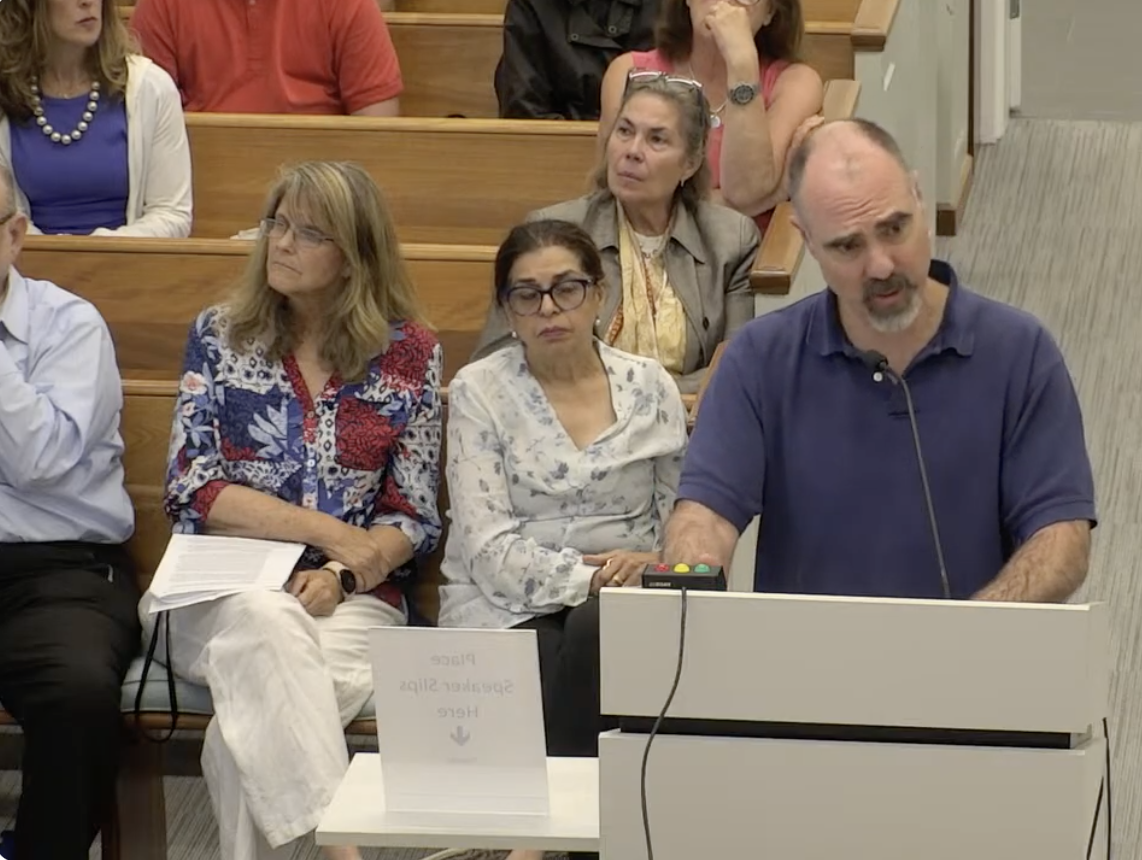
There is a lot of support, but there's a lot of concern that this is being done such that the schedule is motivated by things other than what's in the best interest of the City and the community. There's a lot of support for affordable housing throughout the city. [But,] There's a lot of concern about mass, you know, this affordable housing in option C, that kind of thing. And so regarding the RFP process, since it's public land involving public redevelopment, the public needs a meaningful role. And before a preferred developer is chosen, the public should have an opportunity to understand the basic options, meaningful summaries of what's being proposed, and understand the trade-offs and provide input.
See you at the next City Council meeting, Monday, July 13!
For our recent letter to the editor from a Virginia Village resident, see below:
 Christopher Jones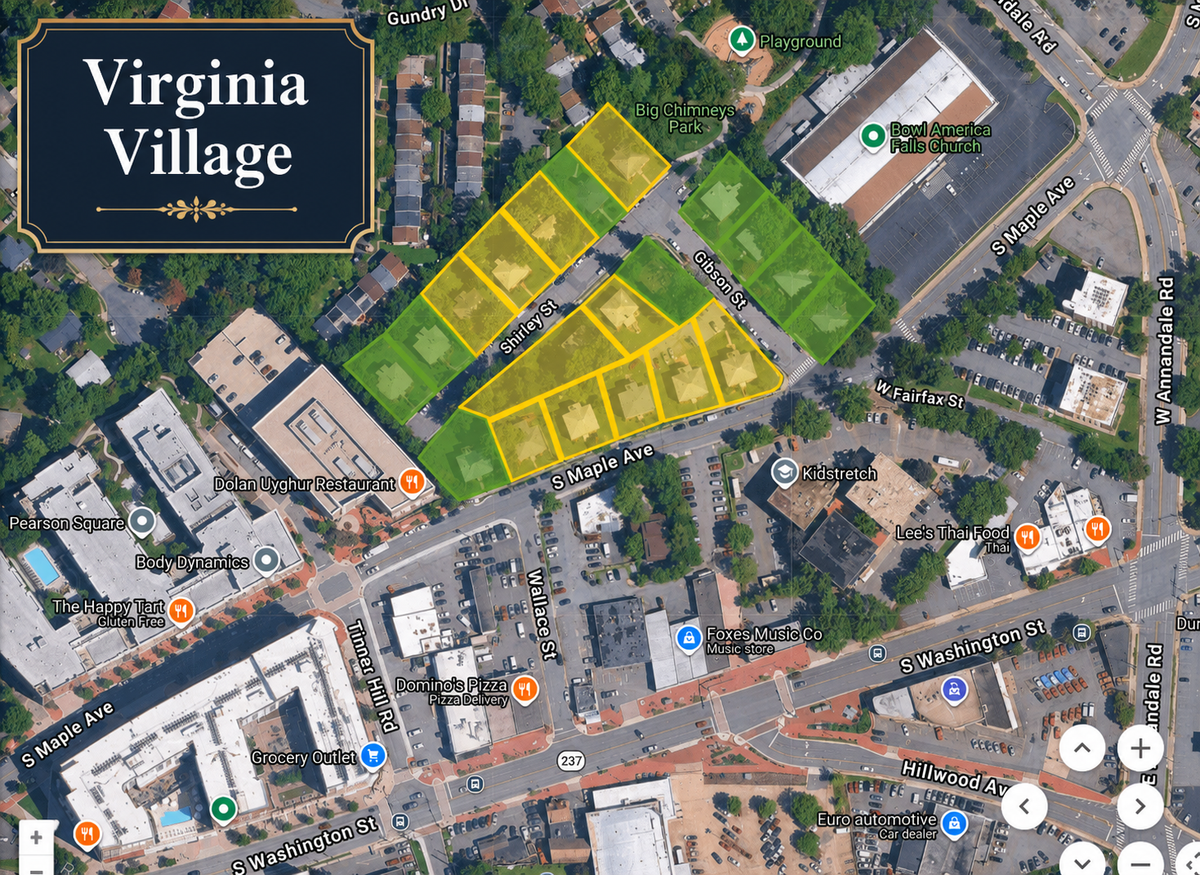
If you'd like to submit a letter to the editor on this or any other subject, please send it to: chris@fallschurchindependent.com.
By Christopher Jones

Member discussion